By Kenneth Ehigiator
The campaign for a dramatic slash in fares charged by foreign airlines in Nigeria started like a huge joke, which nobody took seriously, because of the nation’s notoriety for blowing hot and cold at the same time. Not even the military regimes in the country could dare probe into how foreign airlines carried on in Nigeria over the years, as most of the big carriers were known for using prominent traditional rulers and others to have their way round the government of the day.
However, from the onset, it was clear that the melody had changed, considering the tenacity with which the Aviation Minister, Princess Stella Oduah, pursued the campaign. Airlines such as British Airways and Virgin Atlantic may have laughed and waved off her “tantrums” at their own peril.
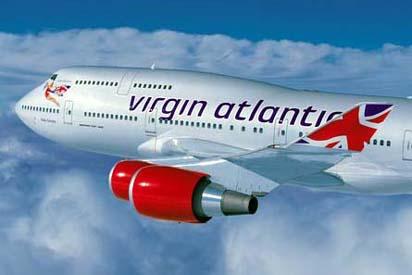
Arik Air had been denied its slot on its Abuja-London operations at Heathrow Airport in London, and this prompted the Federal Government to respond with a clamp down on British Airways’ operations in Lagos. But good reasons prevailed and government listened to its British counterpart who promised to order an independent study of the fare regimes of the two British carriers, BA and Virgin Atlantic Airways, in Nigeria in comparison with other countries in West Africa.
Unfortunately, the British government failed to utilise this window to have the issue addressed once and for all, deploying what the Aviation minister described as “delay tactics”, designed to wear down its Nigerian counterpart, with the aim of laying the matter to rest, to the detriment of the country.
“We are seriously concerned and worried by the reluctance to restore parity within the region by the foreign airlines. They have been using all kinds of delay tactics; this is unacceptable and will no longer be tolerated. Nigerian passengers do not deserve this kind of exploitation and we are willing and ready to stand up for their rights,” the minister had declared while issuing a 30-day ultimatum to all foreign airlines operating in the country to dismantle their fare disparity or face a ban.
Over the years, the argument of the airlines had been that their high fares were contigent on the high operational cost in Nigeria, occasioned by high fuel cost, landing and parking charges and other navigational and en route charges. But recent investigation by Vanguard indicated that the argument was neither here nor there, as the charges are even higher in countries in West Africa where fares are far lower.
For instance, while the passenger service charge (PSC) at Nigerian airports is just $50 per person, it is twice higher in Ghana, standing at $100. Same applies to other charges. This has, therefore, nullified that argument.
At the time the price of crude oil hit the roof in the international market, going as high as $140 per barrel, airlines worldwide introduced fuel surcharges on every ticket sold to enable them cope with high operational cost. This, of course, increased the cost of flight ticket. But when the price of crude crashed in the market, several airlines across the world also eliminated the surcharges.
However, at present, airlines such as British Airways still retain the surcharge in calculation of their tickets per passenger and it is flat rate. Vanguard’s recent investigation revealed that BA still imposes $508 fuel surcharge on every ticket sold in Nigeria and this is exclusive of security and insurance surcharge of $16 on every ticket.
BA’s body language, since the crisis started, has shown that it is not ready to shift ground, even when it has become obvious that there are issues concerning its fare structure. “British Airways is fully legally compliant with the requirements of the Air Services Agreement between the UK and Nigeria. We remain committed to Nigeria and continue to serve the country with daily flights to Lagos and Abuja.
“We have been flying there for more than 75 years and pride ourselves on offering competitive fares, a choice of products and connections to our Nigerian customers. All of our fares are set on a sound commercial basis and remain fully,” the airline had said in its reaction to government’s recent ultimatum which expires April 24.
But Director-General of Nigerian Civil Aviation Authority, NCAA, Dr. Harold Demuren completely disagreed with the airline while appearing before the House of Representatives Committee on Aviation in Abuja. Demuren told the lawmakers that the two British carriers, particularly, had persistently ripped off Nigerians through unfair fuel surcharges and other taxes, arguing that such practices were not congruent with international standards.
He said: “We have done the study and we have all the figures, we have the details. We have been on this for the past two years and every Nigerian that has been reaped off must be paid back. I want to beg the House of Representatives to take on the travel agents because they are technically involved. They will tell you the tickets are not available, of course it is the normal practice in business but it’s unfair.
“Specifically, both airlines – British Airways and Virgin Atlantic – colluded to fix the passenger fuel surcharge in a manner that eliminated or suppressed choice and competition and the Nigerian public were the victims of this conduct, while both airlines reaped huge profits from their misconduct. In addition, both airlines deceived Nigerians and used unfair methods in procuring these huge revenues in their businesses.
“For these violations, the NCAA imposed monetary penalties and a decision that passengers who were exploited must be compensated. With respect to NCAA’s factual allegations and findings that both airlines engaged in deception, collusion (price fixing) and unfair methods of competitions, the panel found that all the allegations were sufficiently established by overwhelming evidence.”
Reacting to all of these, the British government, through its High Commission in Nigeria, had warned that the ongoing crisis over fare disparity might endanger the bilateral relations between both countries, even as it admitted that government’s ban on its carriers might have catastrophic effects, obviously for the British economy, considering the fact that Nigeria constitutes the most lucrative operations for particularly British Airways.
“It (the ban) would cause potential foreign investors to question whether they want to put their money in Nigeria and have a long-term and damaging effect on Nigeria’s growth.
“The Prime Minister and President (Goodluck) Jonathan signed a joint communique last year pledging to double bilateral trade. Action against BA and Virgin would damage that strategic aim,” British High Commission spokesman had said in a reaction.

Stella Oduah, Aviation Minister
However, latest development from the Aviation Ministry has shown that the Federal Government is not swayed by whatever would be British government’s action, as Aviation Minister, Princess Oduah had said Nigeria would not be intimidated on this issue.
She lamented that each time Nigeria made a move to have the Bilateral Air Services Agreement, BASA, with Britain reviewed since 1988, the British government had always shied away from doing so, and stressed that the Federal Government would take its destinies in its own hands on the issue.
“As long as I am here (as Aviation minister), it is my responsibility to protect Nigerian passengers. If what they (British carriers) are doing is right, why are they not doing it elsewhere? Why are they doing it in Nigeria alone? We are on the right track.
“The last time we signed BASA with Britain was in 1988. Each time we try to review it, they will refuse to sign because they think we are the only ones that need them; all this mentality has to change, the minister declared.
Right now, more Nigerians, individuals and groups, are keying into the campaign to stop what they described as further rip-off of Nigerians by foreign airlines. Only last week, Nigerian Bar Association, NBA, pledged its support to the government on the matter, and even promised to offer free legal services whenever the Federal Government was ready to review existing BASAs with other countries.
Launching the NBA into the fray, its national President, Mr. Joseph Daudu, SAN said: “The disparity is very obvious and unjustifiable. These foreign airlines think they have friends in high places and can, therefore, afford to do as they like, but we are here to assure you of our full support. Now, the ultimatum has been issued and we know that violations come with remedies; they should not think we are without remedies.
“The NBA thinks you need support and has mandated us to get in touch with you. We are ready and willing to partner with you on two fronts – advocacy and our legal services.
“It is unfortunate that those well-placed Nigerians who should weigh in on this matter are taking the back seat because of their personal interests and ambitions even though they all know this is a matter of patriotism and nationalism,” the NBA President said, as he led other executive members of the group on a solidarity visit to the minister in Abuja.
From the foregoing, the Nigerian government appears very resolute on this matter and the die is cast for all foreign airlines in the country.
Disclaimer
Comments expressed here do not reflect the opinions of Vanguard newspapers or any employee thereof.