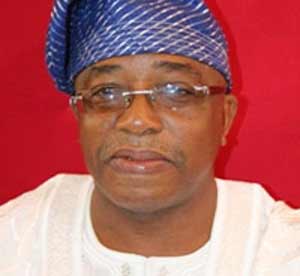
Mr Francisco Abosede
By DOTUN IBIWOYE
Mr. Francisco Abosede, a Town planner, is the immediate past Commissioner for Physical Planning in Lagos. In this interview, he spoke on a number of issues affecting the construction industry. Excerpts
Controversies over Eti-Osa – Lekki toll road Alhaji Lateef Jakande built that road over thirty years ago. If you look at the road as at the time that Bola Ahmed Tinubu went into it, that road was impassible. It was a road that had nearly been totally destroyed; pot holes were here and there. The road became so bad that it took an average of about five to six hours to ply a distance of less than 20 kilometres.
People were in pains crying for help and the governor said yes, I have priorities to do several things. Let me concession this road and see whether a concessionaire will take it up and develop it.
A concessionaire came forward in the name of LCC and undertook to fix that road, to collect toll and possibly real estate over a period of time, to see whether the cost involved can be recovered over a period of time.
Having put all their numbers together, having put their details and ingredients together, they made a design. In the completion of the design, they saw that it would take a number of years to repair that road, so the cost of the road was computed and they took it to various agencies – Nigerian and international banks to convince them and shop for money over a period of time.
Then they were able to get international finance to finance that particular project and that was actually what led to the construction of Lekki-Epe express road.

Mr Francisco Abosede
Allegation that only a few lanes were added by the concessionaire
The roads were not in a state to be managed. That is a point blank. I can tell you that because I was involved at the initial conception, I was involved in the acquisition of the right of way. Getting the right of way was difficult but people understood that they needed to give off some of their rights in order to get the road in position.
Private sector development
For anybody to now doubt the need for tolling is unbecoming because from the beginning government made it clear that it was a private sector development and they would need to recover their cost. Yes government should put alternative routes in place and I am sure government has done that.
Let me put it in another way, look at the Badagry express road, it is undergoing the same process. There will be an alternative road and there would be a fast lane where you can pay. Once you can pay, you can go through the fast lane.
If you want to go through the alternative road, you have rigmarole through all processes before you can get to your destination; it takes a longer time while the express-way takes a shorter time because you are paying. That is the essence of it.
Toll on Lagos -Badagry expressway
I don’t know what government plans at the moment. As a layman, if you look at the structure of the road, you will note that there are some wider parts, there are some shorter parts. And if you look at the way the road is built, there are possibilities that that road could be tolled – some part of it. I’m not saying all. So that if you need to get to point A and B, within two minutes you can take the road.
It is already happening at the moment because if you go through the smaller road, it takes a longer time, if you manage to slip through the inner road which Julius Berger is building, in two minutes, you are where you want to go. Those are the issues that are at stake.
Slums in a mega-city
There are areas like that in Rio de Janeiro and Sao Paulo which are as big as Lagos. They have almost the same incidents of building collapse which claim lives all over the country. They have slummy areas too. We have them in Badia, Shomolu, Mushin Brariga, Ajegunle among others. But what is important is that we have been developing in a slummy way.
We have been extending and prolonging development along a particular corridor, whereas we need to diversify. All those small bungalows need to come together and government needs to coordinate them and get the private sector to redevelop them.
The private sector should get involved in regeneration because there is also of money in it. There is a lot of business in regeneration. So when they do regeneration, they would get the support of the current owners who are going to have a win-win situation because their plots of land will be taken and the bungalow they have, will be developed into several floors.
Then houses at lower mortgage rate will be offered to people to buy and over a long period of time. There are endless possibilities in a slummy area where you can transform through regeneration process.
Recurring cases of building collapse.
In Brazil, in China, In Japan you keep reading on the paper about collapse building. Collapse building emanates from different factors. It could be a construction fault, it could be a design fault, it could be through negligence. One important thing that we have not taken into consideration is that we should be able to assess all our building. We should be able to assess all building that are two floors and above.
The owners of the building should take building insurance. The insurer who is going to insure is not going to give a blanket insurance because he wants to make money. He will be held liable. He needs to know the capability of the building, he needs to advise whoever wants to insure that your building is not standing right and if your building is not standing right, automatically I will not insure you. If a proposal is brought before whoever is the owner of that building that the building is not safe, I am sure he will go back and think twice.
But if he insures for the sake of insuring, once there is a collapse, the insurance will be held liable and that insurance will be made to pay to government the total cost and also be prosecuted. That is the way government should handle it.
Government should insist that any building above two floors must have an insurance. If the insurance company knows that they have a very great task, they will check and ascertain that the building that they are insuring stands to specification and meets specified standards.
Disclaimer
Comments expressed here do not reflect the opinions of Vanguard newspapers or any employee thereof.