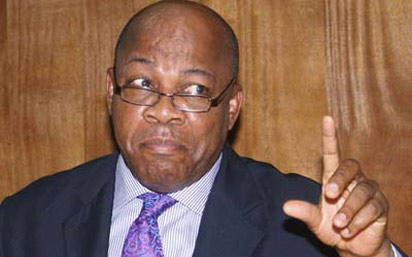
Agbakoba
By Dayo Benson
Mr Olisa Agbakoba , SAN, is a former President of the Nigerian Ban Association, NBA and foremost human rights activist. In this interview, he spoke on some contentious national issues such as the proposed fuel subsidy removal, insecurity in the country and the way forward in nation’s judiciary.
Excerpts:
There has been so much debate over the proposed removal of fuel subsidy by the Federal Government. In spite of the outcry, it does appear that President Goodluck Jonathan is determined to go ahead with the plan. Is it really desirable at this point? What is your take on this?
We met with Mr. President recently and we conveyed the general view on the whole debate about fuel subsidy removal was unpopular.
‘He however explained the reason why he wanted the subsidy removal. He said ‘If we keep subsidising all sectors, that government will run broke one day.’
‘He told us that he would rather take courageous decisions that to run the Nigerian ship of state aground and I was happy about that honest clarification.
I am sorry to say that the Nigerian press has not been fair in this debate by presenting the pros and cons of the debate. In my view, the press should concentrate on the question of ‘Is it really in the interest of Nigeria to continue to subsidise?’ conceptually, No.
‘This is because subsidy breeds corruption, inefficiency and waste.So, the issue is, has the government done enough to create the information exchange, the confidence and the resource?
‘This is given the fact that nobody trust government. The general view is that once subsidy is removed, the money will enter private pockets.
‘Some have even argued that there is no subsidy at all. We need to have answers to tough questions.
‘Is there subsidy? If there is, how much is filed by corruption?’
‘We must also understand the power trio regulate prices in the petroleum industry vested in the Petroleum Prices Regulatory Authority.

*Agbakoba... I also recommended electronic filling of case
‘The PPRA has a greater responsibility to engage Nigerians in the debate and craving their understanding.
‘My very candied view is that the issue of removal of fuel subsidy whether it is right or wrong should be delayed till April 2012. ‘This is to enable Nigerian to participate fully in the debate to arrive at an understanding on how much load everybody will carry, including the government and the people.’
On the state of security in the country, given the spate of bombings in many parts of the North, what is your take?
‘Ojukwu is the man who has spoken then truth about Nigeria, and until we tell ourselves the truth that what we have is a loose federation, we are centripetal federation, we won’t make any progress.
‘Boko Haram, OPC, Egbesu, MOSOP and MASOB are not security problems, they are just political problems, which we must tackle head-on.’
What is your assessment of the report submitted by the 29-man panel judicial reform committee which you are a member and why did you not sign the report?
I don’t have to remind you of the events which led to setting up of the Committee. It was basically the rift between Justice Salami and the former CJN Katsina-Alu which led to the loss of confidence by Nigerians.
Some of us held the view that it was improper the way Salami was suspended. Without prejudice to the merits, the due process path was not followed. So, Salami was wrongly suspended and we therefore recommended that he should be recalled.
When the committee also raised issues over the CJN’s headship of the NJC. There was a bit of tension over who should head NJC, eventually it was agreed that the CJN should head it. But that the President of the NBA should take part as the appointing authority.
So, what we will now have as appointing authority is the CJN, NBA President, President of the Court of Appeal, three retired CJNs and three retired Presidents of the Court of Appeal. There was a robust debate and I signed on, having satisfied myself that it was the best way to go.
I also recommended quicker dispensation of justice. The slow pace of our justice delivery is worrisome. I recommended State Courts of Appeal, which in my view should lessen the burden of the Federal Court of Appeal and the Supreme Court. The Supreme Court for instance shouldn’t be burdened with interlocutory appeals. That should end at the Court of Appeal.
I also recommended electronic filling of case. So that it would be possible to sit in my office and file a case at the High Court electronically. If I can sit in my office and book a flight on an airline, why can’t I file a case from my office? These are the kinds of changes that we should expect.
We should also dispense with oral arguments in court. This is because evidence, documents, written arguments are already front-loaded and the counsel on the other side already has them. So what are we going to argue over again? At most, give 30 minutes for oral submissions for each side and the judge will decide.
Specifically, how would you appraise the job done by the committee as contained in the report?
The committee had robust sessions, as you know, It was made up of key actors in the justice sector comprising of lawyers, academics, judges, both serving and retired, therefore there were robust views, tensions and varying views expressed.
The report, if implemented, will revolutionise the judiciary. For instance, we are going to start advertising for the appointment of new Judges, that is a revolution. Before there was nothing like that, Chief Judges (CJS) sat in their offices, picked names and appointed them.
Nobody knew what was happening, but now, there will be a robust verification processes for selecting those who are going to be there, putting their names out and asking members of the public, do you have any objection to these people being appointed judges, if you have, let us know.
What are the other recommendations?
There was also agreement about performance. It means that there will be a performance measuring index and judges who fall below expectations will b e severely punished with all manner of sanctions including dismissal. There was very much concern about the slow pace of justice delivery in the country and I played a very strong role here.
We are now going to look at how we can revamp and create model rules of courts. We are now going to move from a model of partial front loading to the English total frontloading . So, once you front load your case, the other man has exactly 30 minutes for cross examination.
You have the statement of claims, the pleadings, the facts of the case, the evidence to support your case, the legal arguments will be there, the document, witness statements all front loaded, so that is your case, anything you don’t put there would not come in again.
How would this address the issue of interlocutory applications?
The issue of interlocutory applications, are all out because you have your full time to do the front loading. If that total front load is done properly, it will absolutely cut the time by years spent in determining cases here. Then court administration, the way the courts work, can’t we introduce some changes in this area, for instance, processing court documents, serving court documents, deliver ICT.
Shouldn’t there be e-pay platforms, so that at about 4 a.m., in the morning, I can file in my claims into the registry. Why should I, in this modern day and age take N5,000 cash to a cash registry that might have closed, whereas I can have a pay platform with my e-payment process.
So, these are all the recommendations that we made to the CJN and I hope that he does implement them. If he does, it will shake the roots and branches. These are the roots and branch shaking recommendations.
Disclaimer
Comments expressed here do not reflect the opinions of Vanguard newspapers or any employee thereof.