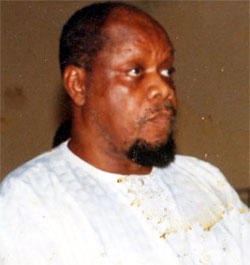
Odumegwu-Ojukwu
BY CHIOMA OBINNA
EVEN as former Biafran leader and leader of the All Progressive Grand Alliance (APGA), Dim Chukwuemeka Odimegwu Ojukwu, joined the list of Nigerians who have died of stroke-related problems, indications are that the development may not be as strange as expected.
“Statistics show that 20 per cent of Nigerians who died of stroke are confirmed patients of hypertension while many others with undiagnosed hypertension are even bigger potential patients of stroke.
“The situation is worsened by the growing tendency towards sedentary lifestyle in this part of the world which is fueling stress, obesity, diabetes, high cholesterol and other health hazards.

Chukwuemeka Odumegwu-Ojukwu
“Unfortunately, lack of emphasis on treatment management and prevention of cardiovascular disorders such as stroke in most hospitals across the country as well as lack of adequate education and information about the condition is not helping matters.“According to a cardiologist at the Lagos University Teaching Hospital, LUTH, Dr.
Amam Mbakwem, stroke is a leading cause of morbidity and mortality worldwide and the prevalence of the condition is on the increase in Nigeria due to hypertension, which is the most dominant factor for its occurrence.
Statistics including the one from the Division of Neurology, Department of Medicine, University of Ilorin Teaching Hospital, Ilorin, Nigeria indicate that the current prevalence of stroke in Nigeria is 1.14 per 1,000 while the 30-day case fatality rate is as high as 40 per cent.“Management of the disease is largely conservative while there is little or no funding for high-quality research.
Primary prevention is the key to reducing the burden of the disease in a country with such poor resources.“Stroke is a medical emergency requiring immediate treatment. Prompt treatment improves the chances of survival and increases the degree of recovery that may be expected.“Mbakwem explained that people with hypertension diabetes, elderly people, family history of stroke, high blood pressure, high cholesterol, smokers, obesity and overweight, cardiovascular disease, a previous stroke or transient ischemic attack (TIA), high levels of homocysteine (an amino acid in blood) and heavy use of alcohol, amongst others, are at risk of stroke.
“In Nigeria, up to 20 per cent of the cases are caused by hypertension; unfortunately, many of them are undiagnosed until they are down with hypertension.”“On how long a patient could live after a stroke attack, she explained that it all depends on the size of the blood vessels affected. “Manifestation varies. Some will live longer depending on the size of the vessels affected. If it affects the big vessels, it would widen the more and that will be much severe. Some will have minor neurological problems while some will die instantly. Depending on the area it affected and how well it was managed, some people do recover.” “A stroke happens when blood flow to a part of the brain stops.
A stroke, sometimes called a brain attack, occurs when a clot blocks the blood supply to the brain or when a blood vessel in the brain bursts. According to the size of the brain affected, lack of oxygen and glucose (sugar) flowing to the brain may results to the death of brain cells and brain damage. Stroke can cause death or significant disability, such as paralysis, speech difficulties, and emotional problems, movement, and memory loss, coma, or death. If not treated urgently, it could lead to permanent neurological damage.
A stroke is a medical emergency, and anyone suspected of having a stroke should be taken to a hospital immediately so that tests can be run and the correct treatment provided as quickly as possible.“There two main types of stroke: ischemic stroke and haemorrhagic stroke. Ischemic stroke accounts for about 75 per cent of all strokes and occurs when a blood clot, or thrombus, forms that blocks blood flow to part of the brain.
If a blood clot forms somewhere in the body and breaks off to become free-floating, it is called an embolus. This wandering clot may be carried through the bloodstream to the brain where it can cause ischemic stroke. “A hemorrhagic stroke occurs when a blood vessel on the brain’s surface ruptures and fills the space between the brain and skull with blood (subarachnoid hemorrhage) or when a defective artery in the brain bursts and fills the surrounding tissue with blood (cerebral hemorrhage). Both result in a lack of blood flow to the brain and a build-up of blood that puts too much pressure on the brain.
“The outcome after a stroke depends on where the stroke occurs and how much of the brain is affected. Smaller strokes may result in minor problems, such as weakness in an arm or leg. Larger strokes may lead to paralysis or death. Many stroke patients are left with weakness on one side of the body, difficulty in speaking, incontinence, and bladder problems.“
What causes stroke?“Ischemic strokes are ultimately caused by a thrombus or embolus that blocks blood flow to the brain.
Blood clots (thrombus clots) usually occur in areas of the arteries that have been damaged by atherosclerosis from a buildup of plaques. Embolus type blood clots are often caused by atrial fibrillation – an irregular pattern of heart beat that leads to blood clot formation and poor blood flow.“Hemorrhage strokes can be caused by uncontrolled high blood pressure, a head injury, or aneurysms. High blood pressure is the most common cause of cerebral hemorrhage, as it causes small arteries inside the brain to burst. This deprives brain cells of blood and dangerously increases pressure on the brain.“Aneurysms – abnormal blood-filled pouches that balloon out from weak spots in the wall of an artery – are the most common cause of subarachnoid hemorrhage. If an aneurysm ruptures, blood spills into the space between the surfaces of the brain and skull, and blood vessels in the brain may spasm. Aneurysms are often caused or made worse by high blood pressure.“
Symptoms of stroke“Within a few minutes of having a stroke, brain cells begin to die and symptoms can become present. It is important to recognize symptoms, as prompt treatment is crucial to recovery. Common symptoms include dizziness, trouble walking, loss of balance and coordination, speech problems, numbness, weakness, or paralysis on one side of the body, blurred, blackened, or double vision, sudden severe headache. Smaller strokes (or silent strokes), however, may not cause any symptoms, but can still damage brain tissue.“
How is stroke diagnosed?“Physical assessment – blood pressure and blood tests to see cholesterol levels, blood sugar levels, and amino acid levels.“Ultrasound – a wand waved over the carotid arteries in the neck can provide a picture that indicates any narrowing or clotting.“Arteriography – a catheter is inserted into the arteries to inject a dye that can be picked up by x-rays“Computerized tomography (CT) scan – a scanning device that creates a 3-D image that can show aneurysms, bleeding, or abnormal vessels within the brain.“Magnetic resonance imaging (MRI) – a magnetic field generates a 3-D view of the brain to see tissue damaged by stroke.“CT and MRI with angiography – scans that are aided by a dye that is injected into the blood vessels in order to provide clearer and more detailed images.“Echocardiography – an ultrasound that makes images of the heart to check for embolus.“
Treatment: “The primary goal in treating ischemic stroke is to restore blood flow to the brain. This will be attempted using blood clot-busting drugs such as aspirin, heparin, or tissue plasminogen activators that must be administered within three hours of the stroke.“A study found that cholesterol lowering drugs can prevent stroke recurrence.“Hemorrhagic stroke is treated differently than ischmic stroke. Surgical methods used to treat this stroke variant include aneurysm clipping, aneurysm embolisation, and arteriovenous malformation (AVM) removal.“
Prevention: Stroke prevention is based on living a healthy lifestyle. This includes:“Knowing and controlling blood pressure. Finding out if you have atrial fibrillation“Not smoking. Lowering cholesterol, sodium, and fat intake. Following a healthy diet“Drinking alcohol only in moderation. Treating diabetes properly. Exercising regularly. Moderate aerobic fitness can reduce stroke risk, a study found. Managing stress. Not using drugs“A study found that drinking three cups of tea per day reduces the risk of stroke. “Taking preventive medications such as anti-platelet and anticoagulant drugs to prevent blood clots.
Disclaimer
Comments expressed here do not reflect the opinions of Vanguard newspapers or any employee thereof.