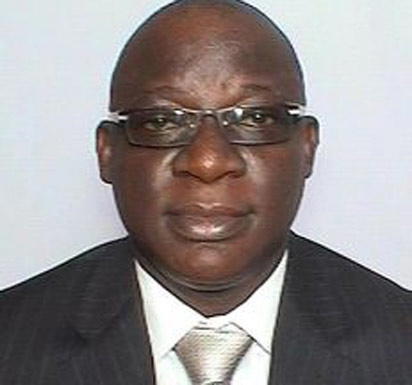
Sen Ewherido
BY HENRY UMORU
Senator Pius Akpor Ewherido (DPP, Delta Central) vice-chairman, Senate Committee on Marine Transport is the only Democratic Peoples Party, DPP Senator in the present Senate. Ewherido who sharpened his legislative skills in the Delta State House of Assembly where he rose to be Acting Speaker, in this interview articulates his views on contemporary issues including the insecurity situation in the land, his mission to the Senate and reasons why more revenue should be channeled back to the oil producing Niger Delta region. Ewherido, unarguably one of the leading political facilitators in his native Delta State, also makes a vow to use the platform of the Senate to make a change in the lives of his people.
How has it been so far since you came into the Senate?
It has been very interesting. You will recall that we started with the screening of ministerial nominees. That took about three weeks out of our calendar. After that, we went into full legislative business. There were a lot of motions and resolutions that had to do with the welfare of the Nigerian people and we took some executive bills that are under consideration now.
And of course that was the period that this ad hoc committee on the investigation of the privatization and commercialization of government companies was also set up. So far, it has been interesting, tasking and challenging. Tasking and challenging because we have used this initial period to see that the problems we face are very enormous and there is need to come up with legislations especially to address the issue of poverty, which is a product of unemployment and the issue of insecurity.
You will recall that the Senate had a session with the service chiefs and security chiefs. We had very fruitful discussions, discussions that were meant to inform us, to form the bedrock of our thinking, with regards to proffering solutions to the security situations in the country. Based on all these, a lot of us are working on proposals with regards to bills and motions that will soon come up on the floor.

Sen Ewherido
Shortly after your interaction with the security chiefs, the spate of bombings in the country increased. What is your impression of the briefings you received vis-à-vis what happened shortly afterwards?
Let me put it this way, there is always a difference between being briefed on a situation and when whatever action that will be taken will take effect. The National Security Adviser said it all when he said we were not prepared for this kind of bombings that are happening now. That much we knew. But preparations for whatever they are doing now have to take some time.
Even if it is new gadgets you have to bring and anti-bomb devices, it will take some time. You know we are not a manufacturing country of these devices, and that is the basic problem. So, whatever we need to prevent some of these things, we have to depend on some foreign countries to get those things. But you see, with regard to the security situation, a lot of basic things have to be done. For instance, do we really have a happy Police Force? Do we have happy security men in this country? Because that is a precondition for commitment to the job you are doing.
Because a man will ask himself at the end of the day, if something happens to me in the course of what I am doing, what is the guarantee that my family will be taken care of? You see, a man placing his life on the line must have some level of assurance. And these are things that I think the executive and legislature must seriously address, because if you don’t have commitment from the security forces it is very easy for them to be bought over, it is very easy for their morale to be affected. So, we can’t just look at it from the point of view that Oh, these people are not doing their job.
I believe in fundamentals. If a man is not doing his job, you must ask a basic question: why is the man not doing his job or why is he unable to function optimally. I think these are the issues first of all that we must address. Then we need a total reorientation in this country. And we must do this as a matter of urgency, because these issues are interwoven, the issue of insecurity, the issue of poverty, unemployment, and so on. These things are interwoven.
The only way you can get a man to commit the kind of heinous crimes that we see today is that the man is either idle, not because he doesn’t want to do anything, but because he cannot find paid employment that can guarantee some meals for his family at the end of the day. So, we must tackle the problem of poverty and tackling the problem of unemployment is the easiest way of tackling the problem of poverty. We must also create an enabling environment for the private sector to thrive.
There is no country that is developed on earth where government is the sole employer. Government is expected to provide the infrastructure, the enabling environment for industries to thrive. And if industries thrive, employment is generated. And if employment is generated, you wipe out poverty and all that. So, we must look at these things holistically. We must not just pick one in isolation, because they are interwoven like I said.
What value addition are you bringing into the 7th Senate that you think will make it different from the previous one?
I believe we should build on the gains of the former Senate. For instance, we need to revisit the Electoral Act, we need to revisit the burning questions in the country that were listed in the Senate President’s speech. As an individual, you know I have always said when asked why I opted for the National Assembly and what I think is the advantage vis-à-vis the state Assembly, I have always told people that as a legislator at the state level, I found out that there were too many constitutional hiccups for some of the things that are even fundamental to the growth of our peoples.
I come from the Niger Delta where we suffer so much from ecological and environmental degradation through spills and others from oil companies in our area. Each time we challenged them, we ended up with the constitution being placed before us, the exclusive list and the concurrent list. Legislators at the state level are restricted to the concurrent list. And of course, laws that have to do with oil and all that are on the exclusive list.
This means that we didn’t have any form of say in the way these people are operating and in the way their activities affect our people which we believe is wrong. And I vowed to myself that anytime I am through with the state Assembly, I was going to go to the National Assembly where I can be part of the vanguard that can make the oil companies and other federal institutions to be more responsive to the needs of our people. It has to do with social responsibility and response to the environment where you operate. You know it is a fundamental problem. Now, at that level there was no way I could address that.
Then this entire issue of biting poverty, biting unemployment and all that, if you make laws at that level that have to do with poverty, unemployment and all that – like I came up with a bill with my colleagues at the Delta House of Assembly on creating employment for indigenes of Delta and the first challenge we met then was whether it will conform with the constitution or whether it would even agree with federal thinking.
But at this level, you can’t be able to contribute to issues that will transform the place in terms of providing employment which are the things that we are talking about because employment can’t come without the growth of industry and industries can’t grow if the enabling environment is not there which we listed earlier.
Now I wanted to be in that group and during my electioneering campaign, I always told my people that I will give them selfless representation which means that I was going to report to them and get feedback and based on whatever feedbacks I get from the constituency will inform the kind of laws that I will participate in.
Let us go back to the issue of security, are you satisfied with the handling of the security situation so far by security personnel?
You see, I only pointed out the ones that I feel were more basic. But I believe that beyond the question of whether they are happy and trying to provide for them, even if a man is happy you must now provide equipment with which to work; you must also provide more personnel and other basic infrastructure for them to function optimally.
They have also on their own detected that they need to be more pro-active because what happens is that we only react after the havoc has been done. We should be able to ask ourselves some questions: Now that they are looking for where those bombs are made, that is a way of being pro-active. You don’t wait for the blasts to happen. Nip the thing in the bud by trying to track down those involved and those who aid and abet them. But I do admit that for our police and security agencies, the kind of crime they were used to were different and it will take some time for them to adjust.
Our plea is that the adjustment should be fast and the promise from the legislature is that by cooperating with the executive with regards to security matters, we would do everything that is legally possible to ensure that they get legislative backing to improve on the security situation in the country through enhanced equipment, enhanced personnel and infrastructure generally.
There is the Niger Delta Ministry, Amnesty programme and the NDDC, are you not satisfied?
For now, I agree that we have NDDC and Niger-Delta ministry, but the gravity of what transpired in the past is not what these palliative measures can wipe out. We have gone through years of ecological degradation of the area, the sources of livelihood of the people of the area were totally destroyed and these are people who have been cut off completely from civilization.
You need to be there, go into the creeks and see what our people suffer and you will understand that these are palliative measures. We need to open up the Niger-Delta up to civilization the quantum of money to do that is not what today is being budgeted.
Are you saying you have not felt the effect of the ministry in the region?
I did not say that, but not in the magnitude that is expected or that will solve the problems of the place yet. The problems are still there and very enormous if you go to the Niger-Delta. So our plea is for an enhanced package for the Niger-Delta. People always say you are getting so much, why are you still making so much noise, but we always counter by saying because we have suffered so much, and even having to have address the injustice of power is a thing that should be taken serious by the country.
Then having to get us to progress now is a more serious problem, as we sit here, predominant areas in the Niger-Delta are still cut off from civilization, we need to build bridges in the Niger-Delta.I believe opening up the place is more important than the things that are being done now. If you open up a place, a lot of things can happen, there is so much in terms of produce from the few fertile places that are still available. So if you open up the place, it will help the area. You see road construction is very costly in the place because of the swampy nature of the terrain.
There are too many rivers and for every other village, there must be bridges, that’s why I say we must open up the place. Yes there is amnesty programme, amnesty programme was there predominantly to get the militants back from the creeks where they were involved in fighting to a more productive path of peace. That was the major thing amnesty programme was designed for. Now it’s not everybody that is in the amnesty, not every Niger-Deltan, it was more especially for the militants. What of the non militants who are resident in the Niger-Delta? So the empowerment package must be a total one.
Are you going to do anything concerning the derivation formula?
I think it will be very criminal for this country not to increase the derivation formula. We have always said that in a pure federal system the resources will be explored by the people of the area and they will pay tax only to the centre. That is the prescription in fiscal federalism, but today Nigeria takes it and gives to the area what they want to give to it. So asking for 50% is not too much, it is because of the enormity of the area, but if we leave it at 13%, I think is not a fair deal to the Niger-Delta people at all.
In spite of the fact that you get so much gas from there, the creeks are places that have not enjoyed electricity in this country, because of the difficult terrain. But it can be achieved if you spend so much on it. So when I say opening up the area, I’m talking about building bridges, good roads and lighting up the area. This power thing is underrated in this, but it is of the basic thing for development, because if we have stable power today, all the industries will function and the generator bills will be reduced.
Even in your own house, calculate what you spend on NEPA bills and calculate what you spend on generators. But that is not the only thing that I think we need to address in the constitution, you know there are a lot of structural problems, the whole issue of looking at the entire revenue formula, you know there has been this agitation as an individual that the centre is too wealthy, the centre must shed weight for the states to have more.
I for instance don’t see what the centre is doing with road construction outside interstate roads. I believe the federal roads that are not inter-state should be dropped for the state and you know a commensurate shedding of weight with regards to what would have been used to either construct or maintain those roads should go to the state.
I also believe that the Federal Government should have no business with primary education, because the problems with primary education are localized. In the north you talk about nomadic education, but in my state for instance we don’t have that nomadic people who need to be educated.
Disclaimer
Comments expressed here do not reflect the opinions of Vanguard newspapers or any employee thereof.