By Bisi Lawrence
On the morning of Inauguration Day, May 29, I was by my television set no less than one hour before the ceremonies were to begin. A generator powered the TV set, as usual, – only it was rented this time, as my oId “noise-maker” had decided that the perfect time to check out on me was the previous night. But after almost five years of daily service, I thought it too might take a holiday like the rest of us.
And talking about holidays, May 29 this year fell on a Sunday; that is a non-working day, and so Monday was declared a holiday to make good the free day that was thus lost. That is our policy; when a holiday falls on a non-working day, we make up for it with a holiday on the next working day.
It is the same thing when two holidays fall on the same day, like an Easter Monday that falls on Independence Day. The Easter Tuesday becomes a holiday automatically. And why not? I mean, who is complaining? But, as a matter of fact, we all should.
Many people, especially those who are self-employed in the small business sector, would rather miss out on whatever the advantages of several of these multiple enforced free days might be. It is not a creditable comment on our sense of duty – our work ethics – that we seem to scrounge holidays out every possible occasion, without any regard for how it effects the over-all contribution to our productivity as a nation.
The practice was once dropped and, I believe, that was not badly received by the populace then.
But it was later resumed and the generality of the citizenry appeared to have welcomed it back. However, I am of the opinion that the matter would bear a sound re-examination. We might start by making the observance of some holidays voluntary to certain sections of the economy, like the local markets, banks, pharmacy and supermarkets. Several units within this category already select their own area of observance anyway.
This may not seem vital to the transformation that we all sincerely hope President Goodluck Jonathan’s era may usher into our national existence. But it is bound to affect what we think about our obligations, how we view our duties, and the importance we attach to our responsibilities, if only in an obscure degree. What we think – our pattern of thought – is key to our being, since thoughts beget other thoughts, and serve to formulate attitudes, as well as motivate actions.
Inauguration Day is, of course, a genuine twenty-four karat holiday. It marks the beginning of a new administration of the country and re-assures us of a continuance of the unceasing efforts to make our nation greater. Its observance should be total. As I watched the parade on Eagle Square, my heart rose on the wide wings of hope. I forgot, for a moment, that I should not be watching an important occasion like that on a rented generator-powered television.
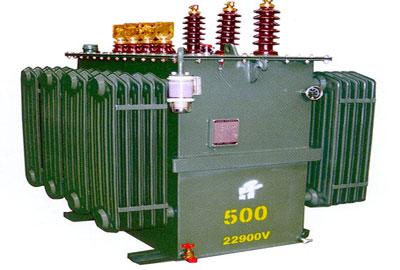
Currents flowing on a national grid through a transformer to my residence should have supplied me the power. Ah, transformer! That brings to mind the role that President Goodluck has pledged to perform in our national life.
The essence of transformation may be infused with immediacy, like a magical outcome. The transformer in electricity changes energy from one impedance or voltage to another in a process that generally produces a desired measure of refinement.
It all happens in a trice. While that is always true in the ‘material sense, the reality of transformation in behavioral change is usually manifested through a gradual but steady progress. Good1uck will achieve untold success if he can employ both strategies evenly by correctly deciding on what can be changed immediately, and what may require a bit of time and patience.
He won’t rid Nigeria of corruption tomorrow, but he can commence the building of the second Niger Bridge next week.
He can’t raise the standard of our education this month, but he can begin to find out the real problems – apart from funding – next month. He can’t turn around the declining fortunes of our agriculture overnight, but he can begin to plant the seed for regeneration today. He has to create jobs quickly, and resolve, as soon as possible, the Niger Delta Crisis.
The reforms of the oil sector are self-descriptive, and so is the crying need for us to restore an appreciable measure of security in every part of the country now. What with killings at one end, kidnappings at the other, and all sorts of mayhem in the middle, Nigeria is fast becoming an unsafe place on every side. The arrests of riff-rafts have proved ineffective; the ring-leaders must be sought out and stopped.
And may I add (and with no intention of being facetious) that some effort must be made to enable me to operate my television set on Inauguration Day (and any other day) without so much hassle. On that particular point, as you can imagine, actually hangs the solution of so many other problems. Our power supply in this nation today does indeed need a transformer.
8888888888 *on the parade ground 888888888888888
The officers who rode in the open vehicle that took President Goodluck Jonathan round the parade ground at the Inauguration Parade on Sunday, were from the army. One found that intriguing as we are supposed to be in a civilian regime, and one would have expected the escort to be provided by the police. No bones broken, anyway since, after all, the President is Commander-inChief of the Armed Forces.
It was another variety on the theme of presidential appearance on such occasions. President Shehu Shagari, one recalls, used to appear in a military uniform at Independence Day parades, as indeed his predecessor, Nnamdi Azikiwe did. President Jonathan stuck to his simple civilian attire, up to his felt hat. Impressive.
One also noticed a number of women on parade within the guards formed by detachments of the army, the navy and the air force. Their presence added a kind of depth to the match past. It may also reassure the women waiting for their inclusion in the “one-third” female quota appointment that there are other ways of making it.
If other women can serve so well in uniform, maybe they needn’t spend the rest of their lives waiting in mufti for a handout.
And that silent drill featured at the parade was simply so spellbinding, I didn’t want it to stop. It left me speechless, – yes, you might even say, silent – for a while!
The NTA coverage was, however, simply wishy-washy. For instance, the commentator (or was it one of the Masters of Ceremonies?) was dripping with excitement as he informed viewers that they were in for a treat since they were in the perfect position to watch a display of calisthenics that is, on a television screen. Unfortunately, we were denied the panoramic view that an aerial shot would have given us – and which would have made his statement true.
The height of the camera position was in no way adequate, and so the perspective of the provided picture was so poor that it was very difficult to decipher the words displayed by the young performers in the arena. And yet we were informed that there was a series of rehearsals before the broadcast. Didn’t the so-called producers know that you provided scaffolding for aerial shots specifically for such an occasion?
Julie Coker and Yinka Craig (of beautiful memory) had no problem with that in Tafawa Balewa Square several years ago. That was only one of the several unprofessional aspects of the coverage of one of the most important ceremonial occasions, which normally afford the electronic media the opportunity of flaunting its expertise before a captive audience. They blew it.
Even the AIT, a private organization, displayed more imagination in their camera positioning and expanse of coverage. They need a course on the basics of “Outside Broadcast” coverage and management in that NT A.
888888888888888888888888888888888888888888888888888888888888888888888
Echoes: Sir, your article about the new “Ka-bio-osi deserves commendation! Our governors and even local government chairmen in the Southern part of Nigeria are now the new Kabiyesi … (07053150533)
Echoes: Dear Bisi, the Emir of Kano’s disrespect reported in your Vanguard column of May 28, is unacceptable and should be condemned .The Emir is in no way higher than the VP of the nation. He assumes a bigger status than he has, because of the Northerners’ sheepish worship of royalty. (Chuma … 08057525085)
Dear Chuma, The disrespect was doubly on the VP’s side: he had no respect for the Emir by being so late, and that in itself shows little regard for time. Natural rulers were once highly regarded throughout Nigeria. They are still the custodians of our traditions and so deserve to be honoured.
Even in your own part of the country, the cognomen of”Igwe”, which means “The Sky”, speaks of how unapproachable, unquestionable, and immeasurable the majesty of a natural ruler is. I am aware that a number of elements in your part of the country revel in the reputation of the ‘republican” tradition which is ascribed to you.
But this is frequently overplayed because I also know, from close acquaintanceship with Nwafor Orizu, son of a traditional ruler, and Osita Agwuna, a traditional ruler in his own right, that the history of the Igbos records counterparts of the Obas and the Emirs that are in other parts of the country. The status of the Emir of Kano is conferred on him by tradition.
The texture is of a refinement that supercedes the artificial injunctions of protocols devised by officialdom to proclaim officialdom – which you, my dear Chuma, should stop worshiping sheepishly.
E
choes.’ Sir, please tell me to which big family does Mr. Goodluck belong. What we want is for him to bring smart, young people, possibly from poor, unknown families.
They will work and not steal our money,’ and even if they do, it will only amount to redistribution of wealth. Please stop selling us scions of Wellington families. They and your generation got us to this sorry state. (Emeka … 07030562006)
I am sure you mean “President Goodluck Ebele Jonathan”. There is no “Mr. Goodluck” around. He is already from a “big family”, and his progeny will become scions of a well-known family. Such people also work very hard because they have the advantage of usually being well-trained – and not all of them steal our money,. In fact, other classes of people have been known to be just as dishonest as any other.
What have you got against well-born people? Aren’t you proud of your birth? And are you sure you are not of my generation? What matters, at the end, is the character of the individual. The mention of a “scion” of a well-known family was by way of description, not in the manner of an advertisement.
But I am free to recommend anyone I fancy, aren’t you too?
(PS. Append your full names to your comments, please, to make them acceptable on this page)
Time out.
Disclaimer
Comments expressed here do not reflect the opinions of Vanguard newspapers or any employee thereof.