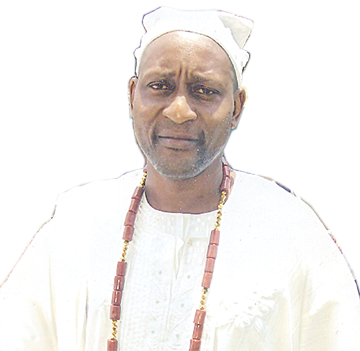
Bajulaiye
*‘It is an insult to claim Lagos is a no man’s land’
By Alade Aromashodu
Prince Ayodele Adedeji Oyekan, a son of the late Oba Adeyinka Oyekan and the Bajulaiye of Lagos, recently, celebrated his 50th birthday and 15th anniversary of his chieftaincy title. Oyekan used the occasion of the celebrations to speak to Sunday Vanguard on the claim by some people, especially the Igbo, that Lagos is a ‘no man’s land,’ and the significance of the Bajulaiye in Lagos and Benin Kingdom respectively.
Growing up
I was born into the family of the late Oba Adeyinka Oyekan II and the late Olori Florence Modupeola Oyekan who died in 1966, precisely a year after my father became the Oba of Lagos. My first three years in life, I stayed with my grandmother, the late Princess Adebisi Ogundimu of Akintoye Royal Family in Lagos at 20, Agodogba Court, Isale-Eko (hinterland of Lagos Island).
I came back to the palace in 1969, when I was enrolled at Aunty Ayo Preparatory School, Lagos; later, I attended Ireti Primary School and then Methodist Boys High School, for secondary school and finished my education in London. My father was more caring than our mothers.
Being a polygamous family, anytime our mothers quarelled, we, the children, would still sit together, have breakfast, lunch and dinner together without bothering about the differences among our mothers. Sometimes, all of us, the children, would even eat with our father. I really enjoyed my childhood and miss my late father so much.
You were based in London before returning home to become the Bajulaiye. How do you cope residing in Isale-Eko, an indigenous and traditional community?
All my years in London, I always told my friends from other countries and Nigeria that there is no place like home and that I will never swap Isale-Eko for any other place. Even if I build mansion at Park View, Victoria Island, I will still live in Isale-Eko, because I want to be among my people; I want to associate with indigenes of the community. I eat with my people in public, drink in the bar, mingle with them, etc. Before I travelled to England, I lived in Isale-Eko and can never swap it for anywhere else in the world.
How do you describe your late father?
I don’t think we the children can say much about him; the people of this community (Isale-Eko) are in a better position to describe him. He was a caring person; he loved his people, he would go to a great length to make sure that his people were okay.
I remember a time there was epileptic power supply during the late Sani Abacha regime, and the National Electric Power Authority, NEPA, wanted to give him priority so that there would be improved electricity in his palace. He refused, saying, “If you can’t give my people light, don’t give me, adding that, “let us all stay in darkness together.” He went on: “What is the point of me using light and my people don’t have light? What kind of Oba do you want them to call me?” Anytime he was coming from an occasion in his convoy and met people doing party on the street, he would never tell them to leave the street for him to pass.
He would alight from his vehicle and walk through the party to his palace. He always thought about his people.

Bajulaiye
What are those things you are missing that your father is not alive?
Well, there is always something you miss about your parents. I miss his care, his love because he would prefer his children to eat before he eats. If you go round Isale-Eko, people would tell you they miss my father.
What is the Oyekan family’s relationship with the current Oba of Lagos, Rilwan Akiolu I, like?
Kabiyesi is one of us. He’s from the Ologunkutere lineage like myself. In Lagos, we have what we call declaration. When a position is vacant, any of the princes is eligible to contest. So, we are all from the same family. Since the reign of Ologunkutere, all the Obas have been from the lineage (Ologunkutere). Oba Akiolu is our blood relation, he is a father to us, anybody that ascends that throne is a father to all princes and princesses, so we are all one. If we need anything, we consult him as our father.
What does it mean to be the Bajulaiye of Lagos?
My maternal great-great-great-grandmother was the last child of Bajulaiye. The woman, Oresan, represents a branch of the Bajulaiye family. She got married to Oba Dosunmu and gave birth to a son called Oyekan, i.e Oba Oyekan I, who was the father of Kushanu, that gave birth to my father, Oba Adeyinka Oyekan II. Our lineage had never been a chief in Bajulaiye’s Court (Iga) until I became one because everybody wanted to be king.
When the Bajulaiye position was vacant in 1976, my father asked me in London, if I was interested and I asked whether he had consulted other people at home (Nigeria), and he replied in the affirmative. When I came back to Nigeria, inspite of the consultations, I still struggled for three years before I became the Bajulaiye, as there was a conflict with some people who also showed interest.
We even went to court after which I became the Bajulaiye of Lagos on August 12, 2001. I thank God for sparing my life for 15 years on the throne and to celebrate my 50th birthday. I thank my children, grand children for the love and support they’ve given me over the years. Bajulaiye is a unique and significant chieftaincy title in Benin Kingdom (Edo State), where we originate from. Over there in Benin, they will tell you ‘Obazuaye’. Bajulaiye is a very important chieftaincy title in Benin Kingdom and Lagos.
Does the Bajulaiye chieftaincy family have any relationship with Bajulaiye Oja in Somolu in Shomolu Local Government Area?
All the chiefs in Lagos have landed properties. Areas like Pedro towards Obanikoro in Palmgrove, Ikorodu Road belong to the Onisemo chieftaincy family; Somolu Bajulaiye Oja belongs to me, the Bajulaiye chieftaincy family. Also in Somolu, we have Bashua, Suenu who are also chiefs in Lagos Island.
We all have landed properties all over Lagos. Ojon chieftaincy family comes from Ijon at Abule-Egba. Bajulaiye belongs to Abagbon title chiefs that have Ashogbon as the head but not the most senior, as we have Ogboni Iduntafa-Onilegbale; Head of Akarigbare – Eletu Odibo; Head of Idejo – Olumegbon; Head of Ogalade – Obanikoro and Ashogbon, Head of Abagbon.
The Bajulaiye is a unique title in Lagos. Ineso Bajulaiye ibini arokun taayo; Omo abiliki liki Abaja; Abaja epo tomorofo; Bajulaiye jigan larogun; Gbagan larogun; A bo ogun laruku dugbedugbe; Omo osupale, eni o gun lo; Eni owo bato kole tunse, Omo oju awo ni bi ka ku, Orisa-oke nio gbo tiwon, Omo ewekewe, omo egbo kegbo, Omo baba ta la fe fi gunse; Owo kembe rebija.
What are your challenges as the Bajulaiye of Lagos?
It’s not easy. As early as 6am, you have people waiting for Baba to come down. People will come for different things, some will come for kids school fees; some for monetary assistance; some for utility bills to be settled in their various homes.
Our salary isn’t much, but we thank God that we can assist people. Some people will come for help to secure employment; some for admission into tertiary institutions, etc. I thank God, if eight people come for assistance and I’m able to assist five or six, I’m okay. But those I can’t attend to immediately, I always plead with them to come another time.
What can you say about government and tradition in Nigeria?
Traditional leaders started democracy. Anytime they wanted to instal an Oba, the kingmakers would decide via voting, that’s how democracy started. Today, if there is an issue, the Oba will invite the Council of Chiefs and the community at large to deliberate which may end with voting to resolve the issue. Our past Yoruba leaders were too ambitious, people might express their views as they are entitled to their opinions.
In the North, the Sardauna didn’t take away power from Emirs; Zik never took away power from Igwes, Obis. The president will invite traditional leaders from across the country for meeting in Abuja. Why can’t he go to them? If the governor is coming now, Obas will stand up for him.
This is one of the things killing our nation. If there is respect for elders, there will be positive change in this country. Politicians have rendered Obas and chiefs redundant. If government invites traditional leaders to Abuja for deliberations on an issue, their views will not be considered. Traditional leaders are just like an advisory body to government now. From inception, our government has never been fair to the traditional institution.
Chiefs in Lagos use Keremes (white cap). What is it all about?
Keremes is the symbol of White Cap chiefs of Lagos. Keremes of White Cap chiefs of Lagos Island is unique as chiefs here are kings elsewhere. We are unique as baales that become Obas don’t have what we possess in Lagos Island. We have our tradition as we have been existing before many Obas in Lagos.
So, when we become Oba in our landed areas, we automatically become First Class Obas. Most Obas in Lagos are baales before they become Oba, but we are not; we are unique. Tradition has been what is keeping us together. What we do mostly is to appease our ancestors as it was done from time immemorial.
Government should endeavour to give traditionalists public holidays as they give Christians, Muslims, to celebrate their festivals. Celebration of tradition (Isese), which holds on August 20, every year, should be declared a public holiday for traditionalists to celebrate. Prayers offered on August 20 every year, by traditionalists and other religion leaders, keep the country alive.
What can you say about the Adamu Orisa festival in Lagos?
Adamu Orisa Play popularly called Eyo is a symbolic and significant tradition of Lagos. It’s done to bury important personalities in Lagos and staged once in a while; it could be once in five or 10 years. Eyo is a unique festival.
How do you view the position in some quarters, especially among Igbo people, that Lagos is a ‘no man’s land?’
Whosoever utters that kind of statement is insulting Lagosians.
And if I may ask, does it mean that when these strangers came to Lagos they did not meet indegenous people? Meanwhile, I do not blame them. Politics allowed such a reckless claim. And the situation is made worse by our hospitality.
We are so accommodating so much so that everybody resident in Lagos operates anyway he wants. Can the Igbo people contest election in other states where they are not indegenes the way they do in Lagos? However, we are not saying they should not contest election in Lagos but 90 percent of the slots contestable in the state should go to indegenous Lagosians. And we are trying to ensure that indegenous Lagosians are given 90 per cent slot in any election in Lagos under any party.
Disclaimer
Comments expressed here do not reflect the opinions of Vanguard newspapers or any employee thereof.