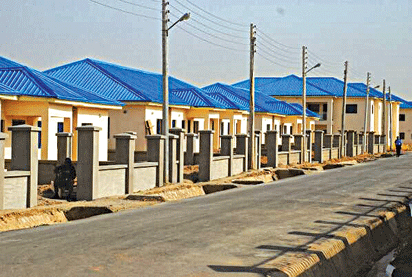
Typical houses requiring mortgage financing
By YINKA KOLAWOLE
The federal government is set to adopt six different house designs for its mass housing programme across the different geo-political zones of the federation, with construction expected to commence in the fourth quarter of 2016.
Minister of Power, Works and Housing, Mr. Babatunde Fashola, disclosed this at the first City People Real Estate and Housing Lecture held in Lagos. He also stressed the need to overhaul the nation’s mortgage system to make home ownership easy.
“We have concluded this, starting from about 21 different designs, working down to 12 and concluding on six. The designs would include one, two and three bedroom bungalows, blocks of 16 and 24 flats of one, two and three bedrooms and bungalows of one and two bedrooms.”
He explained that the one, two, and three bedroom bungalow designs will have court yards in order to make them respond to the climate change and cultural leanings of the north, adding that they would be built in states in the North-East, North-West and North-Central parts of the country. According to him, blocks of flats of one, two and three bedrooms and bungalows of one and two bedrooms will be built in the South-South, South-East and South-West regions and the Federal Capital Territory (FCT).
A release by the Special Adviser on Communications to the minister, Hakeem Bello,
said the housing blue print would lead to indus trialisation of construction which would, in turn, help to reduce delivery time from the estimated 18 months to about six months for a stan dard flat. According to him, the defi ciency in housing was largely due to the fact that the cost of building was high, leading to high cost of both purchase and rent.
He said the roadmap targets the low and medium income earners who are first time home owners. He added that aside certifying and accrediting developers from the pri vate sector, the agenda was aimed at proving the work ability and national accept ability of the new concept which, would be supported through government fund ing in the short term.
Fashola lamented the system of rent payment in the country. “It reinforces the need for a credit system in our real estate sector, where payments for rent are matched not only to the quantum but also the timing of income. The present system whereby people who earn their salary monthly were made to pay rent in advance was abnormal. People, who get paid weekly, monthly or yearly, should pay their rent weekly, monthly or yearly,” he said.
According to the minister, aside relieving a lot of pressure on ordinary working people, it would allow increased occupancy of many flats that are empty across the country, “because people cannot pay multiple year advance rent from weekly or monthly incomes they received in arrears.”
He reinforced the need for mortgage financing as a means to increase the rate of home ownership in the country, adding that it would both reduce the frustrations of landlords who depend on their houses for income. “Landlords who are saddled with defaulting tenants on one hand; and the trauma of families with children who are unsure when they will be thrown on the streets on the other hand,” adding that there are initiatives to generate alternative revenues.
Disclaimer
Comments expressed here do not reflect the opinions of Vanguard newspapers or any employee thereof.