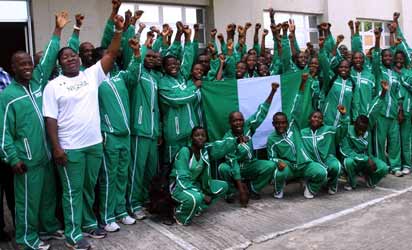
READY TO GO . . . Team Nigeria on arrival for the Africa Youth Athletics Championships ( AYAC), Warri 2013. Photo: Henry Unini
Over the years, FIBA’s Women’s Olympic Qualifying Tournament (WOQT) has proven challenging to African teams, but there could be history in the making next month when Nigeria take to the court in Nantes, France, reports FIBA.com’s Julio Chitunda.
That is where 12 teams will battle it out from 13-19 June to grab the five remaining places on offer for the Rio Olympics.
Eight out of 10 teams that reached the last two editions of the Olympics (2008 and 2012) via the WOQT were Europeans.
Senegal (0-2), Mali (0-2) and Mozambique (0-2) have all tried to qualify for the Olympics via the WOQT but all returned home winless. Back in 2008, in Madrid, Angola (1-3) beat Argentina in the Group Phase, yet they fell short in the Final Phase against Latvia and Brazil, who advanced to the Beijing Games.
In just over a month’s time, Nigeria will face Korea and Belarus in Group C while Cameroon will go up against Argentina and Turkey. One win in the Group Phase, followed by another in the Final Phase would guarantee Nigeria a ticket to Rio.
I have regularly written about Nigeria’s upcoming WOQT campaign and have also interviewed players, coaches, and officials. All in all, what amazes me the most, is the sense of confidence they express.
Even the country’s 42nd place in the FIBA World Ranking Women – the lowest among the 12 teams playing in the WOQT – doesn’t seem to deter them from dreaming big.
Head coach Scott Nnaji and his players will be travelling to Nantes in the hope of making history and replicating the feat achieved by Nigeria’s men at the highly-competitive 2012 FIBA Olympic Qualifying Tournament (OQT) in Caracas. Nigeria stunned the basketball world by securing one of the three tickets for London 2012 on offer and became the first African team to achieve Olympic qualification via the OQT.
The similarities between the two teams are real, starting from the number of talented players who, at some point in their careers, have played in top leagues around the world, followed by the self-belief that they seem to have instilled in them, and adding a sense of desperation that can make this Nigerian team a threat.
Disclaimer
Comments expressed here do not reflect the opinions of Vanguard newspapers or any employee thereof.