By Sola Ogundipe
Kudirat was 38 when Sekinat, her non-identical twin sister, challenged her to make her dream of motherhood a reality. Sekinat had just given birth to her second baby girl, within four years of marriage to Gbenro, her heartthrob of many years. However, Kudirat, the more outspoken of the duo, had not been as lucky experiencing the joy of motherhood.
While Seki maintained both of her pregnancies with ease, Kudi had not been as fortunate. Along with her husband— Jaiye—who she describes as her “soul mate” they had tried all they could to achieve the elusive conception without luck.

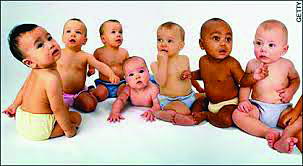
IVF: 5 million IVF babies have been born globally
“Wait”, was all they heard from the healthcare providers. Every doctor said the same thing—”be patient” or “keep trying”. But Kudi was getting fed up waiting and being patient.
Kudi and Seki had tied the nuptial knot at about the same time. But while Seki got pregnant almost immediately Kudi remained perpetually on the “waiting list” as she often put it. Aware that her fertility was declining, Kudi was getting desperate.
Over and over, she ruminated over Seki’s suggestion that she (Kudi) should try IVF with donor eggs or sperms. Seki had even sent her a few addresses and contacts of fertility specialists and clinics.
“One of the clinics that came highly recommended was Nordica Fertility Centre, Lagos. After my sister asked me what I was going to do about having children, I felt I should make an informed choice. Could I have a baby or not, I needed to find out, so we went to Nordica.”
At the fertility centre, given her age and medical history (she had been treated for endometriosis), the specialist urged that IVF using donated eggs or sperms would give the couple the best chance of success. But Kudi would have none of that.
“I decided to have treatment not with just any ‘known donor’, except my very self and my own Jaiye, not least because I was concerned about my child not knowing its real father and mother, but because I wanted my husband and I to have our own biological child at all cost.”
However, this meant a frustrating six-month wait before treatment could begin.
“We were told we had less than 5 percent chance of ever conceiving with our own eggs and sperms. But I was undeterred, and resolved to die trying. To me, 5 percent chance was better than nothing.
“When my eggs were first collected, there were only two, but the embryologist said they were the best quality but, unexpectedly, both failed to fertilise. The doctors said nothing went wrong with the process, that it was just the eggs that were just naturally unviable.”
The second attempt was even more traumatic. Again, Kudi failed to produce any viable egg after series of attempts and painful injections.
“At a point I reacted so much to the drugs and got so ill for several days, I was advised to stop treatment on medical grounds. Jaiye very much wanted us to have a child, but not at the expense of my health. He pleaded passionately with me to stop the IVF treatment. Although I gave in to his pleas, I stubbornly refused to give up trying.”
Kudi waited almost six months before another IVF attempt.
“On the day of the egg collection, I was overjoyed when I heard that 11 eggs were collected. Eleven! I still remember looking at those precious eggs on the computer screen and wishing with all my heart that one, just one would successfully fertilize and become an embryo.
“But we had to wait and I was going out of my mind long before the news came through. I prayed, and even fasted for a successful outcome.
“Eventually when my phone rang and the voice at the other end announced it was calling from the clinic, I held my breath and felt my heart thumping violently. I couldn’t believe my ears when I heard the news that we had six embryos. This was fantastic news! It was the best news I had heard in a very long while.
“Knowing we had six embryos was such a relief. Of course, only one would be transferred but six meant that there was a good chance of at least one being of a good enough quality by the fifth day, and if there were any extra, we could have them frozen in case the cycle was unsuccessful.
“On the 5th day at the clinic we were told that three embryos hadn’t survived, but the remaining three were doing well. Two would be frozen and one, a near perfect blastocyst, would be implanted. The embryo transfer was not painful at all.
“I waited nine days until I was allowed to take a pregnancy test, though I secretly promised myself I’d take one a day early.
Kudi was asked to report at the clinic for screening onthe day before she was due to take her pregnancy test. Before going to the clinic, she and Jaiye decided that even if this cycle failed, they would have as many attempts as possible before giving up altogether.
Coincidentally, it was also Kudi’s 40th birthday, so she knew what to wish for when she blew out the candles on her cake. That evening, just before going to bed, she remembered the home pregnancy test kit Jaiye had bought for her just before the first IVF cycle, almost a year earlier.
“Purely out of curiosity, I decided to try it out. Without telling Jaiye, I entered the toilet and was completely shocked to be confronted, minutes later, with a positive pregnancy test result.
“Trembling with excitement, I dashed out of the bathroom screaming ‘It’s positive! Jaiye, it’s positive!’ Without uttering a word, Jaiye simply opened his bedside drawer and brought out another pregnancy test kit. I bought this kit today. Let’s try again. This time we’ll do it together. They did and the result was the same – positive.”
Stunned but overjoyed, neither Kudi nor Jaiye slept a wink that night. The following morning went by in a blur. They went to the clinic, had the pregnancy test done all over again, several times in fact – this time blood tests – but the results didn’t change. Kudi was pregnant.
In the course of the following weeks, every imaginable test and scan was performed and all came back the same – normal.
Kudi’s joy knew no bounds and she went on to have a completely healthy pregnancy. Just last month, she gave birth to a baby boy – Ismail. Her admonition to women who experience infertility is to be more actively interested in their gynaecological health and well being and never ignore conditions that can potentially compromise their future aspirations.
Disclaimer
Comments expressed here do not reflect the opinions of Vanguard newspapers or any employee thereof.