By Kingsley Adegboye
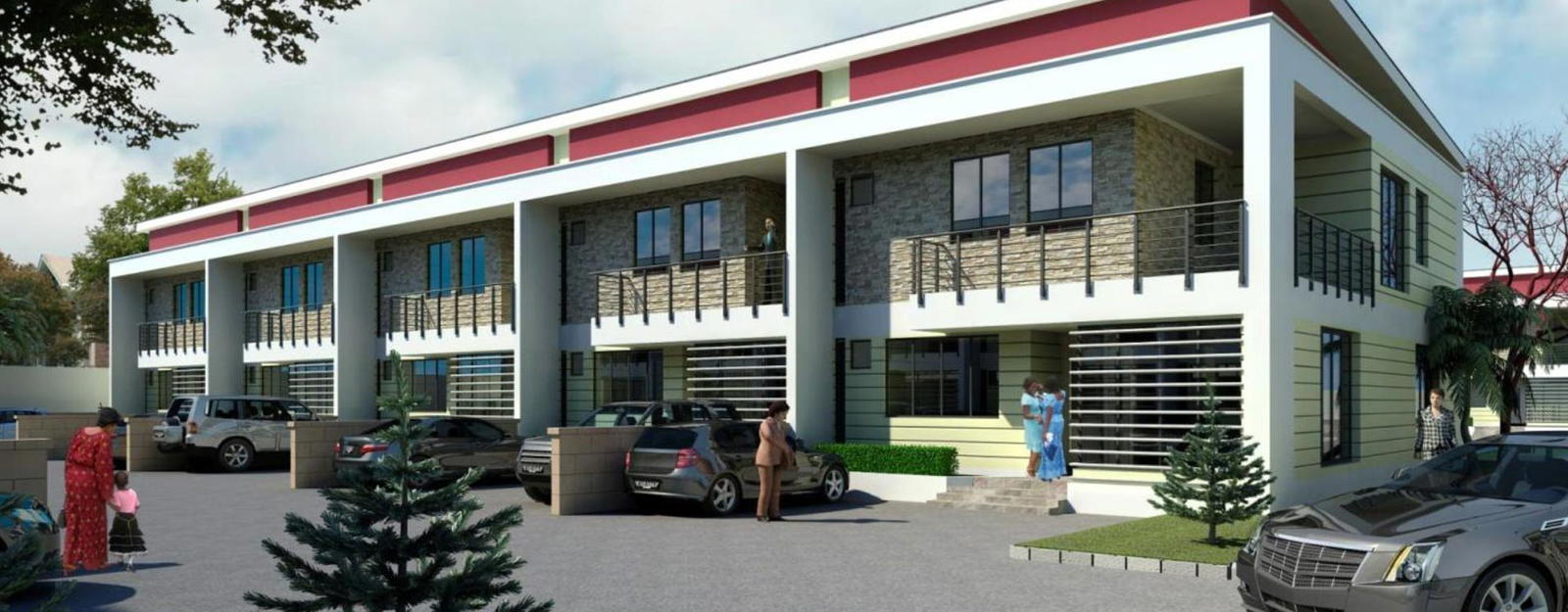
AS Nigeria continues the search for alternative building solutions to bridge the nation’s widening housing gap, Messrs Alpha Mead Development Company, AMDC, has introduced a modular building system aimed at lowering the entry level for middle income home buyers in Nigeria.

Modular house
The company which is the real estate unit of Alpha Mead Facilities & Management Services Ltd (AMFacilities) said last week that the modular building system which is also called form work panels, are aluminum panels that ensure strict quality control and curb wastage of building materials when compared to conventional building methods.
These disclosures were made by the Managing Director/CEO of AMFacilities, Mr. Femi Akintunde at a ceremony which the company used officially announce its partnership with Wall-Ties & Forms International, WTF. Akintunde who is an engineer, said WTF is a recognized world leader in the form work industry which produces and ships over 30 million ties a year.
Innovative technology
The company also exports over 200,000 aluminum concrete forms to Brazil, Singapore, Mexico and 42 other countries around the world.
Akintunde said the partnership with WTF is one of his company’s strategies to explore innovative technology to build quality houses, and lower the entry level for middle-income home buyers from the current market average of N6 million to as low as N250, 000 monthly payment without any initial large deposit or collateral.
The form works according to Akintunde, will ease the process of construction, drive down the cost of building by a very wide margin and increase the speed of construction to as much as delivering a house every week after the foundation.
The Alpha Mead boss who disclosed that the company has already recorded 60 per cent off-plan subscription on its flagship project, the 112-unit Lekki Pearl Estate where the form works are being used for construction, explained that the aim is to lower the entry level for home ownership to just regular income earners from whom the monthly N250,000 payment on installments can be met.
“We want to help middle income Nigerians who are unable to raise the large capital most developers demand as deposit, or are unable to build due to the large capital involved and other perennial challenges, as well as wastage associated with self-built houses,” Akintunde said.
The General Manager of the real estate development firm, Mr. Damola Akindolire noted that about 20 to 30 per cent of construction cost goes into waste such as broken tiles, damaged blocks, plywood, bamboo, personnel cost as a result of the extended period of conventional building systems and poor finishing.
“We are not just saying we want to drive down cost of owning a quality home because it is the right thing to say in a market with a very high entry barrier. Our focus is to lower the market entry barriers for home buyers through the use of technology that can help eliminate wastes that would have been built into the construction cost. The form works we are using on our site have the capacity of eliminating wastes and saving time. For example, our solutions can build a house in about seven days with an average of six to ten personnel without the use of cranes or heavy duty machinery. That means we can eliminate the cost of damaged building materials and pass that saving to our customers. Also, we can save the cost of paying personnel for about 50 days, if we had employed the conventional building methods,” he said.
Damola explained that the form works system is a win-win situation for the home buyers and the environment in this era of climate change because the technology ensures precision in building dimension and linearity. It reduces the use of wood thereby discouraging deforestation, and further drive down the cost of building because the panels can be re-used up to 1,000 times.
Mr. Ross Worley, the inventor of the technology and chief executive officer, Wall-Ties & Forms Inc. said the system which is the focus of the world now, has tremendous advantages over the conventional methods of building construction. According to him, the panels can be re-used up to 1000 times.
Disclaimer
Comments expressed here do not reflect the opinions of Vanguard newspapers or any employee thereof.