By Michael Eboh
The Nigerian National Petroleum Corporation, NNPC, Tuesday, blamed the fuel scarcity currently witnessed in some parts of the country on the strike action embarked upon by the members of National Association of Road Transport Owners (NARTO) and the Petroleum Tanker Drivers (PTD) over their disagreements with major oil marketers.
The NNPC in a statement signed by Mr. Ohi Alegbe, Group General Manager, Group Public Affairs Division, said the strike was in protest of the huge amount NARTO and PTD members claimed they are being owed by major oil marketers.
To this end, the NNPC said the truck drivers have refused to lift petroleum products from the coastal depots.
“We are, however, working towards a speedy resolution of the issues to ensure a hitch-free distribution of products across the country,” the NNPC assured.
The NNPC also appealed to NARTO and PTD to call off the strike in the interest of the country and not unleash unnecessary hardship on Nigerians.
Furthermore, the NNPC assured Nigerians that it has enough stock of petrol to service the country for 27 days at a national consumption rate of 40 million litres per day even as it has stepped up efforts to end the distribution challenges in the fuel supply system.
According to the NNPC, we have sufficient stock of petrol at our coastal depots in Port Harcourt, Warri, and Calabar besides the stock we hold in the national strategic reserves.
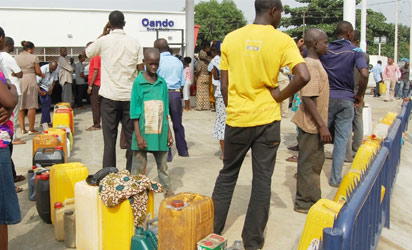
The fuel crisis has been a constant phenomenon in the FCT over the last three months, with long queues in filling stations across the state.
The crisis worsened in the last couple of days with motorists spending an average of 12 hours at petrol stations in their quest to purchase the commodity.
Also, majority of the fuel stations have also altered their pump price, selling between N100 and N130 per litre.
The prolonged scarcity has also brought in its wake, a hike in transport fares, commodities and services in the Federal Capital Territory, FCT.
In addition, as a result of the hike in transport fares, large crowd of pedestrians were seen at almost all the bus stops in the FCT, as one of the cab drivers told Vanguard that commercial drivers are left with no other option than to hike their fares, as most of them had to purchase fuel from the black market at a minimum of N200 per litre.
Disclaimer
Comments expressed here do not reflect the opinions of Vanguard newspapers or any employee thereof.