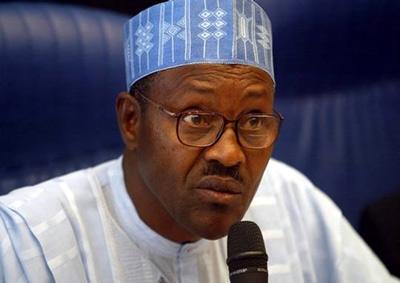
CPC Presidential candidate, Gen. Buhari
Read Deconstructing Buharimania (1)
By Douglas Anele
Keep in mind that one of the reasons Gen. Ibrahim Babangida gave for overthrowing Buhari was that the latter is too rigid and opinionated to preside over a multiply plural country like Nigeria. Because of desperation to win in his fourth attempt to become President, Buhari now campaigns as if he has a magic formula to solve the myriads of problems facing the country within four years. His supporters think that as a retired general he can crush the Boko Haram terrorists at the snap of his fingers.
Buharimaniacs who believe him without question conveniently forgot that Buhari, aside from his single-minded devotion to Islam, which fits comfortably into the Islamisation agenda of Boko Haram, had excoriated the federal government for trying so hard to liquidate the terrorists militarily instead of giving then amnesty just like late President Umar Musa Yar’Adua did for the Niger Delta militants.
To be candid, Buhari’s contradictory statements on Boko Haram indicates the ambivalence of a confused devout Muslim in a serious dilemma about how to deal with fellow Muslims trying to violently impose their bloodthirsty antiquated religious weltanschauung throughout the country. It is ironic that Tinubu, who in 2011 declared that Gen. Buhari represents expired leadership, is among those working relentlessly to install an “expired leader” as President. If that is the kind of change APC can offer, Nigerians should look elsewhere because it would lead to the tiresome condition of arrested development.
 Moreover, several kingpins of APC have held, and are still holding public offices at different levels of government. Yet, there is very little to show that they are trustworthy change agents. For instance, in APC controlled states, the problems of bloated cabinet, overconcentration of development in few urban centres to the detriment of the rural areas, emasculation of local governments, cronyism, and financial rascality are still rampant.
In my home state, Imo, the so-called achievements of Governor Rochas Okorocha in infrastructural development and education are insubstantial: indeed, roads constructed by his government are substandard whereas the state, once the leading centre in academic achievements at different levels of education, is lagging terribly behind. In my view, APC’s allegation of poor performance and financial recklessness against President Jonathan and PDP generally can also be validly levelled against APC governors. Meanwhile, a sizeable number of prominent APC members were formerly in PDP.
Obviously, it is hypocritical that chieftains of a party campaigning on the platform of change would enthusiastically welcome renegades from the very party they have been disparaging and criticising for years. I laugh when APC takes credit for the modest achievements of Rotimi Amechi, Rochas Okorocha and others before they joined the party. Perhaps, Tinubu and others are too desperate for power and would do anything to get it: their criticisms of the ruling party and enthusiastic welcome of PDP turncoats stem from jealousy rather than from sound ideological principles. Whatever might be the case, there is nothing outstanding to show in APC-controlled states that Nigerians should trust the party as the vehicle of positive change if its presidential candidate wins the election.
Let us now examine critically the foundation of Buharimania, namely, the reputation of Gen. Buhari’s as an honest principled strongman who can wipe out corruption in Nigeria. For most people, corruption is illegal and dishonest behaviour by people in positions of authority or power. That is why when the average Nigerian talks about corruption, he or she has in mind the illegal or dishonest behaviour of government officials in return for money or power.
However, corruption is all-pervading – it goes beyond giving and taking of bribes by people in authority. Taking a cue from Plato, corruption connotes change: it is perversion from the true nature and essence of a thing, process, or system. Thus, and most relevantly, as Obi Nwakanma stated, corruption is the inability of institutions established by law to prevent stealing and dishonest behaviour, or punish the offender when it occurs.
But the failure of institutions to function properly arises from the inability or plain refusal of individuals in charge of those institutions to carry out their duties effectively. Stealing and bribery are the commonest forms of official corruption globally. The difference between countries with respect to the quantum of official corruption is fundamentally cultural; it also depends on the nature of extant laws and willingness of people in authority to enforce existing anti-corruption legislation.
Corruption in whatever form is rooted in the basic conditions of human existence. Human beings are not perfect; they have a natural tendency to seek their own advantage sometimes through illegal and dishonest ways. Therefore, it is impossible to eliminate corruption. Nevertheless, countries create institutional bulwarks against it such that the propensity to act illegally and dishonestly would be drastically reduced. Nigeria, just like every other country, is grappling with corruption.
The Economic and Financial Crimes Commission (EFCC) and Independent Corrupt Practices Commission (ICPC) were established to deal with the problem at different levels. Now, despite claims By the EFCC that it achieved the highest number of convictions during the present administration, die-hard Buharimanics still insist, wrongly, that Jonathan’s government is the most corrupt in Nigeria’s history. I believe that President Jonathan’s laid-back attitude towards corruption and justified refusal to interfere with the legislature and the judiciary contribute to deliberate misinformation about his government’s achievements in fighting corruption. Certainly his government can, and should, do more to bring to justice the “high and mighty” stinking with the stench of corrupt enrichment.
But, all things considered, is Gen. Buhari capable of fighting corruption especially at the highest level as he boasted? Before we answer that question, let us consider some relevant facts about him. According to media reports, Buhari did not enrich himself while in office: that is quite commendable, considering the propensity of Nigerians to exploit political power and influence for bulimic accumulation.
On the other hand, what has the former military leader been occupied with since he left office? What value has he added to the Nigerian project outside official duties? There is no evidence whatsoever that he has improved himself academically or economically after leaving office as military head of state and chairman, Petroleum Special Task Fund; he has not been involved in any charity work either.
All this implies that Gen. Buhari, just like several APC kingpins, is like a fish out of water whenever he is not occupying one official position or another, that he does not have enough drive and skill to conceive, nurture and implement ideas for personal cum social development beyond what is readily available to him at the official level. This is a very significant fact about Gen. Buhari Nigerians have not paid attention to.
If, after leaving office several years ago Buhari went back to school to improve his knowledge, managed a business venture successfully no matter how small or founded a non-governmental organisation to champion any noble cause of his choice, APC’s argument for change through his leadership would have gained traction among those who maintain that he is out of touch with contemporary principles of political and economic management.
It is just not enough for a party campaigning for change to rely too much on the anti-corruption reputation of one man, based on careful suppression of inconvenient facts that tend to suggest that the person in question might not have stolen public funds but could not prevent those working with him from stealing. It is commendable if Buhari is as “clean” as his vociferous admirers claim.
Still, Nigeria needs much more than a President who would not steal money but cannot prevent others from stealing and hobnobs with some of the most corrupt politicians in Nigeria today.
To be continued
Disclaimer
Comments expressed here do not reflect the opinions of Vanguard newspapers or any employee thereof.