By Appolos Ibeabuchi Oziogu
THAT clarion call for development of the Education wing of National Museum stemmed from the fact that in the past, the teaching of African Studies in our Nigerian Universities and other institutions of higher learning had been treated with levity
National Museum is a special institution which is concerned with preservation of a country’s cultural heritage in the form of objects for research and study as well as aesthetic enjoyment. For the smooth running of its professional and administrative works, there are special units created basically for special services, one of which is Museum Education Unit.
Mr. Eken Akpan, a one-time keen follower of Nigeria’s educational development analysed the nation’s educational system in early 70s and emphatically pointed out that the educational system was more British than Nigerian. According to him, the British rocked the brains of the elites with English, Latin and Geography which qualified them for mere clerical duties and as interpreters both in the courts of law and public service.
In fact during the colonial rule, the colonial masters taught the nation’s forebears only the 3RS (Reading, Writing and Arithmetic). This type of education was basically designed to enable them do white-collar jobs rather than improve their technology, as technical education was not emphasized and equally true with vocational type of education.
There has also been a wide gap in the educational system as the importance of culture has not been emphasized. In cognizance of the above excruciatingly painful situation, a one-time Federal Commissioner for Education, Mr. Wenike Briggs stressed the importance and need for the development of the education wing of National Museum in Nigeria.
That clarion call for development of the Education wing of National Museum stemmed from the fact that in the past, the teaching of African Studies in our Nigerian Universities and other institutions of higher learning had been treated with levity. As a result, students were not privileged to study their culture.
For example, most of the Nigerian students today don’t known about NOK culture which provides evidence of the earliest ancient civilization in Nigeria (900 B C) neither do they know the place it was first found nor the villages where NOK is located.
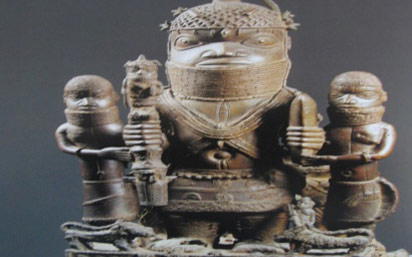
The Igbo-Ukwu culture, Benin culture and Ife culture to mention a few are what look some-what abstract or esoteric to many Nigerian students, hence the urgent need for establishing the Education Unit of National Museum, which would fill the wide educational gap and further foster unity among Nigerian youths of various ethnic groups.
The development of an Education Unit of National Museum started in January 1969 when two Nigerian Museum curators visited Uganda Museum in Kampala to see its education programme under Ford Foundation Travel Awards. It was after their return that the curator at the National Museum Lagos, Late Sam Adeloye initiated and started a series of education programme for school children at the National Museum Lagos which included a lecture on Nigerian Cultural history, a tour of the Museum and a motion picture on Nigerian art and culture.
The museum Education Unit also began a series of adult education programmes with a series of displays. Today, the unit has the sole responsibility of making all educational potentials and facilities in the museum available to schools, colleges and the public which could enhance and quicken their learning.
These museum collections are useful teaching aids for a great variety of subjects. Through the museum collections, knowledge can be felt. Subjects of abstract topics are made concrete and simple. Museum education is therefore basically on the principle of visual experience.
Museum Education Unit substitutes the poor quality of education in schools and colleges where students are not aware of tangible reality of the objects they are studying. Thus, Museum education Unit uses those cultural objects and relates them to the information gathered from the books for intellectual understanding and comprehension as well as enjoyment.
The role of Museum Education Unit in the National commission for Museums and Monuments (NCMM) is unique. In this era of technological advancement direct experience of natural materials such as wools, clay, palm nuts, mushrooms and calabash etc is lacking. Most children in the cities nowadays don’t know these natural materials physically or their traditional names and uses.

Culture Minister, Edem Duke
In fact, they don’t know the processes these natural materials undergo to give their desired end-products. They are not even acquainted with the traditional skills and methods of soap-making, pottery, mat-weaving, black-smiting, cloth-weaving neither are Picturesque illustrations enough!
Students need to have a practical knowledge of these original materials for study and research. They need to see them as to remember and torch them as to understand. In National Museums like Jos, and Kaduna for example, there are pottery sections, weaving sections, black-smiting sections, mat-weaving sections, leather-work sections etc.
In most other National Museums too, they have wood carving and bronze casting sections like Benin Museum. There are always Museum Education Officers on duty, skilled in the profession, who conduct the students on organized – tours and take them round these various sections for visual experience of what they have been taught about or read from text books or heard from the Museum Education Officers on duty.
Museum objects are three – dimensional materials or visual aids or teaching aids which are of a significant importance in the process of study and research. These objects are not only seen physically, but touched, handled and felt for more understanding and knowledge, thus the saying:
“I hear, I forget;
I see, I remember;
I do, I understand”.
Disclaimer
Comments expressed here do not reflect the opinions of Vanguard newspapers or any employee thereof.