In The National Interest: UK launch exposes deep frustrations about Nigeria, by Olu Fasan
Last week, on October 7, the London School of Economics, LSE, hosted the UK launch of my book In The National Interest: The Road to Nigeria’s Political, Economic and Social Transformation. Two LSE faculties—the Department of International Relations and the Firoz Lalji Institute for Africa—collaborated to organise the book launch, which included a public lecture. […]


Several months after fire tragedy, traders still count losses
SUNDAY June 9, 2013, is a day that traders at the Speedwell Plaza, Trinity Spare parts market in Olodi Apapa, now remember with pain and regret. It was a day their shops at the plaza were razed by fire that left them suffering huge losses and being heart-broken. Two years after, they are yet to recover from that disaster as they are still lamenting their losses. This is after several Save- Our-Soul, SOS, letters and appeals to the Lagos State Government have failed to yield any comforting response.
When $ became cheaper in the black market
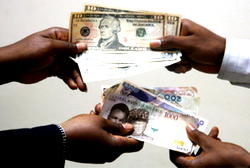
The actual value of dollars deployed for this purpose is not known, but it was certainly large enough to temporarily overwhelm subsisting Naira supplies with BDC operators to make the Naira relatively scarce against the dollar. It was consequently no big surprise therefore, that the heavy inflow of dollars into vibrant black market centres in Lagos, Kano, Ibadan, Port Harcourt, Abuja etc. quickly strengthened the Naira exchange rate below the official N197=$1.

Who is a Lagosian?
About 12, 15 years ago, when the issue of who is really a Lagosian was nothing more than a stimulating debate among friends, I had asked a friend to write an article on it for me. His was one of the more passionate voices when the issue was discussed at Ikoyi Club amidst banter and drinks then. He had every reason to be passionate. He was born and bred in Isale Eko, the ‘cradle’ of Lagos of Edo father and Yoruba mother.

Probe of NNPC from 1999 inevitable
The report by Everest Amaefule, went on to state that “The World Bank’s Chief Economist for Africa, Mr Francisco Ferreira, said looking into financial records of the country, especially allegations of corruption at the NNPC, would check impunity and build public institutions in the future”. While thanking Ferreira for his observations, it must be stated that Buhari does not really need the World Bank or any external organization before probing the Nigerian National Petroleum Corporation, NNPC, and others. He has our mandate to do so.

The fallacies of delusional negative triumphalism (3)
But expediency is not always right or else any anti-corruption measure, no matter how dehumanising and inhumane, would be justified. In the case we are discussing, Umaru Dikko could have died at some point in the perilous journey if his kidnappers had succeeded in their mission. Remember, there is no guarantee that brutal military methods, including lengthy prison terms, will eliminate corruption.