
Aziken
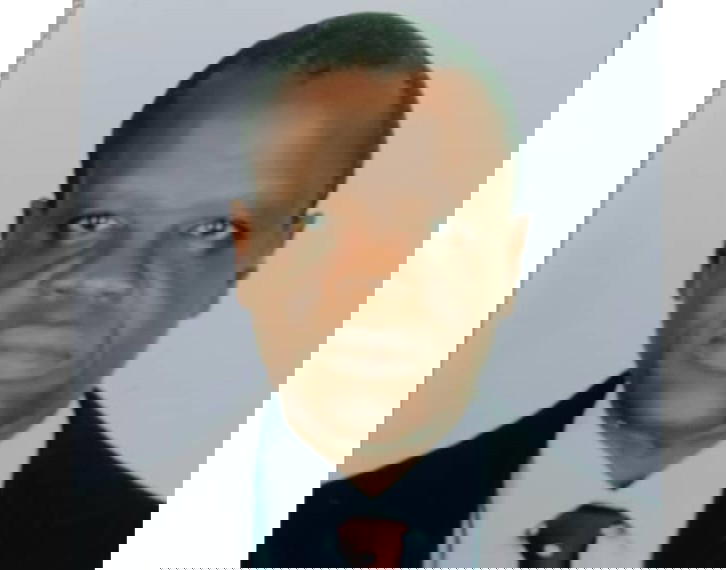
The defection of Abubakar Atiku Abubakar, son of opposition leader and former Vice President Atiku Abubakar, is the latest and perhaps most symbolic precision strike in President Bola Tinubu’s methodical dismantling of organised opposition.
This was not just another politician switching parties. This was intimate. Psychological. Almost theatrical.
A son of the man who wants to take over Tinubu’s seat not only abandoning his father’s political platform, but stepping into the rival camp and openly endorsing the very president his father seeks to dislodge.
In politics, defections are common. But defections of blood are rare.
That is why Abba’s move struck differently. It was not merely a crossing of carpets; it was a crossing of lines. A public repudiation not just of a party, but of lineage, political heritage and symbolic continuity. For an opposition already struggling to find coherence, the image of Atiku’s son pledging loyalty to Tinubu was not just damaging — it was disorienting.
Abba is not the first scalp from the Atiku political family wall.
Before him came Reno Omokri, one of Atiku’s most aggressive and visible social-media foot soldiers in 2019 and 2023. Reno was not just a supporter; he was a political attack dog. He specialised in demonising Bola Tinubu, deploying language so vicious that even some of Tinubu’s critics cringed at the excesses. To many in the opposition camp, Reno was not merely campaigning — he was waging ideological warfare.
Then came the conversion.
The same man who once painted Tinubu as the embodiment of everything wrong with Nigeria suddenly discovered new vocabulary. The demon became a democrat. The autocrat became a reformer. The villain became a visionary. And after his nomination as an ambassador, the transformation was complete. From derogation to adoration. From firebrand to incense bearer.
Many who watched that transition were less interested in the sincerity of Reno’s change of heart than in the machinery that enabled it. How does Tinubu do it? How does he reach into the inner sanctums of rival camps and extract not just supporters, but symbols?
Another surgical strike followed with Daniel Bwala.
Bwala had once dramatically walked out of the APC over the Muslim-Muslim ticket. He positioned himself as a moral protester, building an identity around resistance to the Tinubu-Shettima pairing. He became a familiar face on television, defending Atiku, attacking Tinubu, and presenting himself as part of a principled alternative.
Then suddenly, he too was back — not merely in the APC, but as one of its most energetic defenders. The man who once rejected the “vomit” now found it nourishing. The outrage dissolved. The rhetoric softened. The television appearances continued, but the target changed.
What is bewildering is not that people defect. Nigerian politics thrives on defections. What is bewildering is the quality of those being detached: communicators, mobilisers, emotional bridges between leadership and the streets.
From Reno to Bwala to Abba, the pattern suggests not random political drift but a calculated weakening of the opposition’s internal architecture. Tinubu is not trying to defeat his critics only at the ballot. He is amputating their megaphones, their messengers, their morale officers — and now, their myths.
Reno Omokri, in his own conversion testimony, pointed in the direction of Nuhu Ribadu, the National Security Adviser, as playing a role in his metamorphosis. Whether Ribadu also midwifed the political rebirth of Daniel Bwala remains open to conjecture.
What is clear, however, is that Ribadu occupies a unique relational space in this unfolding drama. He is not just the NSA; he is also an in-law to Atiku Abubakar. Another Atiku son, Aliyu Atiku Abubakar, is married to Ribadu’s daughter, Fatima. Politics rarely ignores bloodlines, and in Nigeria, family connections often serve as unseen corridors of influence.
Whether or not Ribadu had anything to do with Abba’s defection, the optics are impossible to ignore: the National Security Adviser standing on one side of the state, and the former vice president watching a son cross to that side.
The Atiku camp is deeply unsettled. Their reaction has not been loud, but it has been heavy. Associates of the former vice president insist that the APC “went for a son” who, they allege, has particular personal challenges. Out of respect, they say, they will not put those challenges in the public domain. But they bristle at what they see as the political exploitation of vulnerability.
True or not, that narrative introduces a darker layer to the saga. If politics has now descended into hunting inside families and probing private fragilities, then the battlefield has shifted from ideology to psychology.
Yet, even stripped of every conspiracy, the raw political symbolism remains devastating.
Even if Abba does not deliver a single extra vote to the APC, the image of a son campaigning against his father is a moral earthquake. It provokes questions voters rarely like to ask aloud: If a man cannot persuade his own household, how does he intend to persuade a nation? If loyalty fractures at the dining table, what hope is there at the ballot box?
Politics is not only arithmetic; it is also theatre. And this is powerful theatre.
It also raises uncomfortable reflections beyond Atiku. It forces a meditation on legacy. On the values parents transmit. On whether political convictions are taught, inherited, or merely worn. It reminds society that the real battleground is not always the rally ground or the television studio, but the living room.
Atiku’s own response has been characteristically calm. By insisting that he does not coerce anyone — including his children — to follow his political blueprint, he has taken a liberal, almost statesmanlike posture. He has framed Abba’s decision as personal agency rather than betrayal.
It is a commendable stance. But it is also one that will follow him. Because leadership, especially presidential leadership, is permanently on trial. Nigerians will inevitably ask whether the same hands-off philosophy would guide his governance, his party discipline, and his crisis management if he were to become president.
What is apparent is that political infidelity in Nigeria is no longer restricted to associates and allies. It is inching closer to the hearth. The opposition is not just losing members; it is losing metaphors. The imagery of unity, continuity, and collective struggle is being replaced by visuals of fragmentation.
Disclaimer
Comments expressed here do not reflect the opinions of Vanguard newspapers or any employee thereof.