Acknowledgements and gratitude (1)
This Christmas season I had intended to engage in a critical investigation of religion given the powerful theological significance of the controversial purported birth of Jesus on December 25.






65 more refineries, Hurray – but…
The release of licenses, in June this year, to 65 Nigerian companies to establish local refineries must be welcome news to everyone who is unhappy with the overwhelming Foreign Exchange bill for our fuel imports. The licenses were granted barely two weeks after President Buhari’s inauguration, and probably provide a strong indication of PMB’s burning desire to reduce Nigeria’s huge fuel import bill and hopefully also reduce or eliminate the incidence of subsidy in fuel pricing.
The poison in further devaluation
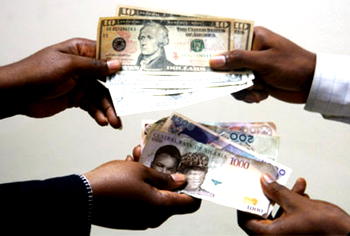
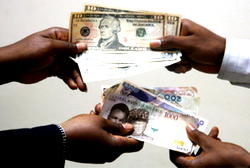
Indeed, Naira devaluation is probably the most potent weapon against the prosperity of Nigerians. Nigeria’s migration from a potential industrial power house with bustling social affluence, to a subdued and stumbling economy clearly began with the adoption of IMF’s Structural Adjustment Programme during Babangida’s regime: the chorus from International Agencies, at that time, was also that falling oil prices with an unserviced debt burden and the consequent restriction of trade credit to Nigeria, were the products of an allegedly overvalued Naira exchange rate.

High expectation for TSA
“First of all, you have got liquidity surplus in the banking industry; … there is over N1.3tn or so sitting in banks and belonging to government agencies. Now basically, they (these funds) are at zero percent interest and the banks are lending about N2tn to the government and charging 13 to 14%! Now, that is a very good business model, isn’t it? (You) Give me your money for free and I lend it to you at 14%; so why would I go and lend to anyone?”

Nigeria: Where prosperity is unconstitutional
Regrettably, this enabling reform that is clearly in consonance with the constitutional objectives has ironically been rejected on the ground that it is “unconstitutional”. Surely, for crying out loud, no one is suggesting that we should spend dollars instead of Naira; nonetheless, CBN appears insistent on cutting its nose to spite its face, as a payment reform that would facilitate the achievement of its core mandate for price stability is brazenly rejected as illegal.
Yoyo naira exchange rates and common sense
Notwithstanding, the CBN has again assured Nigerians, that the current Naira rate would be stable, as it is inappropriate for the tail (i.e. the small parallel market) to wag the dog. Nevertheless, the CBN may have been in denial of the inflationary potential on the economy of the ultimately higher market prices for rice and 40 other items recently banned from official dollar purchase.
Papa has a new bag of debts
Unfortunately, the National Assembly in its self-serving wisdom ignored this faux pas, and it is doubtful if the banks ever repaid this loan. Nigeria’s external debt stock has alarmingly continued its unrestrained spiral and now exceeds $10.3bn as at 30th June 2015, while the outstanding Domestic stock has also risen to N8.4 Trillion; furthermore, the debt stock of state governments has also risen above $10bn to make up a consolidated outstanding National debt of almost $64bn.

Double whammy of fuel import subsidies
It is ironical that despite the raging public debate on whether or not to sustain the regime of fuel price subsidy, our government may have, regrettably, once more, inadvertently doubled the existing N50/litre subsidy. The Petroleum Product Pricing Regulatory Agency’s template indicates that as at June/July 2015, the “subsidy free” price of petrol hovered around N140/litre; thus, the regulated pump price of N87/litre, implies that motorists currently pay over N50/litre less than the actual recovery price.

Economy: Mr. President’s unfortunate mis-step
The recent announcement by the Federation Accounts Allocation Committee, of over N760bn disbursement to cash famished states, was popularly regarded as a bailout package, despite clarifications from the President’s Media Adviser that the income was actually the constitutional entitlement of the three tiers of government.

‘The Economist’ and CBN’S “toothpick alert”
What is clear from ‘The Economist’ story, however, is the overriding message that investors want more Naira depreciation, so that speculative overseas investors can readily expand their portfolio of Nigeria’s listed equity for less dollar values. In pursuit of this objective, “The Economist” is ‘righteously’ alarmed that ‘instead of allowing the Naira to devalue” (the writer probably means depreciate as a currency does not unilaterally devalue itself) “the Central Bank is trying to defend the Naira rate by blocking imports”.

Fuel imports: The real cabal
A cursory survey of media reports on the downstream oil sector suggests that the prevailing popular belief is that a predatory cabal has a vice grip over the business of fuel importation. There is concern, therefore, that this, presumably, vicious class of businessmen would do everything to ensure that refineries will never work, and that the subsidy regime would subsist, while fuel supply will continue to be carefully manipulated to regularly induce artificial scarcity so that bountiful profits can be harvested from the attendant sufferings and economic dislocation deliberately caused by the oil cabal.