Acknowledgements and gratitude (1)
This Christmas season I had intended to engage in a critical investigation of religion given the powerful theological significance of the controversial purported birth of Jesus on December 25.







Should interest rates be legislated?
The promise to diversify Nigeria’s revenue source and reduce the nation’s dependence on dollar income from oil exports was sustained by earlier administrations. Curiously, however, as with previous administrations, there seems to be a convenient denial of the reality that, competitive production output, cannot be sustained in any sector, if critical monetary indices challenge the creation of vibrant economic activities and job creation opportunities.

The inevitable choice between N10,000 note and redenomination
Households across the Nation have become severely traumatized by the escalating prices of goods and services, particularly in the last six months or so. The uneasy feeling that one’s pocket has been picked has probably become common after every visit to the market, while the smallest available plastic sachet may be all that is needed to pack your N10,000 purchase(s) from the ubiquitous corner street medicine stores in our cities.

Economy: The blind leading the blind
A seemingly responsible fiscal plan will become unimplementable, in the modern era, if the underlying monetary indices are out of sync with budget projections. Conversely, the stubborn sustenance of appropriate monetary benchmarks for inflation, cost of funds and exchange rate may still rescue the performance of an otherwise bad budget.
Bdcs: Has the leopard changed its spots?
In January 2016, the CBN announced that it had stopped, with immediate effect, the sale of foreign exchange to Bureau de Change (BDCs), so as to reduce pressure on Nigeria’s foreign reserves. The CBN Governor, Godwin Emefiele, has therefore directed BDCs to henceforth source forex from the autonomous market.

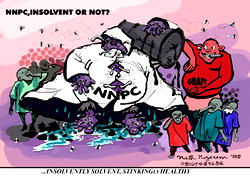
Fuel Price: The bone in NNPC’s Throat
The nagging question for any close observer of the market is whether or not diesel can sell above petrol and kerosene prices in a deregulated market space? If it cannot be so, how then does NNPC account for the present huge price differentials for both products, when diesel sells for over N200/litre? The following is a summary of an article published in May 2016, titled “Why Petrol will exceed N200/litre this year…unless”; nevertheless, with NNPC’s seeming helplessness and confusion with petrol and kerosene prices, “Fuel price: the bone in NNPC’s throat” seems a more appropriate title. Please read on:

An economy on the brink
A close study of our recent economic history would suggest that the present policies adopted by government, particularly with regard to Naira devaluation, and fuel price increase, are not different from the same strategies that triggered the oppressive serial abuse of the Naira exchange rate in the era of former President Babangida and sustained Nigeria’s steady slide in the rankings of the World’s poorest nations. Invariably, therefore, the ill advised rehash of those same options to resolve our present economic logjam will unwittingly deepen our poverty.

Economy: Kaleidoscope of recent media reports
“I was reading a story recently that there was SME intervention fund in CBN that was grossly underutilized. Why should that be when we have a lot of SMEs looking for funds to develop products? If we want to assist the SME, we must make sure that interest rate on their loans is not more than 5%. That is why Lagos State has used the benchmark of 3% interest rate for the SMEs …”

Nigeria’s debt creation office
In a recent document titled “Nigeria’s Debt Management Strategy 2016-19″, the Debt Management Office (DMO) expressed concern on the high risk collateral of servicing and refinancing the nation’s N8.54tn domestic debt which reportedly excludes over N2.4tn outstanding obligations on CBN’s sales of Treasury Bills. The DMO is clearly worried that refinancing of about 30% (N2.56tn) of the domestic debt, which will fall due, in the next 12 months, poses a threat to the economy because maturing debts will have to be refinanced at market rates which could be oppressively higher than the almost 11% average of existing debt.” Furthermore, the projected N984bn domestic loan in the 2016 budget, would raise this already disturbing domestic debt level by over 10% to propel debt service charges, dangerously beyond the current 35kobo from every one Naira of internally generated revenue by government.
This devaluation ‘be like’ 419
The ‘419’ scam is well known in Nigeria for boasting empty promises of stupendous returns which induce victims to willingly part with their valued possessions. The perpetrators of this fraud, ply their trade nationwide with targets which cut across the social spectrum and include otherwise, successful businessmen and highly educated professionals, who are usually gullible and driven by the unreasonable expectation of clearly unrealistic returns on their ‘investments’. Ultimately, the bubble would burst and much pain and sorrow would follow.

Economy: The floodgates have been breached
The CBN’s decision to float the Naira in response to dollar demand and supply, in such austere times, will probably be primarily remembered as another policy shift that breached the gates and unleashed devastating floods that swept away any flickering hope of economic diversification or credible inclusive growth. The serial devaluations dictated by the 1985 Structural Adjustment Programme (SAP) was another such event that disenabled our economy, traumatised our people and challenged our traditional value system in many ways.