
By Ahmed Maiyaki
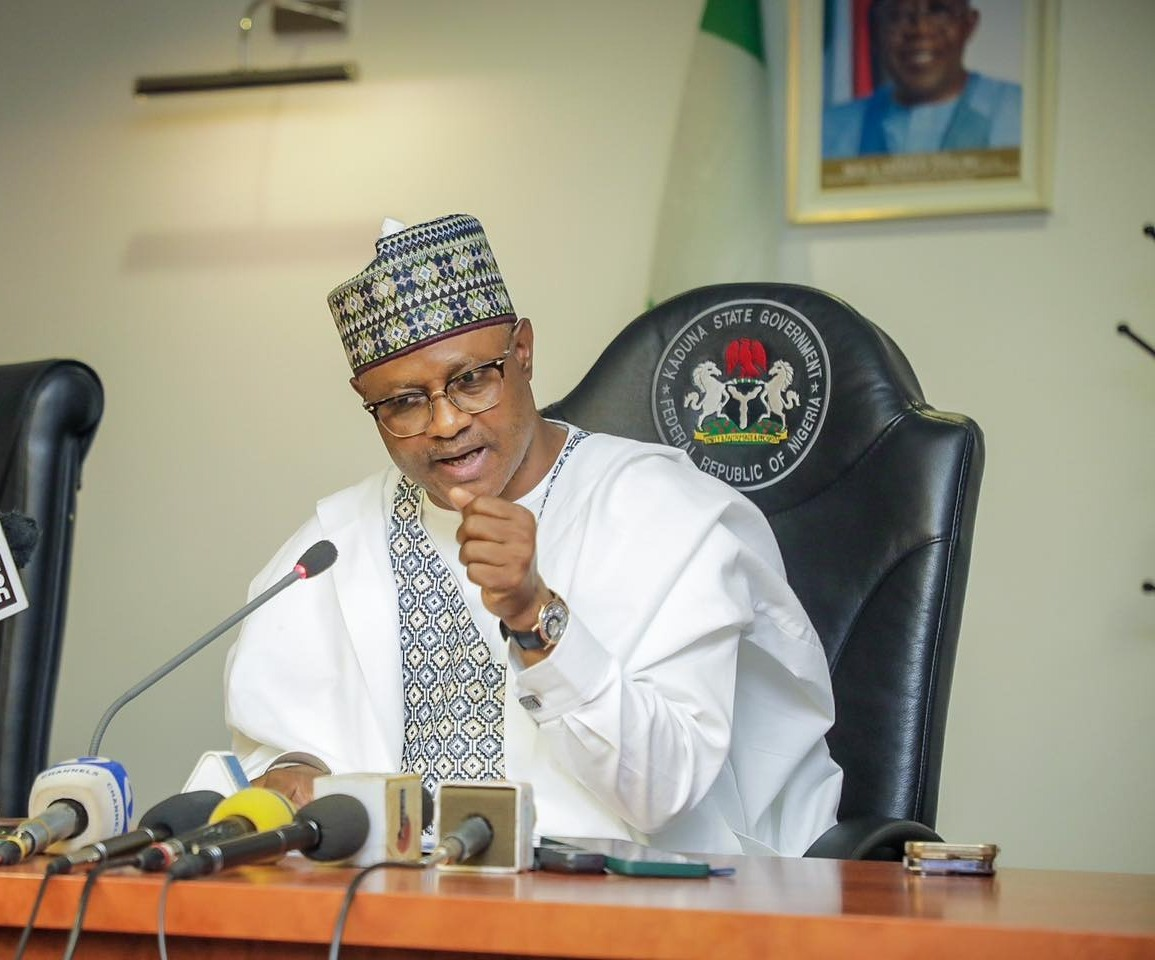
Three years after assuming office as Governor of Kaduna State, Senator Uba Sani has steadily built a governance model anchored on inclusion, compassion, infrastructure renewal, economic revitalisation, and sustainable peace. Across rural communities and urban centres alike, his administration has pursued deliberate, people-oriented policies aimed at restoring public confidence in government and improving the quality of life of citizens.
At a time when many subnational governments are grappling with economic uncertainty and social pressures, Kaduna State under Governor Uba Sani has remained focused on delivering practical solutions to longstanding developmental challenges.
From healthcare and agriculture to infrastructure, education, security, investment promotion, and social welfare, the administration’s interventions have continued to produce measurable outcomes with direct impact on ordinary citizens.
Governor Uba Sani’s leadership philosophy has remained clear from inception: governance must prioritise the people, especially the poor, vulnerable, and historically underserved communities.
As the Governor often says, “The true meaning of leadership is not measured by power or rhetoric, but by how many lives government is able to positively transform.” That philosophy has largely shaped what is now widely acknowledged as Kaduna’s emerging governance revolution.
In the health sector, Kaduna State has recorded one of the most ambitious healthcare expansion programmes in Nigeria. The upgrading of all 255 Primary Healthcare Centres to Level II status made Kaduna the first state in the federation to attain such a milestone, significantly improving access to quality healthcare services across rural and urban communities.
The administration also commenced the rehabilitation, remodelling, and equipping of 14 General Hospitals under Phase I, while work has begun on six additional General Hospitals spread across the three senatorial districts. Equally significant was the completion of the long-abandoned 300-bed Specialist Hospital initiated over 16 years ago.
Commissioning the facility in June 2025, President Bola Ahmed Tinubu described the hospital as “a landmark intervention that reflects the Governor’s commitment to strengthening healthcare delivery and improving the wellbeing of the people.”
The administration’s sustained allocation of not less than 15 percent of the state budget to the health sector, in line with the Abuja Declaration, further demonstrates its commitment to healthcare financing and improved service delivery.
Agriculture, the backbone of Kaduna State’s economy, has equally witnessed unprecedented support under Governor Uba Sani.
Over 240,000 smallholder farmers benefitted from the free distribution of 900 truckloads of fertiliser during the 2024 and 2025 farming seasons, while commercial farmers received subsidised inputs aimed at reducing production costs and boosting productivity.
The administration also significantly increased budgetary allocation to agriculture from ₦1.48 billion in 2023 to ₦74.2 billion in 2025. More remarkably, the allocation rose to over ₦100 billion in the 2026 budget, representing 11.6 percent of the state’s total budget and making Kaduna the first subnational government in Nigeria to surpass the 10 percent Malabo Declaration benchmark on agricultural financing.
The launch of the Special Agro-Industrial Processing Zone (SAPZ) further reinforced Kaduna’s strategic position in Nigeria’s agricultural transformation agenda.
President of the African Development Bank, Dr. Akinwumi Adesina, described the initiative as “a game changer capable of attracting investments, creating jobs, reducing food losses, and accelerating industrialisation.”
Infrastructure development has become one of the defining signatures of the Uba Sani administration.
Across the 23 local government areas, over 150 road projects covering more than 1,400 kilometres have either been completed or are ongoing. For the first time in Kaduna State’s history, twelve local governments that had never benefitted from state road projects are now connected through strategic infrastructure expansion.
The administration also delivered the longest single road project in the state’s history — a 35-kilometre road linking Igabi, Kajuru, and Chikun Local Government Areas, complete with a major bridge across River Kaduna, connecting over 76 farming communities and stimulating economic activities.
Governor Uba Sani has consistently maintained that development must not be concentrated only in urban centres.
“Development must reach every corner of Kaduna State. Rural communities deserve roads, hospitals, schools, water, and opportunities just like urban centres,” the Governor has repeatedly emphasised.
In the water sector, the administration confronted decades of neglect by declaring a State of Emergency and initiating comprehensive reforms aimed at restoring potable water supply across the state. Through massive investments in water treatment plants, pipelines, and distribution networks, over 1.5 million residents now enjoy improved access to clean drinking water.
Education has equally received unprecedented attention under the administration. More than 600 classrooms have been constructed and renovated, while 60 new secondary schools have been established, with additional schools currently under construction.
These interventions contributed significantly to reducing the number of out-of-school children from about 550,000 to 187,320 within three years.
Governor Uba Sani’s first Executive Order, which reduced tuition fees by 50 percent across all state-owned tertiary institutions, eased financial burdens on families and expanded access to higher education.
The administration also rescued Kaduna-sponsored students abandoned abroad by clearing over ₦407 million in outstanding foreign tuition liabilities.
One of the defining pillars of the administration, however, remains the Kaduna Peace Model — a people-centred security framework anchored on dialogue, reconciliation, intelligence gathering, community engagement, and socio-economic inclusion.
Unlike purely kinetic approaches, the Kaduna Peace Model recognises that sustainable peace requires trust-building, inclusion, economic empowerment, and social justice.
Through this initiative, communities previously devastated by insecurity — including Birnin Gwari, Giwa, Igabi, and parts of Southern Kaduna — are witnessing renewed peace and stability.
Improved security conditions facilitated the reopening of over 162 schools and 222 Primary Healthcare Centres previously shut due to insecurity.
The Office of the National Security Adviser (ONSA) commended the Kaduna Peace Model as “a viable template for conflict resolution, peacebuilding, and sustainable security management across Nigeria.”
Today, farmers have returned to their farms, markets are thriving again, and displaced communities are rebuilding their lives.
Kaduna’s improved peace and stability have also strengthened investor confidence and economic growth.
The state moved from 8th to 2nd position nationally in the Presidential Enabling Business Environment Council (PEBEC) Ease of Doing Business ranking. Within three years, Kaduna attracted over $3.51 billion in domestic and foreign investments, while Internally Generated Revenue increased from ₦62 billion in 2023 to over ₦71 billion in 2025.
Governor Uba Sani’s administration has also prioritised policies aimed at cushioning economic hardship and improving citizens’ welfare.
The state’s Compressed Natural Gas (CNG) transport initiative conveyed over 1.4 million passengers within five months, helping residents save more than ₦1.39 billion in transportation costs.
Recognising the impact of the programme, Governor Uba Sani approved the indefinite continuation of free transport support for civil servants, students, traders, artisans, and vulnerable groups.
The administration also paid over ₦17.8 billion in pensions, gratuities, and death benefits, restoring confidence among retirees and public servants.
In line with its broader vision for youth empowerment and economic inclusion, the administration established three Institutes of Vocational Training and Skills Development across the three senatorial districts.
The institutions are expected to train over 32,000 youths annually in ICT, welding, mechatronics, solar installation, carpentry, fashion design, and other modern vocational skills critical to today’s economy.
As Governor Uba Sani marks three years in office, Kaduna State is undeniably witnessing a gradual but steady transformation driven by strategic reforms, inclusive governance, and people-centred leadership.
The administration’s achievements across healthcare, education, agriculture, infrastructure, security, investment promotion, and social welfare demonstrate a government focused not merely on promises, but on measurable impact and sustainable development.
In the words of Governor Uba Sani, “Our goal is simple — to build a peaceful, prosperous, inclusive, and globally competitive Kaduna State where no community is left behind.”
Three years on, that vision is steadily becoming a reality.
Ahmed Maiyaki is the Honourable Commissioner for Information and Culture, Kaduna State.
Disclaimer
Comments expressed here do not reflect the opinions of Vanguard newspapers or any employee thereof.