
… Calls for new approach to diplomacy
By Nkiruka Nnorom
Legal scholar and energy expert, Prof. Yinka Omorogbe, has urged the Frderal Government to take the lead in driving Africa’s economic integration.
Speaking at the Nigerian Institute of International Affairs, NIIA, Foreign Policy Lecture Series in Lagos, Prof. Omorogbe called on the government to adopt a new approach to diplomacy that’s focused on practical action rather than past liberation efforts and challenged policymakers to rethink Nigeria’s role on the continent.
Delivering a keynote address with the theme: “The Power of Union: Nigeria, Integrated Markets and the African Century”, she argued that Africa’s prosperity would only come through deliberate implementation rather than mere aspiration and .
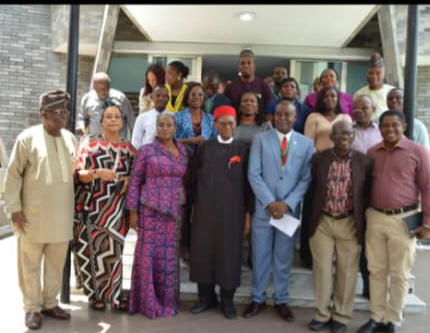
The lecture, attended by prominent figures including former Commonwealth Secretary-General Chief Emeka Anyaoku, Senator Daisy Danjuma, UAE Consul-General Salem Aljaberi, and NIIA Director-General Prof. Femi Otubanjo, centered on Nigeria’s capacity to anchor Africa’s economic transformation.
She noted the African Century represents the opportunity to convert the continent’s population, resources, markets and creativity into shared prosperity, but warned that it was “neither a prophecy nor a guaranteed fact,” describing it instead as a challenge that must not be wasted.
To achieve this, she said Nigeria must move beyond size and potential, which do not automatically translate to leadership or strategy.
She identified five roles Nigeria must play as a continental anchor, including transiting to a production hub that manufactures for Africa rather than relying on imports; an energy hub leveraging gas, power, refining and renewables as strategic instruments; a financial hub using its banking footprints to fund integration; a legal and regulatory hub that shapes contracts, standards and arbitration across the continent; and a diplomatic hub that shifts from liberation diplomacy to implementation-driven integration diplomacy.
She described the African Continental Free Trade Area, AfCFTA, and energy integration as the twin engines of the transformation.
While AfCFTA is a vehicle for structural change, she stressed it goes beyond cross-border trade to building industrialisation and regional value chains.
Highlighting Nigeria’s domestic paradox, she noted that despite its vast resources, about four in ten Nigerians still lacked access to electricity, saying: “Without affordable energy, development remains a pipe dream.”
Omorogbe also stressed that Nigeria cannot export integration if it has not built it at home. She called for urgent reforms to tackle insecurity, high logistics costs, port congestion and unreliable power supply.
To move from declarations to delivery, she outlined a 10-point action agenda. This includes making AfCFTA a national strategy rather than a single ministry’s file, aligning gas, power and refining policies with regional energy diplomacy, pursuing electricity reform with continental ambition, modernizing ports and borders, and integrating payment systems to facilitate local-currency trade.
Disclaimer
Comments expressed here do not reflect the opinions of Vanguard newspapers or any employee thereof.