
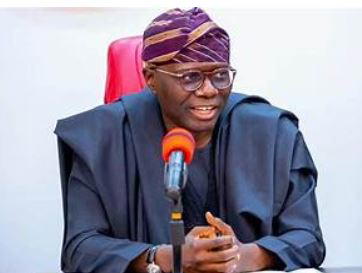
Gov Sanwo-Olu
.As experts call for resilience actions
By Olasunkanmi Akoni
The Lagos State Government has introduced a N2.5 million tree-planting prize initiative, aimed at encouraging residents towards boosting environmental sustainability, as well as mitigate the threatening urban heat challenge across the State.
Special Adviser to the Governor on Environment, Olalekan Rotimi-Akodu, announced the initiative on Friday, during a special programme, marking the 2026 World Environment Day celebration, held at the Johnson Jakande Tinubu,JJT, Park, Alausa,Ikeja.
This comes on the heels of the United Nations’ recognition of the state among 50 cities across the world with the potential of experiencing extreme weather temperatures of up to 50°C.
The event, themed; “Inspired by Nature for Climate, For Our Future,” focused on the role of nature-based solutions in addressing climate change and building resilient cities.
Rotimi-Akodu disclosed that the state government had planted over seven million trees since 2009 through the efforts of the Lagos State Parks and Gardens Agency, schools, communities, businesses and civil society groups.
He added that to commemorate this year’s World Environment Day the state is set to plant 500 trees across the metropolis with the and launch of a special initiative, tagged:“Me and My Tree.”
According to him, the initiative will provide free seedlings to participants, who will be required to nurture and maintain the trees for one year, after which the owner of the best-performing tree will receive a cash reward of N2.5 million.
“As we celebrate this year’s World Environment Day, the State Government, through the Ministry of the Environment and Water Resources, has committed to planting 500 trees to commemorate the occasion.
“The Ministry is also introducing a special initiative tagged ‘Me and My Tree.’ Under this programme, free seedlings will be provided to participants, who are expected to nurture them and ensure their survival. After one year, the best-performing tree will be awarded a prize of N2.5m,” Rotimi-Akodu said.
He noted that Lagos would also join other cities around the world in signing a pledge under the United Nations Environment Programme’s, UNEP’s 50 Cities at 50°C initiative, which seeks to address the growing challenge of extreme heat in urban centres.
He said the state had adopted the theme “50 Cities at 50°C: Lagos Rising Against the Urban Heat Island,” to align its climate adaptation efforts with global strategies aimed at mitigating rising temperatures.
Rotimi-Akodu warned that climate change, rapid urbanisation and population growth were placing immense pressure on cities, resulting in increased greenhouse gas emissions, loss of vegetation and rising temperatures.
According to him, “the World Meteorological Organisation confirmed that 2024 was the warmest year on record, with global temperatures exceeding 1.55 degrees Celsius above pre-industrial levels, while 2025 ranks as the third warmest year.”
Rotimi-Akodu, noted that Lagos, as Africa’s most populous city and one of the continent’s leading economic hubs, remained particularly vulnerable to climate-related threats such as sea level rise, extreme heat and flooding.
“Extreme heat affects every aspect of urban life. It impacts public health, labour productivity, energy demand, air quality and overall quality of life. Incidents of heat stress, dehydration, heat stroke and respiratory complications are becoming more frequent,” he said.
The special adviser highlighted measures being implemented by the state government to address climate challenges, to include; investments in an integrated transport system comprising Bus Rapid Transit services, rail transportation and water transport.
He said the initiatives were aimed at reducing traffic congestion, lowering emissions and promoting cleaner mobility options.
Rotimi-Akodu, added that the state had developed a Lagos State Health Adaptation Plan covering 2026 to 2030 to strengthen the resilience of the healthcare sector against climate-related health risks.
The plan, he said, would improve disease surveillance, integrate climate risks into health planning and enhance access to healthcare services for vulnerable residents.
“Government cannot build climate resilience alone. It requires the participation of everyone. The story of Lagos has always been one of innovation, ambition and resilience. Today, as we confront the realities of climate change, that story continues,” he added.
Earlier, the Global Chief Heat Officer for the United Nations Environment Programme, UN-Habitat and the Atlantic Council’s Climate Resilience Center, Dr Eleni Myrivili, stressed that extreme heat has become one of the most defining urban challenges.
Myrivili, who spoke virtually, added that extreme heat is no longer a future scare but has begun to shape lives across the globe, caused by a lack of green space, transportation and concrete flooring.
“For some cities, it might be 50°C and for others, it might be lower. The numbers may be different but whatever it is, we must prepare for it. That is what 50@50 is all about,” she added.
While highlighting various efforts by cities across the world to tackle extreme heat, she urged the identified cities to take the lead through actions that address their various peculiarities.
Also speaking, an Assistant Chief Meteorologist with the Nigerian Meteorological Agency, Benson Levi, raised concerns over rising temperatures in Lagos, warning that the city is experiencing a consistent upward trend in heat levels despite ongoing environmental efforts.
Levi revealed that long-term climate data spanning from 1991 to 2025 shows that minimum average temperatures in Lagos have continued to increase without any significant decline.
“The minimum temperature we are recording in Lagos is on the rise. It has not declined over the years,” he stated, stressing that the trend underscores the growing impact of climate change on Nigeria’s commercial hub.
Disclaimer
Comments expressed here do not reflect the opinions of Vanguard newspapers or any employee thereof.