
By Alumona Ukwueze
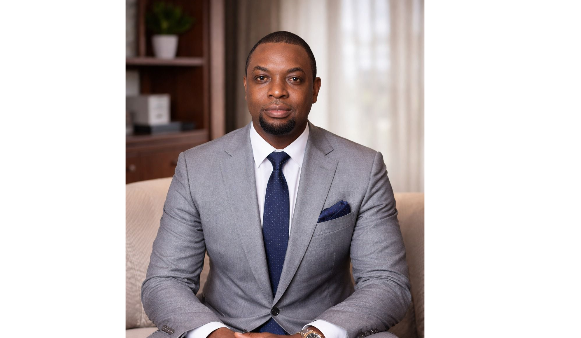
In a time when many Nigerians have grown weary of recycled promises and underwhelming leadership, Dr. Hilary A. Onyishi stands out as a bold, unconventional figure—one whose life journey reflects discipline, resilience, global excellence, and a deep, almost restless commitment to the people of Nsukka.
From the quiet community of Akpa-Edem to the high-stakes engineering environments of Ford Motor Company, Boeing, and Raytheon Technologies, Onyishi’s trajectory is not merely impressive—it is transformative. Yet, for him, personal success has never been enough. “I cannot continue to be outside, helping another country, while my own people are suffering,” he declares with conviction.
It is this urgency—this refusal to look away—that now drives his senatorial aspiration for Enugu North under the African Democratic Congress (ADC) in 2027, a bid he frames not just as a political ambition, but as a necessary intervention to “turn on the government” and restore dignity, opportunity, and hope to his people.
A World-Class Résumé Built for Leadership
If leadership is about competence, capacity, and proven results, then Dr. Hilary A. Onyishi brings to the table a résumé that commands attention and respect in any room—political or otherwise.With over 18 years of high-level experience across global engineering systems, Onyishi’s career has been shaped in environments where precision is non-negotiable and outcomes carry billion-dollar implications.
His journey through Ford Motor Company, Boeing, and Raytheon Technologies is not just a testament to professional excellence—it is evidence of a mind trained to solve complex problems and deliver measurable results.
At Ford, Onyishi broke barriers as the first Black African engineer to lead the redesign of the 2015 Ford Edge, a role that placed him at the center of global automotive innovation. The project was not merely technical; it was strategic, involving product competitiveness, cost efficiency, and large-scale coordination across international teams. The success of that program earned him recognition and awards, reinforcing his reputation as a leader who delivers under pressure.
His move to Boeing marked a transition into even more complex systems. There, he led quality engineering initiatives and managed multidisciplinary teams responsible for critical aerospace programs. His work involved building governance structures, ensuring compliance, and stabilizing high-risk projects—functions that mirror the demands of public sector leadership at the highest level.
At Raytheon Technologies, Onyishi’s impact reached new heights. Working on advanced defense and aerospace systems, including components used in fighter jets, he led redesign efforts that saved over $1.6 billion. These are not theoretical achievements; they are real-world outcomes that required technical depth, strategic thinking, and disciplined execution.
Beyond engineering, Onyishi has demonstrated strong capabilities in cost governance, risk management, stakeholder coordination, and institutional leadership. He has chaired high-level review sessions, managed large teams across continents, and delivered projects within strict timelines and budgets.
“I have worked with the best of the best,” he says, not as a statement of ego, but as a declaration of readiness. “Now, it is time to bring that experience home.”
In a system where leadership is often divorced from competence, Onyishi’s résumé stands as a powerful reminder that governance, like engineering, requires skill, structure, and accountability.
Beyond Words: A Proven Record of Changing Lives Through Empowerment
Long before the conversations around political office began, Dr. Hilary Onyishi had already been quietly building a legacy—one rooted in compassion, sacrifice, and a deep commitment to uplifting others.For Onyishi, empowerment is not a slogan; it is a personal mission shaped by his own life story. Raised by a single mother and having experienced firsthand the harsh realities of financial struggle, he made a decision early in life that would define his path: to become a source of hope for others facing similar challenges. “I am a definition of empowerment,” he says with clarity and conviction. “If I wake up and can count the number of people I have helped, then I have failed my God.”
That philosophy has translated into concrete, measurable impact across Nsukka and beyond. In the area of education, Onyishi has taken on the responsibility of sponsoring students, particularly those pursuing professional courses, ensuring they are supported from admission through graduation. For many families, this intervention has been the difference between abandoned dreams and fulfilled potential.
His influence extends beyond Nigeria’s borders.
Drawing from his own journey to the United States, Onyishi has facilitated opportunities for over 30 individuals to relocate abroad, guiding them through the process and helping them build new lives. These are not just numbers—they are stories of transformation, of families uplifted, and futures redefined.
At the grassroots level, his contributions are both visible and impactful. Through personal efforts and collaborations with diaspora organizations, including the Edem United Association in the U.S. and Canada, Onyishi has led initiatives that have delivered boreholes across communities, addressing the critical need for clean and accessible water. He has also supported the renovation of primary schools, improving learning conditions for children in underserved areas.
His interventions extend further into community development, including support for electricity projects and emerging efforts toward road infrastructure. Each project reflects a hands-on approach to development—one that prioritizes real needs over symbolic gestures.
What sets Onyishi apart is not just the scale of his giving, but its consistency and sincerity. His philanthropic work has not been driven by political ambition or public recognition; it has been a steady, ongoing commitment rooted in empathy and responsibility.
“I know what people are going through because I have been there,” he reflects. “And I will not stand by and watch.”
All-Inclusive Quality Education & Human Capital Development
For Dr. Onyishi, education is not an abstract policy discussion; it is a lived experience rooted in struggle, discipline, and determination. Having been raised by a single mother after losing his father at the age of three, he understands firsthand what it means to pursue excellence against overwhelming odds. From community primary and secondary schools in Edem to his eventual rise as a Ph.D. holder in Mechanical/Aerospace Engineering, his life embodies the very promise he now seeks to extend to others.He speaks passionately about the disconnect between Nigeria’s educational institutions and real-world development. Drawing from his experience in the United States, he emphasizes that no nation can progress when its universities operate in isolation from industry and government. “You cannot drive sustainable growth when the university, the government, and the industry are not talking to each other,” he insists, pointing to a systemic failure that has left thousands of graduates stranded without direction.
His vision is to fundamentally reposition education in Nsukka and across Enugu North Senatorial Zone as a tool for empowerment, innovation, and economic growth. He envisions a system where indigent students are not denied opportunities due to financial constraints, where teachers are properly incentivized and respected, and where academic institutions become active contributors to national development. For Onyishi, Nsukka—home to the University of Nigeria—should not merely be an academic town; it should be a thriving innovation hub capable of driving industrial and technological advancement.
Youth Inclusion, Skills & Opportunities
At the heart of Onyishi’s campaign lies a deep concern for young people, particularly the growing population of graduates who find themselves trapped in a cycle of unemployment and frustration. He does not hide his emotions when addressing this issue. “These are graduates, for crying out loud,” he says, his voice laced with both anger and urgency.His approach goes beyond rhetoric. Onyishi envisions a future where young people are equipped not just with certificates, but with practical skills that make them competitive and productive. He speaks of vocational training centres, digital innovation hubs, and structured entrepreneurship support systems that will enable youths to create value rather than wait endlessly for non-existent jobs.
He is particularly critical of an economy that has failed to evolve beyond consumption, noting that Nsukka is increasingly dominated by small-scale ventures like hotels that cannot absorb the growing workforce. What is needed, he argues, is a deliberate push toward industrialization and enterprise development. “We need industries. That is what creates real opportunities,” he emphasizes, underscoring his belief that empowering young people is the surest path to sustainable development.
Women Empowerment & Social Inclusion
Dr. Onyishi’s development philosophy is inherently inclusive, with a strong emphasis on the role of women as critical drivers of economic and social progress. He understands that in many communities, women bear the brunt of economic hardship while also serving as the backbone of family and community stability.
His vision is to create structured opportunities that enable women to thrive economically, particularly through support for small and medium-scale enterprises. He sees women not merely as beneficiaries of empowerment programs, but as partners in development whose contributions can transform entire communities when properly supported.
Beyond economic empowerment, Onyishi advocates for broader social inclusion, ensuring that vulnerable populations are not left behind. His approach reflects a leadership style that is both compassionate and strategic, one that recognizes that development must be people-centered to be truly effective.
Health Care & Social Well-Being
Healthcare, particularly at the grassroots level, occupies a central place in Onyishi’s agenda. He is acutely aware of the gaps in Nigeria’s primary healthcare system, where many communities lack access to basic medical services, and maternal health remains a significant challenge.
He envisions a system where primary healthcare centres are functional, accessible, and adequately equipped to serve the needs of the people. For him, healthcare is not just about infrastructure; it is about dignity and the right of every individual to live a healthy life.
Beyond medical services, Onyishi connects health to broader issues of social well-being, including environmental sustainability and food security. He speaks about community resilience, emphasizing the need to support agriculture and protect the environment as part of a holistic approach to development. In his view, a healthy society is one where people have access not only to healthcare, but also to clean water, nutritious food, and a safe environment.
Economic Growth & Job Creation
Economic revival is perhaps the most defining pillar of Onyishi’s vision. Drawing from nearly two decades of experience managing complex engineering projects and large-scale programs, he approaches economic development with a level of precision and structure rarely seen in Nigerian politics.
He is deeply critical of an economic system that has failed to create meaningful opportunities for its citizens.
“We cannot continue like this,” he says, pointing to the absence of industries and the over-reliance on low-income activities that do little to drive growth.His strategy is rooted in empowering small businesses, supporting farmers and artisans, and creating an enabling environment for local production. He believes that Nsukka and Enugu North possess untapped potential that can be unlocked through deliberate investment and policy direction.
More importantly, Onyishi intends to leverage his international exposure and network to attract investments and partnerships that can stimulate economic activity. His goal is not just to create jobs, but to build a resilient economy that can sustain long-term growth and prosperity.
Tourism, Culture and Creative Economy
For Onyishi, development is not only about infrastructure and industry; it is also about identity and heritage. He sees immense potential in Nsukka’s cultural and creative assets, which he believes have been largely neglected.He speaks of reviving cultural heritage, promoting eco-tourism, and supporting the creative industry as viable pathways for economic diversification. In his vision, Nsukka becomes a destination where culture is celebrated and monetized, creating opportunities for artists, performers, and entrepreneurs.
This approach reflects a broader understanding of development—one that values culture not just as a symbol of identity, but as a powerful economic resource.
Sports and Youth Development
Recognizing the role of sports in shaping young lives, Onyishi envisions a structured approach to youth engagement through athletics. He believes that sports can serve as both a platform for talent development and a tool for social cohesion.
His plan includes the development of grassroots sports facilities and programs that can identify and nurture talent while keeping young people productively engaged. In a region where youth unemployment often leads to social challenges, Onyishi sees sports as a strategic intervention that can inspire hope and discipline.
Infrastructure and Rural Development
Infrastructure remains one of the most visible gaps in Enugu North, and Onyishi does not shy away from addressing it directly. From poor road networks to unreliable electricity and limited access to clean water, he paints a picture of a region that has been neglected for far too long.
“Everything we want government to do—roads, water, electricity—we are about to unleash them,” he declares, signaling a commitment to aggressive advocacy and implementation.
He envisions a future where rural communities are not isolated but connected through functional infrastructure that supports economic activity and improves quality of life.
Digital connectivity, in particular, is a key part of his plan, as he recognizes its importance in a modern, technology-driven world.
A Leadership Philosophy Driven by Purpose
At the core of Onyishi’s aspiration is a clear and uncompromising philosophy: leadership must serve the people. He rejects the culture of political opportunism and godfatherism, aligning instead with reform-driven ideals inspired by leaders like Peter Obi.
“The interest of the people is paramount to me,” he says, emphasizing that his ambition is not about personal gain, but about collective progress.
His message resonates with a growing number of Nigerians who are eager for a new kind of leadership—one defined not by empty promises, but by competence, integrity, and measurable impact.
Ending Fear, Restoring Safety: A Bold Stand Against Insecurity
For Dr. Hilary A. Onyishi, insecurity is not just a policy issue—it is a direct assault on the dignity, freedom, and economic survival of the people. Speaking with unmistakable urgency, he condemns the rising cases of kidnapping and fear that have gripped communities across Nsukka, insisting that no society can thrive under constant threat.
“As a senator, kidnapping is gone in Nsukka. No Nsukka person shall be kidnapped any longer,” he declares firmly, signaling a zero-tolerance stance on insecurity.
While acknowledging that security requires collaboration across all levels of government, Onyishi emphasizes the role of proactive leadership in driving solutions, including strengthening intelligence systems, leveraging technology, and fostering community-based security networks.
Drawing from his global exposure and strategic experience, he believes that insecurity is not insurmountable but a challenge that demands coordination, accountability, and political will. For him, restoring safety is not optional—it is the foundation upon which economic growth, education, and social stability must stand.
Turning Anger into Change
Perhaps the most striking aspect of Dr. Onyishi’s narrative is his honesty. He does not pretend to have all the answers, but he refuses to accept the status quo. “I am angry,” he admits. “I am angry because my country is not working. I am angry because my state is not working. I am angry because Nsukka is not working.”
Yet, this anger is not destructive—it is transformative. It fuels a vision of a better future and a determination to make that vision a reality. “The time is now,” he insists. “We cannot sit back any longer. Nsukka must work.”
In Dr. Hilary A. Onyishi, Enugu North is confronted with a compelling possibility—a leader who combines global expertise with local understanding, personal sacrifice with public vision, and passion with a clear, actionable plan.
His promise is simple but powerful: to turn on a government that has long been switched off—and to make it work for the people once again.
Disclaimer
Comments expressed here do not reflect the opinions of Vanguard newspapers or any employee thereof.