
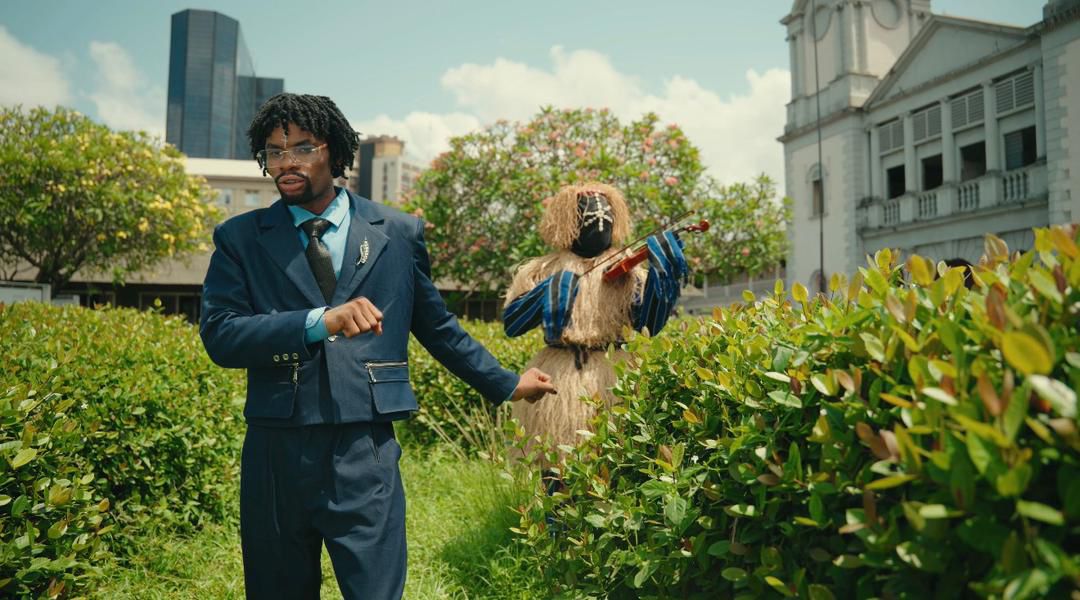
At first listen, Weh Ye does not announce itself loudly. It does not rush to impress or overwhelm. Instead, it settles, almost like a response rather than a declaration.
That choice appears deliberate.
For Dan RicHeE, Weh Ye is not simply another release under the New Skool Ogene (NSO) identity. It reflects a subtle shift, not in message, but in how that message is conveyed.
Where earlier records leaned more into outward expression, Weh Ye feels more internal. The confidence remains, but it is quieter, more controlled, and at times, almost spiritual in tone.
Built on a foundation of guitar, violin, and bass-driven rhythms, the song stays rooted in culture while moving within a contemporary soundscape. Rather than separating tradition from modernity, it allows both to exist side by side. This balance extends into its visual interpretation, where traditional elements meet modern presence without conflict.
Lyrically, Weh Ye functions less as a declaration and more as a response, a phrase that repeats, settles, and becomes understood rather than explained. It is not loud, but it is firm; not aggressive, but assured.
That restraint defines the record.
Within the broader NSO framework, which has increasingly been positioned as more than a sound, Weh Ye contributes to an ongoing expansion. It suggests that the system can carry not only movement and intensity, but also stillness and presence.
Produced by Sparkzy Minded, mastered by Destro, and written by Chimezie Chima Richard, Weh Ye was released on May 13, 2026, alongside an official music video directed by Thecinemafilms.
In a landscape where attention is often driven by volume and repetition, Weh Ye takes a different approach. It does not attempt to dominate space; it allows the listener to engage on their own terms.
And in doing so, it reinforces an evolving idea around Dan RicHeE’s work:
This is not performance.
This is presence.
Disclaimer
Comments expressed here do not reflect the opinions of Vanguard newspapers or any employee thereof.