
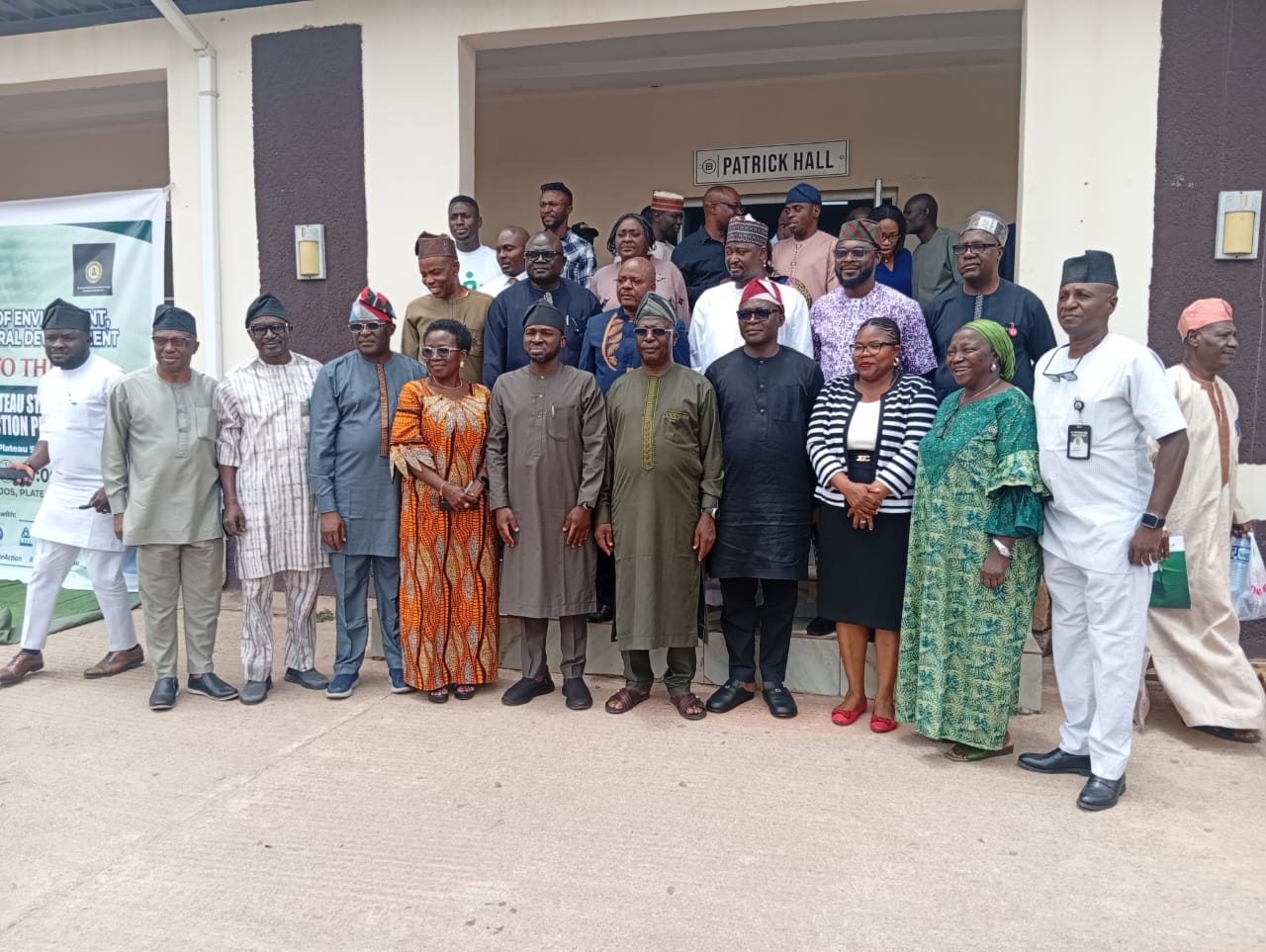
Jos – Efforts to build a climate-resilient Plateau State received a major boost on Thursday with the formal unveiling of the Plateau State Climate Change Policy and Action Plan (2026–2030), as the Centre for Gospel Health and Development (CeGHaD) rallied stakeholders to drive its implementation.
At the public presentation in Jos, Governor Caleb Mutfwang reaffirmed his administration’s commitment to tackling climate change and urged all stakeholders to ensure the policy does not remain on paper.
Represented by his Chief of Staff, Jeremiah Satmark, the governor warned that society faces “looming danger” if environmental challenges are ignored.
He noted that the green colour of his signature cap symbolises his administration’s dedication to environmental sustainability through agriculture and ecological protection.
Commissioner for Environment, Climate Change and Mineral Development, Peter Gwom, described the policy as a timely response to growing environmental threats affecting the State and beyond.
“Over the past decades, we have witnessed profound changes in atmospheric conditions across the globe,” he said. “Rising temperatures and shifting climate patterns have intensified environmental challenges, making climate change one of the most pressing issues of our time.”
Gwom explained that Plateau State is already experiencing the effects through “heat waves, drought, desertification, changing rainfall patterns and flooding,” which continue to place pressure on livelihoods, ecosystems and water resources.
According to him, the policy provides “a comprehensive framework for addressing the impact of climate change through mitigation, adaptation and sustainable development strategies,” while establishing legal and institutional structures to guide action.
He added that the document was developed through an inclusive process involving all 17 local government areas, ministries, civil society organisations and community stakeholders, with deliberate participation of women, youth and persons living with disabilities.
“As a Ministry, we remain fully committed to driving the implementation of this policy through strong institutional coordination, strategic partnerships and continuous stakeholder engagement,” Gwom said, stressing that collective action is essential for success.
Also, the Executive Director of CeGHaD, Nansik Onu, called on citizens and institutions to seize the opportunity presented by the policy to secure the future.
“Plateau now has a policy and an action plan to address climate issues. The Assembly is well structured; we should all take responsibility and buy into the implementation of the policy so we can have a more resilient state,” she said.
Onu disclosed that the initiative was co-funded by the European Union and the Christian Blind Mission, noting that years of effort had culminated in a practical roadmap to guide implementation.
The Plateau State House of Assembly pledged legislative backing for the policy.
Representing the Speaker, Na’anlong Daniel, a lawmaker, Mark Na’ah, assured that the document would receive expedited consideration once presented as a bill.
Experts and stakeholders also emphasised the need for ownership and sustained investment.
Professor Raymond Daspan of the University of Jos emphasised the importance of timely implementation to ensure the policy delivers measurable and sustainable outcomes.
Climate change specialist David Wuyep urged stronger engagement from civil society and the private sector.
“The Climate Assembly should be the most active and productive one. Plans identified should be funded by civil society organisations, while the private sector should identify areas for investment,” he stated.
Speaker of the Climate Assembly, Desmond Chollom, added: “This is a roadmap to achieve set targets between 2026 and 2030. Documents will not build resilience—people will. We must work to bring the policy to life.”
Other contributors, including Olivia Dazyam of the State Gender and Equal Opportunities Commission and Jos South Chairman Patrick Dung, commended the policy’s inclusive approach and pledged support for its implementation.
They stressed that translating the policy into measurable outcomes would require coordinated action, adequate funding and sustained collaboration across sectors.
The unveiling marked what stakeholders described as the beginning of a new phase of climate action in Plateau State, with CeGHaD and its partners positioned at the forefront of mobilising support for a greener and more resilient future.
Disclaimer
Comments expressed here do not reflect the opinions of Vanguard newspapers or any employee thereof.