
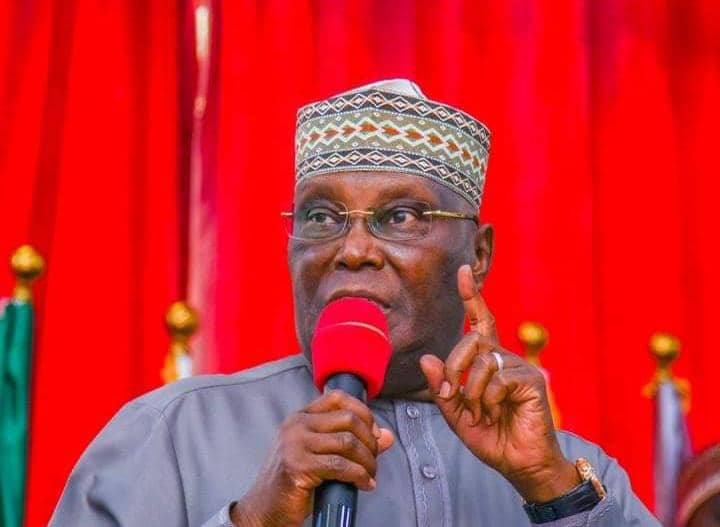
Atiku Abubakar
By Omeiza Ajayi
Presidential candidate of the African Democratic Congress, ADC, Atiku Abubakar, has challenged President Bola Tinubu’s administration to urgently overhaul Nigeria’s counterterrorism framework, warning that terrorists are continuously refining their tactics while the government appears incapable of doing the same.
Atiku raised the alarm in a statement issued on Thursday by his Senior Special Assistant on Public Communication, Phrank Shaibu, saying the disturbing spread of terrorism, banditry, and kidnapping from the North to other parts of the country was proof that the current security architecture was failing to evolve as rapidly as the threats it was designed to defeat.
“The terrorists are learning from every attack. They study their successes and failures. They refine their tactics. They identify vulnerabilities. They adapt and strike again. The question Nigerians must ask is simple: Why isn’t the government doing the same?” Atiku said.
He described a grim cycle that has become routine across the country: an attack occurs, the nation mourns, promises are made, committees are announced, and another attack follows.
“From Chibok to Oyo, from countless villages in the North-West to communities across the Middle Belt and beyond, the pattern has become tragically familiar. A nation that refuses to learn from its tragedies is condemned to relive them,” he said.
Atiku argued that Nigeria’s counterterrorism efforts have for too long depended on centrally designed and largely imported frameworks that pay insufficient attention to hard-earned lessons from communities that have directly borne the scars of terrorist violence.
He called on the Federal Government to immediately initiate a comprehensive review of the National Counterterrorism Policy, insisting that such a review must be rooted in Nigeria’s own experiences rather than foreign templates.
He specifically cited the 2014 Chibok schoolgirls’ abduction as a national trauma from which critical lessons should have been drawn — yet schoolchildren and teachers, he noted, are still being abducted across the country years later.
Among his key proposals, Atiku called for the establishment of a Terrorism Violence Peer Review Mechanism — a structured platform that would bring together communities, local leaders, security personnel, and other stakeholders from previously affected areas to share experiences, document lessons, evaluate response strategies, and feed practical insights into national security planning.
He also proposed the creation of specialised Counterterrorism Fusion Centres in each of the country’s six geopolitical zones, where intelligence from the military, police, Department of State Services, civil defence, immigration, customs, local vigilantes, and community leaders could be pooled, analysed, and acted upon in real time.
“The battle against terrorism cannot be won solely through military deployments. While kinetic operations remain necessary, the government must aggressively target the financial lifelines of terrorist groups. We must identify and dismantle the networks that fund, equip, transport, and shelter these criminal elements,” Atiku said.
He equally stressed the need for massive investment in intelligence gathering, surveillance technology, aerial monitoring systems, communication interception capabilities, and data-driven threat analysis, adding that communities must be made active partners in national security through structured intelligence programmes backed by trust, incentives, and witness protection mechanisms.
Atiku also called for stronger border security, arguing that Nigeria’s porous borders had become conduits for the movement of terrorists, arms traffickers, and transnational criminal networks.
According to him, terrorism thrives where poverty, unemployment, illiteracy, and state neglect have left citizens feeling abandoned, and urged the government to invest in education, youth employment, rural development, and targeted rehabilitation in vulnerable communities.
He proposed the creation of a National Victims and Survivors Support Framework to provide psychosocial support, educational opportunities for affected children, rehabilitation assistance, and economic recovery programmes to communities devastated by terrorist attacks.
Atiku also criticised the Tinubu administration for maintaining what he called an opaque approach to the financing of counterterrorism operations, arguing that despite trillions of naira budgeted for defence and security over the years, Nigerians are less secure today than they were a decade ago.
He called on the Federal Government to immediately constitute a high-level technical committee to review and update the National Counterterrorism Policy and establish the proposed Terrorism Violence Peer Review Mechanism within the shortest possible time.
Disclaimer
Comments expressed here do not reflect the opinions of Vanguard newspapers or any employee thereof.