
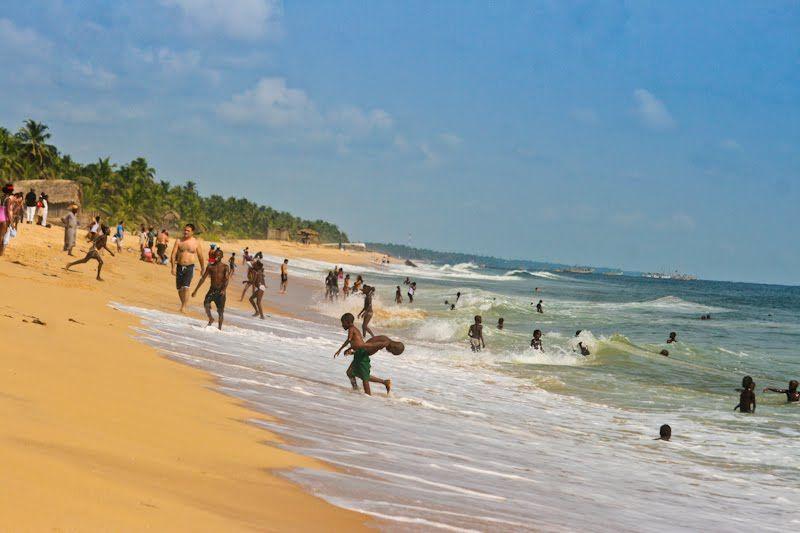
File image.
By Jimoh Babatunde
A city built by the water should never turn its back on it. In Lagos, the Atlantic Ocean is not a luxury amenity; it is a defining feature of the city’s history, economy, and identity. Yet access to many beaches is increasingly restricted by gates, fees, and private control.
This trend raises a simple but urgent question: why should the public have free access to beaches in Lagos? The answer is equally simple, because the coast belongs to everyone.
Beaches are public goods
Long before modern developments, the shoreline served as a communal space for fishing, trade, recreation, and cultural life. Free access ensures that all residents, regardless of income, can enjoy the physical and mental health benefits of open space.
In a city as dense and demanding as Lagos, beaches offer rare relief, places to walk, breathe, exercise, and gather. Turning these spaces into pay-to-enter zones deepens inequality by reserving nature for those who can afford it.
Free access also supports livelihoods. Thousands of Lagosians depend on beach-related activities: fishers, food vendors, artisans, tour guides, and informal workers whose survival is tied to open shorelines.
When beaches are closed off or priced beyond reach, these livelihoods are disrupted or destroyed. Public access sustains a local, people-centered coastal economy rather than concentrating benefits in a few private hands.
There is a strong environmental argument as well. When beaches are treated as shared assets, there is greater public interest in protecting them. Communities are more likely to resist harmful practices such as illegal sand mining, reckless construction, or pollution when they feel a sense of ownership.
Privatization, by contrast, often encourages over development and hard coastal defenses that protect individual properties while worsening erosion elsewhere.
Legally and ethically, the shoreline sits within the public trust. Even where private investment exists, the beach itself is a natural boundary between land and sea, dynamic, shifting, and inseparable from the public interest.
Allowing exclusive control over access sets a dangerous precedent: if the coast can be closed, so can other shared spaces critical to urban life.
Free access does not mean disorder or neglect. Safety, sanitation, and environmental protection require management and funding. But these can be achieved through transparent public oversight, reasonable regulations, and partnerships that prioritize access over exclusion. Entrance fees should never be the default solution to poor governance.
Ultimately, the question is what kind of city Lagos wants to be. One where the ocean is visible but unreachable to most? Or one where the shoreline remains a living, democratic space, open, shared, and protected for future generations?
Lagos’s beaches are not gifts from developers or privileges to be purchased. They are part of the city’s natural inheritance. Free public access is not just fair policy; it is a statement that the city belongs to all who live in it and that the sea, at least, remains free.
Disclaimer
Comments expressed here do not reflect the opinions of Vanguard newspapers or any employee thereof.