
By Kenneth Oboh
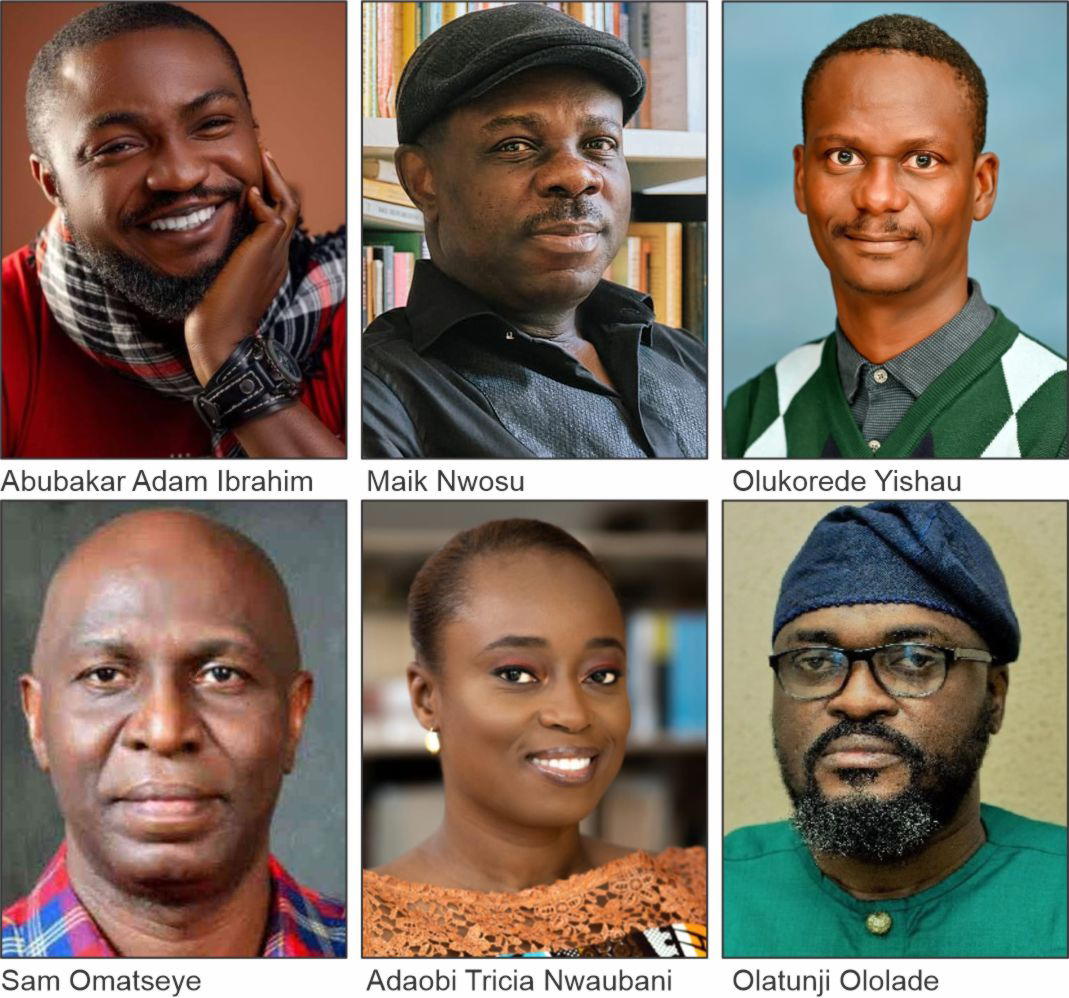
The boundary between journalism and fiction is not a wall but a bridge. The same curiosity that drives reporters to chase facts often inspires them to imagine the lives behind the headlines. From the cacophony of the newsroom to the stillness of the writing desk, several Nigerian journalists have crossed that bridge to create enduring literature. Among them are Abubakar Adam Ibrahim, Maik Nwosu, Olukorede S. Yishau, Olatunji Ololade, Adaobi Tricia Nwaubani, and Sam Omatseye. They have each won awards for journalism, written acclaimed works of fiction, and proved that truth and imagination spring from the same creative impulse.
Abubakar Adam Ibrahim: Bearing witness and reimagining the North
Abubakar Adam Ibrahim stands among the foremost voices of his generation. Known for his evocative features and his lyrical fiction, he built his journalism career at Daily Trust, where he served as Arts and Ideas Editor and later Features Editor. His writing humanised the victims of insurgency and corruption, giving voice to those too often spoken for. In 2018, he won the Michael Elliott Award for Excellence in African Storytelling for his Granta essay “All That Was Familiar,” a piece that traced the trauma of displacement in Nigeria’s North-East. That award, administered by the International Center for Journalists, recognised his compassion and literary grace.
As a novelist, Ibrahim first captured national attention with The Whispering Trees, a collection of short stories that was shortlisted for the Caine Prize for African Writing. His debut novel, Season of Crimson Blossoms, won the 2016 NLNG Nigeria Prize for Literature. Set in the city of Jos, it tells the story of Hajiya Binta Zubairu, a devout widow whose affair with a young street hustler forces her to confront buried desires and social taboos. Critics praised it for its honesty, lush description, and moral daring. Ibrahim followed this with When We Were Fireflies, a novel of memory and self-discovery that confirmed him as a stylist of rare depth. Whether chronicling the quiet grief of a refugee or the secret heart of a matriarch, Ibrahim writes with a journalist’s clarity and a novelist’s empathy.
Maik Nwosu: From Newsroom Intensity to metaphysical fiction
Before becoming a professor in the United States, Maik Nwosu was one of Nigeria’s most dynamic journalists. As editor of The Source magazine in the 1990s, he guided a newsroom that combined investigative rigour with literary flair. His work won several honours, including the Nigeria Media Merit Award (NMMA) for Journalist of the Year in 1994 and the NMMA for Arts Reporter of the Year. He was known for essays that blended political analysis with poetic insight.
Parallel to his journalism, Nwosu cultivated a distinguished literary career. His poetry collection Suns of Kush won the Association of Nigerian Authors (ANA)/Cadbury Poetry Prize in 1995. His novels Invisible Chapters, Alpha Song, and A Gecko’s Farewell reveal a mind attuned to philosophy and myth. A Gecko’s Farewell in particular examines migration and alienation through intertwined stories that traverse Lagos, Johannesburg, and New York. It reflects Nwosu’s fascination with identity in a globalising world.
His most recent novel is The Book of Everything.
Now Professor and Chair of English and Literary Arts at the University of Denver, Nwosu continues to explore the intersection of storytelling and scholarship. His fiction carries the energy of reportage, while his essays retain a lyricism drawn from poetry. He exemplifies how Nigerian journalists often turn the discipline of fact-finding into the art of meaning-making.
Olukorede S. Yishau: Chronicler of power and conscience
Olukorede S. Yishau’s career bridges two demanding crafts: journalism as public duty and fiction as moral inquiry. At The Nation, where he serves as Associate Editor and columnist, Yishau has earned a reputation for essays that cut to the heart of Nigeria’s political and ethical dilemmas. His long service in the newsroom has brought numerous distinctions, including multiple Nigeria Media Merit Awards.
In 2015, he was named Columnist of the Year; earlier he had won awards for capital market and aviation reporting. His writing has also appeared in TELL magazine and The Source, where his investigative flair first drew attention.
Yishau’s first novel, In the Name of Our Father, published in 2018, was longlisted for the 2021 NLNG Nigeria Prize for Literature. It examines the corrosive link between religious extremism and political corruption during the years of military rule. Through the intertwined lives of a journalist and a self-styled prophet, Yishau exposes how power and piety can become tools of oppression. His short-story collection Vaults of Secrets followed in 2020, offering portraits of ordinary Nigerians trapped in moral compromise.
In 2024, he released After the End, a novel about friendship, betrayal, and identity in a globalised world. Each book reflects the same integrity and emotional precision that mark his journalism. For Yishau, the novel is an extended form of commentary—a way to imagine justice when facts alone fall short.
Olatunji Ololade: The investigator as storyteller
Olatunji Ololade, Associate Editor of The Nation, is perhaps the most decorated Nigerian journalist of his generation. His reportage is both exhaustive and humane, the product of meticulous fieldwork and deep compassion. Over the years he has received more than twenty national and international honours, among them the Diamond Awards for Media Excellence, the CNN/MultiChoice African Journalist Award, and the Fetisov Journalism Award for Outstanding Contribution to Peace. His acclaimed feature “The Boys Who Swapped Football for Bullets” brought global recognition to Nigeria’s investigative tradition.
Ololade writes with a novelist’s attention to character and place. His stories about children displaced by conflict, women trapped in trafficking rings, and communities abandoned by the state read like moral epics. It is no surprise that he turned naturally to fiction. His novel Of Gods and Their Claytoys follows a fearless Nigerian journalist on a perilous quest for a better country. The book explores courage, betrayal, and the burden of truth, echoing the author’s own experiences in the field. Readers familiar with his journalism will recognise the same unflinching gaze and poetic rhythm. Through both fact and fiction, Ololade insists that the struggle for justice begins with the telling of a story.
Adaobi Tricia Nwaubani: Between fact, faith and female voice
Adaobi Tricia Nwaubani embodies the global dimension of Nigerian journalism and fiction. Her reporting has appeared in The New Yorker, The New York Times, BBC Africa, and The Guardian (UK), where she writes about humanitarian crises, human trafficking, and post-conflict societies. In 2019 she received the Arthur L. Carter Journalism Institute Reporting Award at New York University for her coverage of forced migration in Africa. Her journalistic voice is marked by empathy and clarity, often turning complex social issues into stories of individual resilience.
Her debut novel, I Do Not Come to You by Chance, published in 2009, announced her as a writer of rare courage. Set in the world of internet fraudsters, it explores morality, family, and survival with humour and compassion.
The book won the Commonwealth Writers’ Prize for Best First Book (Africa) and the Betty Trask Award in the UK. Her second major work, Buried Beneath the Baobab Tree (2018), is a fictionalised account of the Chibok girls’ abduction, based on extensive interviews. The novel won the Raven Award for Excellence in Arts and Entertainment and has been translated into multiple languages. In both her fiction and journalism, Nwaubani reclaims women’s voices from the margins of tragedy, showing that empathy can be a form of resistance.
Sam Omatseye: The poet of politics and the politics of prose
Sam Omatseye occupies a unique place in Nigeria’s intellectual landscape. A veteran journalist, editor, poet, dramatist, and novelist, he has spent decades shaping public discourse. Currently Chairman of the Editorial Board at The Nation, Omatseye’s columns have become a fixture of national conversation, combining sharp analysis with literary flourish. He has won several Nigeria Media Merit Awards and the Diamond Awards for Media Excellence. In 2011, he received the National Productivity Order of Merit from the Federal Government, a recognition of his enduring influence on the profession.
Alongside his journalism, Omatseye has built a formidable literary catalogue. His novel My Name Is Okoro revisits the Nigerian Civil War through the eyes of a minority and a young woman searching for meaning amid chaos. His collection of poems, Scented Offal, reveals a lyrical sensibility rooted in history and identity. Omatseye has also written plays such as The Siege.
Omatseye’s prose mirrors his journalism: bold, provocative, and steeped in imagery. Whether writing about politics or human frailty, he insists that language must bear witness. For him, journalism captures the present while fiction preserves it for posterity. He stands as proof that a columnist can be both a chronicler of events and a custodian of culture.
Disclaimer
Comments expressed here do not reflect the opinions of Vanguard newspapers or any employee thereof.