
By Chioma Obinna
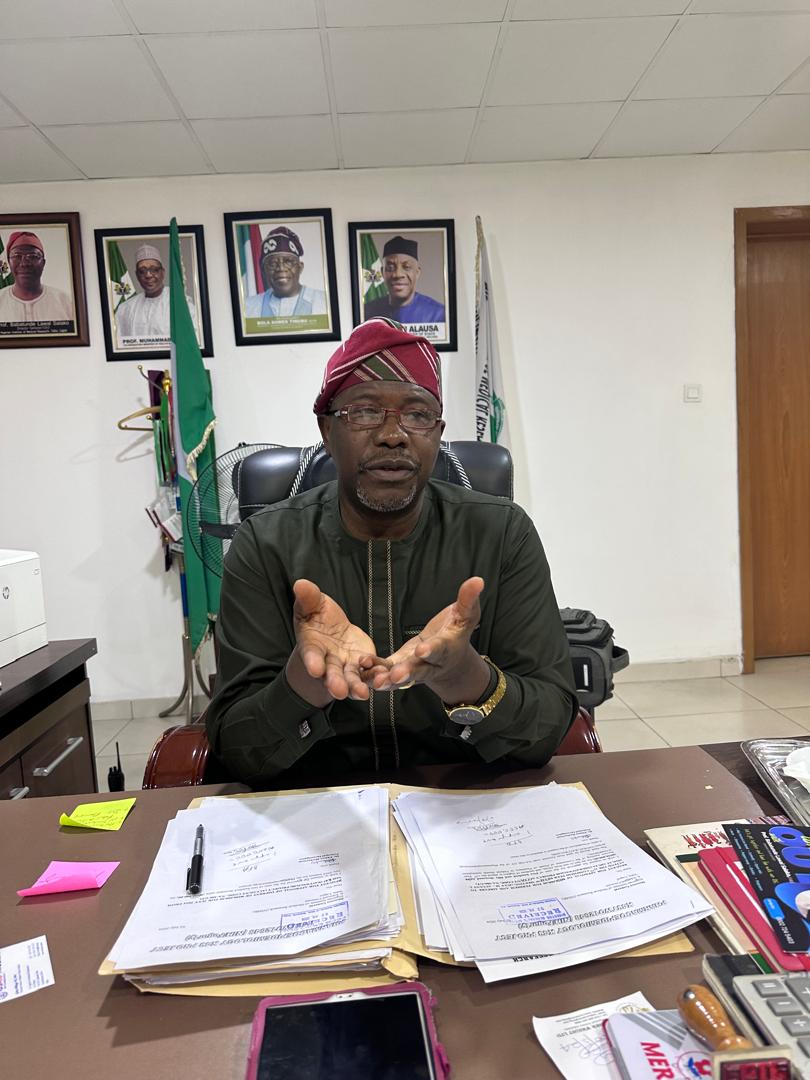
Health research is the engine that drives a nation’s progress, according to the Director-General of the Nigeria Institute of Medical Research, NIMR, Prof Babatunde Salako, who will be ending his eight-year tenure in a few weeks. In this interview with Good Health Weekly, he discussed steps he adopted to reposition NIMR as a research Institute. Among other milestones he achieved as DG of NIMR, he spoke about the establishment of adjunct positions for researchers at NIMR, current visibilities, the creation of various research policies, and tackling internal brain drain among others. He regretted that Health Research is yet to be given its pride of place in Nigeria, advocating at least N500 billion for medical research annually in Nigeria.
Excerpts:
How can we improve healthcare through research?
I used to say, that research is the engine that drives national development and without research, the country is unlikely to be able to develop. But that’s talking about research, engineering, education, whatever. But health research indeed has been the most, or has contributed the most to human development because health research finds solutions to people’s problems. You can look at longevity, for example, being healthy. Then you have a vibrant nation’s workforce. It’s related to GDP and it’s related to the economic performance of the nation.
Health research brings about innovation and discoveries. Apart from the fact that innovation and discoveries may provide health solutions to disease, they also lead to product development. And product development often leads to startup companies. Startup companies will employ people, produce products that will make people well, and create economic fortune for whichever country is producing it. In all ramifications, health research brings new knowledge and new solutions.
When COVID came, there was no drug. Everybody was afraid. They started trying all sorts of drugs. Health research brought about the COVID-19 vaccine. And everybody was taking the vaccine. Today, where is COVID? It’s gone. You can imagine, that before the COVID vaccine came, the health of the economy of the world, not just of Nigeria, of the world, what happened to it. There were lockdowns.
People can’t go out. Markets were closed but as soon as that solution came, we were back on track. Countries went into recession but today, countries are coming up. It pains us, researchers, that health research has not been given a pride of place. Health research in Nigeria should not be having less than N500 billion in a year. I don’t know how much that will even be in dollars in a year so that we can train researchers. We can fund research.
We can bring up innovation. We can do technology scouting that will make our country develop. We can answer specific Nigerian research health questions. Lasa fever has been with us for many years. We’ve been doing a fire brigade approach. It will come, we will do risk communication. We will treat people, then it will go. Then it will come. Research can find solutions for the future. It’s something that has no equal.
Cholera outbreak and NIMR
Well, we are doing things. The first thing that we are doing is to support surveillance. We are currently creating a point-of-care instrument to diagnose cholera using body fluids and also water. Oftentimes, cholera comes from water, food, and hygiene challenges.
And that is almost 80 per cent completed. We chose that because disease detection is the shortest way of preventing epidemics. If you can do surveillance, you can check do we have cholera here. You can pick up a case.
Once you pick the first case, you will be able to sort the rest out. Often what happens is that the disease would have spread before the first case is diagnosed and is it either because where it started, there were no diagnostic kits for them to use. Or maybe because it’s costly. Maybe because it’s not being produced in the country. All sorts of reasons. But we are doing one that is going to be country-made.
It is going to be cheaper, and available and it will be like the dipstick. So, it can be done by anybody. You can have it at home. Also, at the primary care centre where people go for treatment. So, you can have a box of it. You can dip it in your water. You can dip it in the stool. You can dip it in things. That’s where we are going and we are also doing surveillance looking at wastewater in canals around hospitals in Lagos. So, we can detect it because hospitals’ effluent wastes will come out and mix up with floods and all of that. So that’s why cholera comes up when you have rain with flood everywhere mixed with drinking water. And you see all of these, you have to spend money. One of the reasons why some governments may not want to fund research is that the return on investment in research takes a long time. And politicians want something they can do to bring votes tomorrow or at the next election. Something that will be visible. And what they want. I mean, scientists don’t have that time of abracadabra. That’s not to say that no research can bring short-term solutions that you can showcase. But major ones will be contributing to the nation’s economy. The health workforce capacity and all of that might take some time.
What made NIMR tick under his administration
I was appointed Director General by President Muhammadu Buhari on the 25th of July, 2016. That was two days after my birthday. I resumed here temporarily on August, 9th because I was the provost of the College of Medicine, University of Ibadan at the time. I needed to conduct an election for another provost to replace me before I was able to resume fully in NIMR. So, for one month I was acting as provost of the College of Medicine and DG in NIMR between August and September 9th. So, I resumed fully here as DG on September 9th. And of course, the first thing that I did was to have all departments and units do a presentation to me on their current department situation, what were the challenges? How do they think the problem can be solved? So, they were also the ones providing solutions to some of the challenges. We put all of that together in one single document as a kind of needs assessment of what we need to do at the time. We concluded, that the first thing to do is to create a strategic plan for the institution.
In December 2016, we organised what we call the National Retreat for Health Research and the theme was repositioning NIMR for its role in health research and national development, 1st and 2nd December 2016. And we got people from around the world and across the country. People that we have worked with before as researchers. Teachers, mentors, mentees, who we believe have something to offer and the government, starting from the Honourable Minister then, Professor Isaac Folonjo-Adewole, all the heads, DGs of the health-related agencies, provosts of colleges of medicine, some selected ones, and some research institutions were put together for the retreat.
And from that retreat, we were able to come up with the strategic plan for 2017 to 2021. So, in that strategic plan, we had some thematic areas. Those thematic areas focus on research development, especially translational research.
We focus on funding research. We focus on creating an ambience of research that will improve productivity on the part of the staff. We focus on collaboration, and networking, both nationally and internationally. The last part was private sector participation in research. This was our goal for the next five years then, and we had two monitoring and evaluations per year.
The mid-year evaluation, then end of year evaluation, which is done every year as another retreat. So, we’re having retreats every year, defining targets, assessing what we’ve been able to achieve in the last year, proposing what we want to achieve the next year, and seeing where the weaknesses and challenges are. I believe the members of staff grew to understand this and they were able to buy the idea and they allowed themselves to be governed by the benchmark that is set for themselves at the beginning of every year.
Every year, after the selective members of staff retreat, because we certainly cannot take the whole institution there, we select some from the senior to the most junior, including drivers and cleaners, and all of them have representatives at the retreat. We mandate departments between January and March to ensure that they now have their retreat. We fund that retreat to some extent so that they can create goals and targets for themselves.
This set the members of staff to realise that for everything you do you need a target, there is a goal you must achieve, and that to me improved the working environment, the zeal of members of staff to want to come to work and to want to deliver on their targets. This was one thing that made NIMR tick, and everybody developed a sense of belonging. Of course, I should quickly say that that strategy plan ended in 2022, so we had to draw another one, 2022 to 2026, which we are working on now. Of course, it includes engaging stakeholders and disseminating information on research innovation.
Establishing Adjunct positions for researchers
Of course, we wanted to renew and maintain the old partnership, and I believe that the new thing then was also to establish adjunct positions for NIMR researchers in the university, because we found out that researchers wanted an academic career, which is what the institute is, but they want an academic career like the university. Once they notice that they cannot attain that in the institute, they go to the university and leave the institute.
To stem that tide, we established MOUs and adjunct positions with universities in Nigeria, so that our staff can use part of their time to teach and supervise students, and the university in turn can promote them along their academic career so that they can become professors. And with these, we were able to have the first set of professors in 2018, five of them, and that immediately changed the research environment. It created some kind of hope for younger researchers that their hard work, their academic contributions to science and national development can be recognized, even while in the research institute, working as an adjunct with the university.
The kind of internal brain drain that we used to have stopped, and all new PhDs and MDs stayed because we have created hope for them to realize their ambition. And beyond that, we also have adjuncts from those universities having research positions in NIMR. It was vice versa.
We pick on people that we know can add value to the university, I mean to the university and to teaching and research in the university. This provided opportunities for us to network further, and write grants with them, and that improved the number of grants we have in the institution. It improved the number of publications in the name of NIMR and improved Naima’s visibility generally within the country and outside the country.
We also noticed that we needed policies for us to be able to function appropriately and have rules that guide the practice of research within the institution. We created several policies and research policies. We created policies for housing, grants policy, harassment policy, gifts policy, and several other policies that we created.
We created research and innovation policies and all of these documents helped management to manage the institution and help the researchers to also understand how they go about their duties and things within the institution. This sets some kind of international standard that we see elsewhere and creates a different environment for workers in NIMR.
Establishment of research advisory
We also needed to have a research advisory board. So that they can assist the institute in reshaping their activities, research ideas, funding opportunities, grants opportunities, and of course mentoring programs to make sure that these are done in the best international practice. We have people who have made their marks as researchers, both nationally and internationally.
The chair is a professor who is a renowned psychiatrist, a National Merit Award winner and someone who has contributed a lot to mental health science in Nigeria and further afield. We have others, the current DG of NCDC, who used to be Commissioner in Lagos State, and Commissioner for Health, Dr. Dede Idris. We have a senior person in research in IHVN, the head of IHVN, and the current Vice-Chancellor of the University of Lagos, who is a renowned paediatrician and scientist. Then Professor Shitu from the North, Bayero University. I can’t remember most of their names.
Our former Director General, you can see that we have Professor E.M. James and Professor O. Jengbede. These are people that when you mention them in research and education circles, it’s not difficult to find them because many, many people have stood on their shoulders to see the world better when we talk about science.
These people have been with us since 2018 and have been part of whatever we have achieved in NIMR through their advice, network, and of course relationships with other universities around. So that was helping us and the advisory board used to meet twice a year to review the activity of NIMR. Now we believe that for us to have a proper effect, we created new departments and new centres.
Some of the departments that were created include the library and ICT, legal unit, planning department, clinical diagnostic department, grant unit, research and innovation, and product development department, including NIMR kitchen. We also tried to create a staff club for members of staff to have an avenue to unwind and socialize, to complete the same environment that is required of scientists. So, all of these departments are contributing very well.
We created new centres, centres for traditional, complementary and alternative medicine, centres for human biology and genetics, and centres for TB research. All very useful centres to focus on specific diseases, so that research can also remain very focused.
We also hold conferences every year for NIMR. We met that on grant but we had to change the modules and the focus of the conference to focus more on what we call an international conference on health research and innovation. So that we don’t just do conferences that we cannot bring out any useful conclusions that can assist in improving NIMR’s mandate and also contribute to nation-building. We brought people from different parts of the world as keynote speakers. I’m sure we have started planning for the one for this year. We knew that research institutes require internet to function and we were unable to pay for the amount of internet that we needed but the goodwill of Nigerians and more importantly, the current minister of digital technology and communication, helped us to talk to a company then called Main One led by a lady called Funke Ubeke. I needed to mention their name because they played a very important role in the growth and development of NIMR. Between both of them, NIMR has received from Main One free internet for the past six years, 24-7, about 30 megabytes of data.
We cannot but thank both of them for doing this for Nigeria because it’s not just for NIMR. In the same vein, I noticed that we were paying a lot of funds for some company to maintain our internet facility. So, I decided that the NIMR staff in that department should be able to do that so that we can save funding from that source. We had to ask those people to go. These staff in the ICT department were trained and they have been the ones maintaining the NIMR internet facility, working with the Main One people since then. And we have saved quite a lot of money from that. So, we do not have challenges with our local internet and we hope that this can go on forever but I’m not too sure. So, whoever is coming behind must know how to maintain that.
Infrastructure developments
We also embarked on the renovation of laboratories and buildings within the institution. We completed some abandoned projects, some were abandoned for over 12 years. Especially this, our office was abandoned for 12 years.
We completed it, we completed the NIMR house. The main laboratory was also renovated, including residential areas. We did roads, and networks within the campus. We created special laboratories that support research. We created two tissue culture laboratories, one for malaria and one for virus. The one for the virus was used to grow the COVID-19 virus when we were having some research-related need for it which helped us while we were developing our test kits. The one for malaria is being used to culture malaria and to do drug testing on sensitivity testing on malaria. We also created the toxicology laboratory, courtesy of federal government funding for COVID-19.
So we have two machines that can assess heavy metals. And of course, drug abuse can also be measured within the blood using this. These are areas of interest for researchers.
We created a sequencing genomics laboratory where we sequenced the index case of COVID. NIMR was the first to sequence the index case of COVID-19 when it came to Nigeria. Eventually, we worked with the Lagos State Government, the University of Lagos, Ministry of Health of Lagos to put up a comprehensive report on that case. We noted that we needed to be able to produce our primers, especially when we were designing diagnostic kits. Because we needed to sequence the circulating variants of the virus in Nigeria and put that knowledge in context to be able to produce those diagnostic kits.
We met with MTN Foundation which donated to us what we call an oligosynthesizer. And then offered some remote training and we started producing primers in NIMA since then. This provides an opportunity for live scientists to do their research without much ado. I mean before they would have to design the primer, send it abroad, get it produced before it’s sent back to them. But now in NIMR we can do all of that for them and we’ve been doing all of that for them.
ISO Accreditation
We got many of those laboratories accredited. There’s what we call ISO, International Standard Accreditation. We have two of our laboratories, the Centre for TB Research and then the Centre for Human Virology and Genomics and both of them are reference laboratories, national reference laboratories. And our CHVG was also appointed as a mega laboratory for HIV-resistant testing. What appeared to excite us then was our pre-qualification by the WHO of our ability to test kits for other countries to use. And at that time when WHO listed us, we were one of the eight countries in the world that was able to do that.
That was an excitement for us and it catalyzes many of our actions for them at the time. We have since been able to maintain those ISA accreditations so far and we are doing very well with HIV-resistant testing. The other time when the NICE study was done, NIMR did virtually all the HIV resistant testing for that study. We are trying all the HIV-resistant tests for that study.
Most significant milestones
Well, usually when I’m asked that kind of question, most of the things that one has done are actually in about the same standard. But because you must pick one, I would say it is the adjunct position that we’re able to do for researchers. So that researchers in institutes can work in the university, they can help universities supervise, teach and examine their students and above all, they can also be promoted by the universities to become professors.
Now, that alone changed the research environment for them and changed the outlook of national and international institutions on the institute. The situation where the only professor in the institute is the Director General, how do you think others will look at it? Here we are, we have professors here, professors there from some universities, not of the institute. The university sees them now as colleagues. Before it used to be like, what are they doing? Now it’s like, can we work together? Can we send our students? Can we send our staff? That is the kind of support, function, and mandate that has been given to the institute. That alone has opened up a lot of opportunities for the institution. It has elevated the standard of the institution and it has also, in a way, increased the visibility of the institution beyond what it used to be.
All the other things that we can do or that we have done. When people now know the institute, they want to come there, they will come and find them there.
Recommendations for incoming NIMR DG
My first recommendation is that individuals should have an open-door policy. He who wants to see you should be able to see you. Know fully well that such opportunities may be abused. But he should be able to manage it because when there is no information, it creates room for great violence. So, if you don’t want great violence to thrive, then provide information.
Also, receive information so that you can respond appropriately. It is very important. I see that that’s one of the things that explain the success of this administration. We talk to the unions. We talk to individuals. We talk to seniors and juniors. We treat everybody with respect because that’s very important. They say respect, beget respect. So, if you respect and treat your staff with respect, they will also shower you with a lot of respect. I think those are the first things because no matter what you bring to the institution, whatever you buy, whatever innovation you have if the workforce is not ready, then you are not going anywhere.
Impact of Executive Order on Pharmaceuticals and Medicals
You see, Nigeria is a country that has been dependent on importation for many years. Especially when we talk about the medicals, the drugs, the vaccines, the raw materials for many of these things. Our currency is weak against the international currency. So, it explains why the costs of medicals were going up. It was going beyond the reach of an average Nigerian.
I remember we said health is central. Health research, is central to the country’s development, even GDP as it relates to the soundness of the health workforce. And what it can contribute to the country’s economic development. So, if we are having absenteeism at work, this one is sick, that one is sick. I know in Nigeria when one person is sick, it’s the whole family. Ten more people will not go to work apart from that one person. Even the local people, who are selling pepper beside your house, you go and you want to buy pepper. She’s not there because she’s sitting at the hospital. So, you have to take your car and go further.
You are spending money that you may not have spent if it was near you. All of those little, little things, we don’t count them. And that’s why health and education seem to be the first corner for any country, for the country to develop.
So, for the president to have done that, is to ensure that our pharmaceuticals become affordable and accessible for the people of Nigeria. Especially, those who are sick, so that they can get well quickly, and reduce absenteeism, like I said, at work, at the personal workplace. It will ensure that people are healthy and that the nation’s workforce is vibrant, and strong the return of that is a strong economic impact, whichever way you want to look at it.
Regrets
You see, I always pride myself on Mr. No Regret. I don’t regret anything. I don’t want to regret it. I always tell myself, take your decision, take responsibility for your actions. No regrets. It’s your action. Whatever comes at that, take responsibility for it and move on.
But if I must say something, it’s that there are too many superficial oversights, costing the institution money that the institution does not have. That’s not to say that we don’t want oversights or we don’t want to be supervised.
We want altruistic supervision. Altruistic oversight and not the one that comes with a tinge of blackmail. No, I wanted to say that it puts the institution in a precarious position. There are times that I’ve said, I don’t know what I’m doing here. When one felt the heat from that kind of thing. You know you are trying to help the system and then you are doing that genuinely. And then you are facing an obstacle that makes it look like you are not doing what you should be doing.
So, it was like, what is this? Is this what we should be doing? But you know, we come to grow to know that to move forward, to contribute, make sure you make your mark in a place.
You should look sideways sometimes. Otherwise, you might just pack your bag and baggage and go back to where you come from.
Dreams for NIMR in the next five years
I dream of NIMR which should be known by many people. Scientists looking for knowledge, skills, and funds for research because I feel that by that time, we would have established a funding agency. If it’s not in NIMR, it’s on its own, in three years. NIMR will be like the US, maybe not close to it. But we’ll be doing like the US, National Institutes of Health where everybody goes to learn one skill or the other and seek research funding. Different institutions that are researching different aspects of our health, post-doctoral fellowships. Young Nigerians, future research leaders for our countries. We’ll be and there will be many innovations. Policy supports, documents coming, arising from research results. Guidelines for the treatment of diseases are supported by work coming out of NIMR and even discoveries and innovations.
Next step
I can’t go any further. For now, I was provost at the College of Medicine and I still have some years in the system. I believe that my job is still waiting for me. So, I’m still working for the government but on a different level now. We are looking forward to a NIMR environment that is conducive to health research and a NIMR that will be very much well recognised beyond what we have now.
Disclaimer
Comments expressed here do not reflect the opinions of Vanguard newspapers or any employee thereof.