
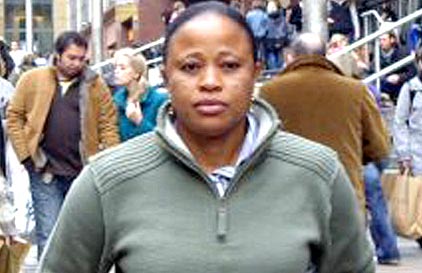
*Mma Odi
By Josephine Igbinovia
Ms. Mma Odi is the Executive Director for Baobab for Women’s Human Rights, a non-governmental organisation in the vanguard of promoting the rights of women in Nigeria and Africa. Baobab is the Secretariat for the Nigerian NGO-CEDAW Coalition, a coalition established in 1997 to give a voice to the issues of the Convention on the Elimination of all Forms of Discrimination Against Women(CEDAW) in Nigeria. Here, Mma Odi who is a veteran in gender activism, bares her mind on gender concerns in the 1999 Constitution proposed for review by the National Assembly. Hear her:
Actually, the Nigerian NGO-CEDAW Coalition also responded to the call for memoranda from the Senate Committee on the proposed amendment of the 1999 Constitution. Being the voice of women in Nigeria, the coalition is recommending that the Constitution be re-drafted to be more gender-sensitive because that’s the only way it can be called ‘the peoples’ Constitution’.
Language of the Constitution
First and foremost, it should be re-drafted to have a more gender-neutral language. We recommend that in any provisions relating to men and women, the masculine and feminine pronoun should be used. This will make room for a peoples’ constitution wherein everyone is involved.
This will also remove the ambiguity in understanding and interpreting the constitution as it relates to gender. “He”, “him” and “his” should be substituted to read “He or She”, “Him or Her” and “His or Hers” where appropriate.
Chapter 1(Section 1(3)) shows that the provision preserves equal status for men and women only in relation to law but does not extend the protection to practice. Although the section mentions “laws” and “provisions” inconsistent with the Constitution it omits “practices”. There still exists in Nigeria practices that are unjust to women. Examples include but not limited to – obnoxious widowhood practices, harmful traditional practices, etc.

*Mma Odi
We therefore recommend that the amendment should read: “If any other law, practice or provision is inconsistent with the provisions of this Constitution, this Constitution shall prevail, and that other laws, practice or provision shall to the extent of the inconsistency be void”.
Gross gender imbalance
Chapter II captures the essence of a state and basic concerns of Nigerian women. Most gender based social-economic rights are encompassed in this chapter. This will make for the full actualisation of women’s rights and make life more meaningful to the average Nigerian woman. We recommend that the provisions of this chapter be made justiciable.
Chapter 14(3) shows that though the federal character gives room for quota systems in our institutions and agencies, there is a gross gender imbalance tilting in favour of men. We recommend that the section be amended to include gender balance.
Section 14(4) should also be amended to read: “The composition of the Government of a State, a local government council, or any of the agencies of such Government or council, and the conduct of the affairs of the Government or council or such agencies shall be carried out in such manner as to recognise the political, religious and gender diversity of the people within its area of authority…”
Section 15(2) should be amended to include the prohibition of discrimination on the basis on gender, disability, age, health, status and marital status.
Section 26(2) (a) violates the preamble of the Constitution which provides equality for all persons and should be amended to grant equal eligibility for citizenship to the foreign spouses of Nigerian women.
We therefore request the amendment to read: “the provisions of this section shall apply to –(a) any man or woman who is or has been married to a citizen of Nigeria”.
Also, Section 42 which talks about the right to freedom from discrimination should be amended to widen the categories of persons to be free from discrimination. Also, the context in which discrimination can occur should be extended to include the private as well as the public sphere.
Provision of affirmative action in the Constitution
There is also an urgent need for the provision of affirmative action in the constitution. A section to read- “Notwithstanding the provision of Section 42, Affirmative Action of not less than 40% shall be reserved for women in spheres of societal life for a period not less than 15 years. This shall be subject to review and assessment by the Equal Opportunity Commission as provided by the relevant section of this constitution”.
Women should have the right to affirmative action for the purpose of redressing the imbalances created by history, tradition or custom. This is currently practiced in countries like Uganda, Rwanda, Kenya, South-Africa, etc. Nigeria as the giant of Africa ought to set the pace while others follow.
Section 38 requires an additional subsection to make reference to freedom for married women to choose their own religion and the freedom from the obligation or force to convert to their husband’s religion.
Section on family life
Also, the section on family life should be added to include the right of men and women aged eighteen and above, to marry, have a family, and also are entitled to equal rights during, marriage and at its dissolution.
This section should also state that the legislature shall make appropriate laws for the protection of the rights or widows and widowers to inherit the property of their deceased spouses and to enjoy parental rights over their children. It should also state that marriage shall be entered into with the consent of the man and the woman intending to marry. Importantly, it should read that it is the right of parents to bring-up their children irrespective of marital status.
Section on women’s rights and equality of sexes
There is need for a section on women’s rights and equality of sexes which would include that special care must be accorded to mothers during a reasonable period before and after child-birth. It should also state that working mothers be accorded paid leave. It should include the provision of facilities in work and public places for the care of children below school-going age to enable women, who have the traditional care of children, to realise their full potentials.
Among other things which are already stated in our memorandum sent to the senate committee, this section should state that a spouse shall not be deprived of a reasonable provision out of the estate of a spouse whether or not the spouse died having made a will.
The National Assembly shall, as soon as practicable after the coming into force of this Constitution, enact legislation regulating the property rights of spouses.
With a view to achieving full realisation of the rights referred to in Subsection (2) of this section on women’s rights and equality of sexes, it should be stated that spouses shall have equal access to property jointly acquired during marriage, and assets which are jointly acquired during marriage shall be distributed equitably between the spouses upon dissolution of the marriage.
Items to be removed from the Constitution
A number of items need to be removed from the constitution, and these include Section 29(4)(b) which grants an underage girl who has been married the ability to revoke her citizen even though she has not attained the legal age of maturity which is 18 years.
Section 28 of the constitution should be expunged from the constitution to allow Nigerians who wish to acquire dual citizenship to do so. Among other things which we actually included in our memorandum, the Federal Character Commission contained in S153(1)(C) should be substituted with an Equal Opportunity Commission with an expanded mandate to accommodate the interest of all Nigerians including women, youths, the aged, the disabled, ethnic minorities and other special interest groups. It should be entrenched as an independent commission in the Constitution with certain functions which are also contained in the Nigerian NGO-CEDAW Coalition’s memorandum sent to the senate committee.
Lastly, the subsection endorsing the Land Use Act in Section 315 should be removed unless the act is amended. This is because the Act is injurious to women’s rights and equal status.
Disclaimer
Comments expressed here do not reflect the opinions of Vanguard newspapers or any employee thereof.