
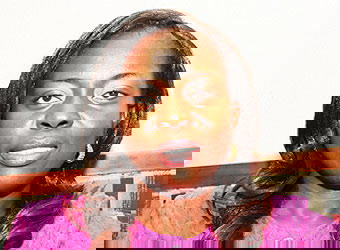
Dr Osasuyi Dirisu
By JOSEPHINE IGBINOVIA
Freedom Foundation, the NGO to which the House of Refuge belongs, is a faith-based organisation founded about ten years ago by Pastor Tony Rapu, with a mandate for social reformation. House of Refuge is a drug rehabilitation and resource centre established by the Freedom Foundation in 2006. It is actually a residential facility to help people who are suffering from problems with drug dependency to overcome the problem and take special responsibility for their lives, and also get reintegrated back into the society.
The House of Refuge is fully registered with the Lagos State Ministry of Health, and it is first of all a hospital. So, we’re licensed to practice healthcare here because a typical aspect of drug rehabilitation is medical. Hence, we have medical doctors, psychiatrists, psychologists and social workers among our team. Apart from coordinating the medical aspect of rehabilitation which is primarily detoxification, medical treatment, follow-up, psycho-therapy, etc.,
we also look at the social aspect which involves reintegrating people into the society and uniting them with their families. This is due to the fact that one of the first things that happen when people start using drug is that they somehow just lose their relationship with family and friends.
So, during rehabilitation, one of the things that need to critically take place if that person must be rehabilitated successfully, is to get the person back into the society by working with his or her family and friends. We also look back into their careers to see how we can get them back into the career. Also, if that person is too old to go to a formal school, we help him or her acquire a skill.
Like I said earlier, House of Refuge is also a resource centre. Apart from doing rehabilitation in this premises, we also have outreach programmes through which we work with schools, communities and religious sects to take the message of substance abuse and its dangers to the streets, and to make sure people have adequate information and awareness that can help them prevent substance abuse in the first instance.
The theme for this year’s International Day against Drug Abuse & Illicit Trafficking that was marked few months ago is ‘Global Action for Healthy Communities without Drugs’, and I would say that this theme is quite timely.
I say this because over the years, we’ve realised that efforts directed at preventing people from going into drug abuse have to be taken on a community-wise basis. Worldwide, we’ve realised that you really need a whole village to get somebody to properly function in a society. It is for this reason that you find that if an individual is on drugs and he grows up on a street where there is a street-drug culture, if you take him out for rehabilitation and take him back to that same street few months later, he is back to his old self.

Dr Osasuyi Dirisu
Hence, global focus is now shifting from the individual to the community. It is in line with the theme for the year that we will be working with schools in Lagos state because a school is actually a community. This is basic when a child enters the primary or secondary school, as that child is there for about five to six years. Therefore, that school becomes his or her community and also forms a major aspect of his or her life. We’re also working with families and in fact, caregivers because they have to buy into the idea so that our schools can become communities where young people who go in can get information, and an enabling environment to stay out of drug.
Another important community in our environment is also the church or mosque as the case may be. Our priority is building healthy communities that are free of drug. Hence, we are working tirelessly with communities in Lagos through our various outreaches.
There are two sides in fighting drug abuse, and the first is supply reduction. Judging from the fact that drug has to be available before people can abuse them, I think all hands have to be on deck to drastically reduce the supply of drug. Freedom Foundation is registered with the National Drug Law Enforcement Agency -NDLEA and we cooperate with them.
The other side of drug abuse elimination is demand reduction. This is where House of Refuge comes in. Like I’ve mentioned earlier, we are working towards reducing people’s demand for drug by telling people who haven’t started not to start at all, and by helping those already addicted, to come out of drug use. We are also working with other agencies to advocate for policies that will support this fight.
The scourge of drug abuse and its attendant problems is of international importance. Since House of Refuge started, we’ve actually had an increased demand in people trying to seek help. In different homes, people have one person or the other having this problem! Formerly, due to stigmatization, families tend to cover-up for their affected loved ones. But now, because we’ve made them understand that we are sincerely here to help, they now come out.
Right now, the United Nations Office for Drug and Crime- UNODC alongside some organizations, is working towards having a prevalent data for substance abuse in Nigeria. But the last data available to us is a work published by the UNODC in 2007. According to this data, an estimated lifetime consumption of marijuana in Nigeria should be about 10.8%, followed by psychotropic substance like amphetamine type stimulant (10.6%), heroin (1.6%) and cocaine (1.4%).
From 2006 till date, we can say that we’ve had over sixty clients at House of Refuge. I also want to note here that the process of rehabilitation is a very complex process, and it’s quite expensive. In terms of functionality, over 90% of our clients are doing better now than when we first picked them up.
Also, because of the complex nature of addiction, one would agree that you need between five to eight years to be able to say that complete abstinence has occurred. This is why after-care is very important. Hence, in about five to eight years from now, somebody leaving House of Refuge today will still be under our searchlight.
We are actually constantly researching on new and better rehabilitation models. Hence, we have people bringing their addicted loved ones from abroad to the House of Refuge here in Nigeria. One advantage we also have here is our faith-based approach which makes it impossible for a client to have access to drug while in our care. We actually test them daily for drug and will surely know through that means if any of them tests positive or negative.’
Disclaimer
Comments expressed here do not reflect the opinions of Vanguard newspapers or any employee thereof.