Saying it as it is (3)
By Douglas Anele Many Nigerians are wondering why more than three weeks since the current fuel scarcity began nobody has been sanctioned. Maybe what is playing out is the sacred cow syndrome in which certain individuals because of their connections with people in power can do anything and get away with it, which is why […]






Areas of concentration for President Buhari (4)
As I was saying, Nigerians would not be perturbed about how much government spends on electricity, as long as the funds are used prudently and there is noticeable improvement in power supply all over the country.
Areas of concentration for President Buhari (3)
Remember, a committee of the Senate of the Second Republic, headed by the late Dr.Olusola Saraki, was about to scrutinise the Ayo Irikefe Report concerning the purported missing NNPC funds when Buhari came to power through a military coup in December 31, 1993. Since then, the Report seems to have disappeared without trace. So where is the Irikefe Report? Was Buhari cleared or indicted by the panel?

Areas of concentration for President Buhari (2)
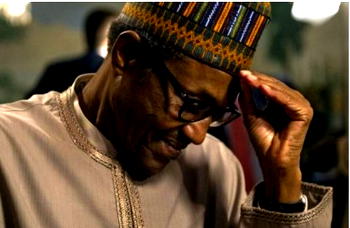
On the other hand, President Muhammadu Buhari must find a way to immunise himself from the toxic sugary insipidities of praise-singers and search within himself for the intellectual and moral stamina required for actualising the most important components of his campaign promises. Of course, the President must be commended for frankly admitting that his advanced age would limit his performance, even as some of his supporters and aides were pretending that age does not matter in a demanding position such as the presidency of a fractious, democratically immature, and economically underdeveloped country like ours, by making tendentious allusions to Ronald Reagan, Nelson Mandela and Robert Mugabe of the United States, South Africa and Zimbabwe respectively.
Areas of concentration for President Buhari (1)
If you are a lecturer in any of the tertiary institutions and you have concluded the topics in your course outline, your students would likely ask you for topics to focus their attention on in their preparations for the upcoming examinations.

Going to America: The Buhari-APC style (2)
For instance, in a meeting he held on July 29 at Blair House in Washington DC with his classmates, members of the US War College class of 1980, the President told them that John Kerry, the American Secretary of State, “read the riot act” to him, Jonathan and Prof. Attahiru Jega, former chairman of INEC. According to Buhari, Kerry reminded them that the election must be free, fair and in line with the Nigerian constitution.

Going to America: The Buhari-APC style (1)
President Muhammadu Buhari’s vuvuzelised state visit to the United States has been generating a lot of commentary in the media. Expectedly, the key issue people are arguing about is the possible benefit of the event to Nigerians as the new government struggles to overcome multi-faceted economic, security and infrastructural challenges facing the country at this time.

The absurdity of primitive accumulation (2)
To be fully human entails the ability and freedom to manifest optimally the creative powers inherent in homo sapiens. This is achievable not through amassing wealth one does not really need but by engaging productively in meaningful work and love. According to the German-born American psychoanalyst, Erich Fromm, freedom can be looked at from two main perspectives, namely, “freedom from” and “freedom to.”

The absurdity of primitive accumulation
According to some estimates, Nigeria has made over $500 billion from crude oil sales since the mineral was first discovered at Oloibiri in 1958. However, considering the parlous state of the country today as documented in the last 10years by relevant agencies of the United Nations with respect to Human Development Index (HDI), it is crystal clear that a significant proportion of that money has been mismanaged by military dictators and agbata ekee politicians. Indeed, the alarming level of unemployment, destitution, hunger, feeling of alienation and hopelessness being experienced by Nigerians – that is, existential poverty in all its ramifications – indicate beyond any scintilla of doubt that members of the ruling elite entrusted with the power to manage our resources have failed abysmally – and they are getting away with it.

Perspectives on change (2)
In this regard, APC is certainly not different from the PDP. The way I see it, given what is known about most prominent leaders of the new ruling party, those who believe it can deliver meaningful change nationwide should think seriously of the possibility that they might be mistaken. Consider the President, Alhaji Muhammadu Buhari.
Perspectives on change (1)
The mantra of change facing ordinary Nigerians and their throbbing desire for improved living conditions. But how many of those who vociferously chanted ‘change,’ especially APC leaders and their supporters across the country, actually understand what genuine social change is all about? What are the philosophical underpinnings and dimensions of change? Are all changes desirable – and if so what types of human beings or groups are best qualified to actualise it in a given society?

How Ndigbo underdeveloped Igboland
In our discussion last Sunday, I made the point, which was almost distorted by editorial pusillanimity, that ideally, in order to render justice to Ndigbo Nigerian leaders who participated in genocide against them during the civil war should be prosecuted at the International Court of Justice. But I also argued that given the very low level of political maturity and moral consciousness in the country presently, that would never happen.
Ndigbo and the burdens of history (2)
As a result, they casually downplay the significance of the civil war for national integration or mischievously misinterpret any reference to its impact on Igboland and the need for restitution as an attempt to create division among Nigerians. But how many Nigerians have thought about the implications of the fact, noted by Prof. Achebe, that there were more small arms used on Biafran soil than during the entire five-year period of the Second World War or that there were one hundred thousand casualties on the much larger Nigerian side compared with more than two million – mainly children – Biafrans killed? If Gowon was serious about his “no victor, no vanquished” slogan and genuinely wanted reconciliation with the defeated Biafrans, why did his government implement extremely harsh measures against Ndigbo after the conflict? For Ndigbo who suffered the greatest from the civil war, whose land was strafed, bombed and devastated, the terrible experiences of 1966 to 1970 remain a recurrent source of sadness and inspiration simultaneously: sadness, because they were the ones that lost almost everything; inspiration, given the inherent capacity of humans to turn adversity into opportunity

Ndigbo and the burdens of history (1)
As a student of history, I have come to realise that it is only within the scaffolding of fidelity to its lessons that individuals and groups can positively transform socio-political reality in an enduring and meaningful way. In otherwords, those who ignore the lessons of history no matter how disagreeable they might be are bound to repeat terrible errors of the past. Ever since Nigeria was created by British colonial imperialism in 1914, efforts have been made to build a truly Nigerian nation that blends into a relatively harmonious geopolitical entity the diverse ethnic nationalities out of which the colonial amalgam was founded. Unfortunately, from the very beginning such attempts, especially by British colonial administrators, were largely disingenuous, biased in favour of the North and geared towards optimum exploitation of the newly created colony for the benefit of imperial Britain.

President Buhari and his enemies
Going by what one reads in the newspapers and hears on radio and television, Buharimaniacs believe strongly that the President, Alhaji Muhammadu Buhari, can solve singlehandedly the problems confronting Nigeria at this time, whereas President Goodluck Jonathan and his subordinates are relentlessly excoriated for running the most incompetent and corrupt government the country has witnessed since independence.

Negation of the negation (2)
As I was saying, many top-level administrators, managers, technicians and civil servants were either persecuted or dismissed from their positions because they were Igbo. The grotesque federal character provision or quota system enshrined in the 1999 constitution is a testament to Igbophobia, indicating the depth of anti-Igbo sentiment and the extent certain elements of the Northern-dominated ruling elite at the federal level can go to entrench tribalism in the country.