Broken politics: Deeply flawed primaries point to a messy 2027, by Olu Fasan
The morning foretells the day. Early signs can indicate how a day will unfold. In that sense, the recent presidential, gubernatorial and legislative primaries foretell a very messy general election next year. Over the past two weeks, the media have been awash with endless stories about deeply flawed party primaries. The primaries betray a political […]







Amotekun: Well done Yoruba for nudging Nigeria towards true federalism
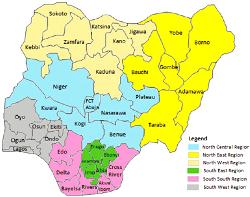
THE Yoruba are quintessential federalists. They are the Californians or Texans of Nigeria. California and Texas are powerful American states that have positioned themselves as bulwarks against the erosion of federalism in the US. For instance, Texas sued the Obama administration 48 times and, so far, California has sued the Trump administration 32 times. Both have won several legal battles to safeguard the federalist principles. The Yoruba are doing something similar in Nigeria: fighting to move this country towards true federalism.

Judicial activism is eroding the legitimacy of Nigeria’s democracy
By Olu Fasan, Abraham Lincoln famously defined democracy as “the government of the people, by the people, for the people”. This means that in a representative democracy, governments can only emerge through the explicit consent of the governed expressed by votes in elections. It is that direct electoral link between the voters and their elected […]
Buhari is succumbing to profligacy and the trappings of power
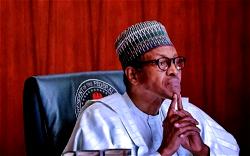
DURING the 2015 presidential election campaign, the Economist magazine described General Muhammadu Buhari as a “sandal wearing ascetic”, and a columnist for the London Times called him a “party pooper”.

Lagos isn’t working: It suffers from Federal neglect and bad governance
DAVID Pilling, Africa Editor of the Financial Times, sent a text to me last November. The newspaper was doing a special report on Nigeria, and he wanted to speak with me about the infrastructure crisis in Lagos. “Has Lagos stopped working?” he asked. We spoke the next day, and I gave him my views. “The Lagos State government is overwhelmed and daunted by the infrastructure crisis,” I said, before going into detail. He later wrote a piece entitled: “Lagos life overwhelmed by Nigeria infrastructure crisis” in the report, quoting me.

Nigeria plumbed the depths of misrule in 2019, never again!
WHEN I started this column in November 2018, the debut article was titled “Nigeria is stuck on a treadmill – going nowhere fast!” (Vanguard, November 15, 2018). One year later, Nigeria, regrettably, is still stuck in the rot. Several decades ago, the distinguished publisher of this newspaper, Sam Amuka-Pemu, a titan of journalism and one of Nigeria’s finest columnists of any generation, ran a famous column called Sad Sam. But today, columnists are sadder, more despondent, because of the country’s deepening decay, and as we see Nigeria’s leaders doing everything in their power to run the country aground.

General Buhari must bring order to his unruly regime
THE Punch newspaper recently decided it would henceforth prefix President Muhammadu Buhari’s name with his military rank of Major-General and refer to his administration as a regime. In an editorial entitled “Buhari’s lawlessness: Our stand”, the newspaper said it would refer to the president and his government in those militaristic and pejorative terms “until they purge themselves of their insufferable contempt for the rule of law.”
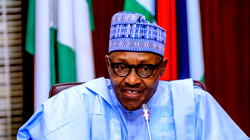
Nigeria’s politics is broken, Buhari’s third term speculation betrays it
TODAY, as you read this, voters in the United Kingdom are going to the polls to elect a new government. Although the opinion polls predict a majority win for the ruling Conservative Party, the outcome is not a given. In a country where only 16 per cent of the population identifies strongly with one political party or another, where 40 per cent of the electorate are swing voters and where volatility at the polling booth is rife, with voters increasingly likely to vote for different parties at different elections, the British politics is genuinely competitive and contestable. This is not only in terms of the absence of entry barriers in the political market but also in the sense that voters cannot be taken for granted or treated as dim, gullible and easily biddable.
Nigeria’s poverty time bomb calls for radical actions
THE World Bank warned this week that Nigeria was heading for an explosive poverty crisis without urgent reforms. Launching its Nigeria Economic Update on Monday, the Bank said the number of extremely poor Nigerians could rise by 30 million by 2030. Of course, with nearly 100 million of its citizens living in extreme poverty, Nigeria has already acquired the sobriquet “poverty capital of the world”, snatching the shameful title from India. But now the World Bank has warned that this country could account for 25 per cent of the world’s extremely poor population by 2030 if it fails to act urgently.

Border closures: It’s wrong to force feed Nigerians with local foods
THE media have recently been reporting a huge surge in demand for locally produced rice. Nigerians are turning in droves to local rice. That’s a great news. It suggests that Nigerians are finally boycotting foreign foods in favour of those produced at home. Except that it’s not such a great news, after all. Why? Well, because Nigerians are in no position to make any voluntary choice. Instead of intentionality and voluntariness, there is coercion. The recent border closures have forced Nigerians to turn to local rice. As one rice farmer puts it, “the border closure has compelled Nigerians who generally have a high preference for foreign varieties to shift to local brands”.
Death for ‘hate speech’? Nigerians are now ruled by fear
LAST week, I wrote that this country, created on the basis of might is right, was still being run on the whims of its self-interested leaders, who exercise abusive power and control over the people.
Creating a just Nigeria through the ‘veil of ignorance’
THE theory of political justice is based on two conceptions. The first is the ‘might-is-right’ school, which describes the illegitimate or amoral exercise of power over individuals or communities. The second is the contractarian perspective, based on the notion that a political community should be founded on consensus among its people, and serve their best interests. Nigeria is a product of the former, the might-is-right school. This country was created, built and continues to exist on the whim and self-interest of the powerful, not on high ideals or virtues.
Two routes to national unity, only one really suits Nigeria
NIGERIA is not a ‘nation’. At best, it is a union of nations, or a ‘state’ of nations. It has the elements of statehood, but not of nationhood. A state is a political construct, with sovereignty and power of coercion; but a nation is a body of people with a common descent, language and culture. While a state can be multinational, consisting of culturally different or heterogenous entities, a nation is defined by its cultural similarity or homogeneity. Crucially, a nation is an affair of the heart; but a state, unless it forges a shared identity, can be no more than a geographical expression!

Buhari apologised for wrong reason in his budget speech
By Olu Fasan PRESIDENT Muhammadu Buhari is reputedly too obdurate to apologise. But he recently did. Well, except that it was for the wrong reason! Presenting his 2020 Budget to the National Assembly on October 8, the President said: “I will start by asking you to pardon my voice”, adding: “As you can hear, I […]

What Buhari’s eminent economic advisers should tell him
PRESIDENT Muhammadu Buhari recently constituted a high-calibre Presidential Economic Advisory Council, EAC, chaired by Dr Doyin Salami, former adviser to the IMF and, for eight years, a member of the Central Bank’s monetary policy committee, with other members, including Professor Chukwuma Soludo, former CBN governor. For a president who largely shunned economic technocracy in his first term, and who only recently appointed an entirely political cabinet for his second term, this was a pleasant surprise.
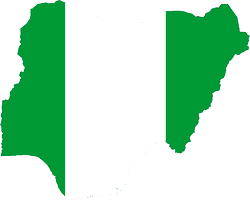
If Nigeria was a PLC, it would be sold for N1 and restructured
Olu Fasan THERE is a well-known practice in the business world in which a large multinational corporation could be sold for £1 or $1, the token price tag serving only as a symbolic proof of exchange. But why would a corporate entity be sold for a token sum? Well, that often happens when a company, […]