
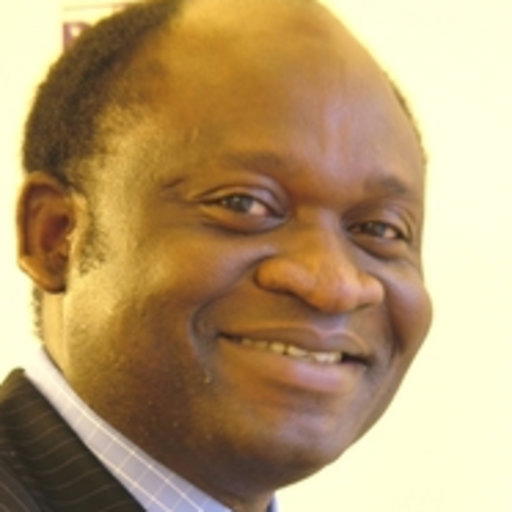
Olu Fasan
Recently, someone sent me an unsolicited WhatsApp message. As a columnist, and being naturally curious, I read any written message sent to me. After all, column ideas can come from unusual sources. However, on this occasion, after skimming the message, I dismissed it right away. Why? Well, the content of the message was too outlandish that only the credulous would readily believe it.
According to a story attributed to “a senior Presidency insider” and “exclusively confirmed” to a news outlet called “ISTA News Bulletin” President Bola Tinubu planned to rename Nigeria as the “United States of Nigeria (USN)”, transfer significant powers to the states and abolish Sharia law across the North. The proposals for this radical redesign of Nigeria were set out in a document code-named “Project True Federation”, with President Tinubu expected to present a bill to the National Assembly by December 15 to give legislative effect to the sweeping and momentous constitutional changes. My immediate reaction was utter incredulity, and, as I said, I immediately dismissed the story.
However, last week, the story appeared to have gained enough traction that the presidency felt the need to deny it. On May 21, Bayo Onanuga, President Tinubu’s Special Adviser on Information and Strategy, issued a statement saying: “The Presidency wishes to state clearly that there is no truth to the viral fake story claiming that President Bola Tinubu seeks to carry out constitutional amendments that will change Nigeria’s name to the United States of Nigeria and abolish Sharia law in the Northern region.” The Presidency said the story was part of a “dubious plot by some desperate politicians to create disaffection in our country, stir up a political crisis, and heat up the polity ahead of the general elections,” adding that “Nigerians should ignore the viral story in its entirety because the purveyors of the fake news are agents of destabilisation and merchants of disorder.”
Well, George Orwell taught us not to take political statements at face value. In his essay Politics and the English Language, Orwell famously said that political language is “designed to make lies sound truthful and murder respectable, and to give an appearance of solidity to pure wind”. In Nigeria, presidential spokespersons are sophists, who, as Plato described sophists, “prize rhetorical success over philosophical truth.” So, I took the Presidency’s statement with a large pinch of salt. For me, the questions were: did the Presidency issue the statement because there was no iota of truth, no scintilla of evidence, in the story or because the story might further damage President Tinubu’s political standing in the North?
Let’s face it, going by media reports and commentaries, the North, particularly the Muslim-North, is angry with President Tinubu. They felt that, despite becoming president with their votes, which accounted for 64 per cent of the 8,794,726 votes that won him the presidency in 2023, Tinubu has ignored the North’s vital interests and ridden roughshod over them. The North’s gripes include: the “Yorubanisation” of Tinubu’s government, which excludes Hausa/Fulani Northerners from key offices of state; the controversial proposal to change the VAT distribution formula, which Northern leaders argued was “against the interests of the North”; the perceived “humiliation” of Vice-President Kashim Shettima, who is reduced to merely attending meaningless international events; and the seeming diminution of the role of Nuru Ribadu, the National Security Adviser, whose national security remit was recently pruned down with the appointment of retired General Adeyinka Famadawa as President Tinubu’s special adviser on Home Security, leaving Ribadu with a diminished “empire”!
Surely, against such cumulation of angsts, the story about Tinubu’s intention to change Nigeria’s name, radically restructure the polity and abolish Sharia law was bound to infuriate the North and deepen perception of Tinubu’s “anti-North” agenda or, as the columnist and academic Farooq Kperogi recently put it, “Tinubu’s baffling Northern exclusion strategy”. For a politician who owed 64 per cent of the votes that made him president to the North, antagonising the same North would be utterly misguided unless he has an iron-clad alternative route to re-election. Even so, Tinubu is too savvy a political operator to give the impression he can do without the votes of any section of the electorate.
So, back to the question: Did the presidency issue that statement of denial because the audacious ideas at the heart of the story never crossed President Tinubu’s mind or because he feared the fallouts and backlash in the North in an election year? Well, the latter is more likely the case. Put simply, Tinubu fears the backlash and doesn’t detest the ideas themselves. Why do I think so?
Well, truth be told, Tinubu feels the hand of history upon his shoulder and sees the presidency as a historic opportunity to transform Nigeria in his own image, that is, based on his long-held ideas of what Nigeria should look like. In opposition, Tinubu strongly pushed for political restructuring and devolution of power in Nigeria. As president, he would like his legacy to be the root-and-branch redesign of Nigeria’s political and governance structures. But beyond the ideational, Tinubu is a megalomaniacal narcissist who loves the personal accumulation and exercise of political power. In Lagos, where he was governor and remains the feudal lord, Tinubu became known as Eko, Lagos’s Yoruba name. When he went to bed, Eko was deemed to go to bed; and it was only when he woke up that Eko too woke up. As president, Tinubu similarly projects himself as Nigeria personified.
Strange as it may seem, President Trump, an acute megalomaniac and narcissist, is Tinubu’s alter ego. Trump has named several US institutions after himself, which is unprecedented in American history. As one American historian put it, “to honour and celebrate a sitting president is virtually unheard of in America”. But President Trump said: “You’ve got to put your name on stuff, or no one remembers you.” In Nigeria, unprecedently, President Tinubu had his name emblazoned on seven state monuments within just two years in power. Narcissistic leaders, often authoritarian by nature, believe they deserve the effusive praise and hero-worshipping they crave and get. They also have a God complex, believing they are exceptionally gifted and superior to everyone else, which gives them the licence to do whatever they like. So, there may be a kernel of truth in the story about Tinubu seeking to redesign Nigeria. A president who changed Nigeria’s 50-year old national anthem within his first year in office certainly has a lot more going on in his head.
To be honest, apart from the Sharia law, which, for me, should be reformed but not abolished, I am comfortable with the other ideas mentioned in the story. Several years ago, I wrote a piece titled “A Vision for the United Nations of Nigeria” (BusinessDay, April 20, 2015). So, I am relaxed about renaming Nigeria as the “United States of Nigeria”, except that Nigeria is a country of nations, not of barely viable “states”! I am also a strong advocate of restructuring, underpinned by radical decentralisation and devolution of power. However, Nigeria cannot truly be restructured without a national dialogue, without a negotiated political and constitutional settlement. Sadly, President Tinubu doesn’t believe in national dialogue. Like King Louis XIV of France, who said l’état, c’est moi – “I am the State” – President Tinubu believes he is the State!
But Tinubu is not the State; he’s only its custodian for the time being. If he doesn’t secure genuine legitimacy for radical changes, those changes won’t outlive his presidency, be it four or eight years. Recently, at the opposition parties’ political summit at Ibadan, the participants defiantly sang the old national anthem, not the one Tinubu forced through within days without public engagement. Surely, if the opposition gets to power, they will revert to the old anthem. Tinubu has a God complex and likes to push through “radical reforms” without national dialogue, without consensus. But power is transient and reforms that lack legitimacy won’t last!
*Dr Fasan is the author of ‘In The National Interest: The Road to Nigeria’s Political, Economic and Social Transformation’, available at RovingHeights bookstores.
Disclaimer
Comments expressed here do not reflect the opinions of Vanguard newspapers or any employee thereof.