Tough times ahead in post 2015 elections
The 2015 election will certainly come and go but the after effect may linger for a long time. Whether it is PDP or APC that eventually wins the presidential election, the party that will come to power post-election had better get prepared for the handling of the economy. As it stands, the nation is on a financial cliff that can fall off any time except a miracle happens. The one commodity that provides life support for the economy has seen its price at the international market fallen to as low as $58 per barrel.




2016 draft budget is a huge joke
When the Managing Director of the International Monetary Fund, IMF, Christine Lagarde came to have a chat with Nigeria’s economic managers and policy makers, she warned that Nigeria should watch the rising debt profile of the country. Christine Lagarde is not against borrowing but borrowing for consumption. She must have been briefed on the 2016 draft budget expenditure and income profile of the country.
Scrap BDCs and save Naira from continued devaluation (2)
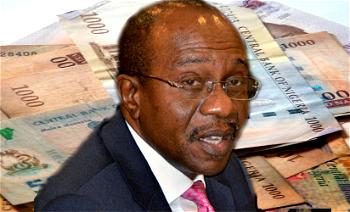
Last week in this column I said in there was no need to continue the sale of foreign exchange by the Central Bank of Nigeria to Bureau De Change in the country as it was no longer tenable. Little did I know then that the CBN was going to act fast on it. But before that evening press conference by the CBN Governor, I received several calls, some accusing me of working for some vested interest, while others were threats of possible reprisals. The curious thing is that some of the calls were from politicians who have been beneficiaries of the scam. The truth is that these are self serving individuals whose only interest is their pockets and stomachs.
Scrap BDC, save the Naira from continued devaluation
The pressure on the Naira at the foreign exchange market might continue to mount and see further depreciation in value of the Naira if the activities of currency speculators are not curbed. At the centre of this speculative activities are the Bureau de Change. Right from the deregulation of the foreign exchange market, the operation of third party non bank outlet for foreign exchange transaction has been the bane of the Naira. Those who own and operate these outlets do so for personal gains. in the guise of helping to reach the unreached members of the public by banks. They buy foreign exchange at cheap rate from CBN and divert them to the parallel market and sell at exorbitant rate to end users.
Responses to “International conspiracy to ruin Nigerian economy”
This is finding excuses for their wrong economical policies, The truth is that Nigerian government lack the understanding of economics. This is why they misuse the country’s resources. l understand the truth and real details each time the Nigerian government goes to borrow money from the IMF and world bank, there will be a revolution the next morning.
Who is afraid of Emefiele as Governor of CBN?
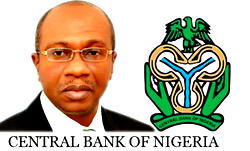
Many Nigerians do not seem to understand the role of the CBN in an economy. Some believe that the CBN is an authority in itself and does not take instruction from government. Yes, it is true that the CBN enjoys some autonomy; that is as far as its management is concerned. The CBN is the banker to the Federal Government and its economic and financial adviser. It is in the final analysis responsible to the president.

Can Saraki really push for a modern economy for Nigeria?
There is usually the belief that investors avoid Nigeria due to lack of infrastructure. This has led government and many well meaning Nigerians to always focus their thoughts on building infrastructure. While it is true that infrastructure facilitate investment, it also aids economic development. The greatest challenge facing the country in terms of foreign direct investment is the obsolete nature of Nigerian laws that do not conform to 21st Century economy.

Is there nothing good about the so called illegal refineries?
Your federal government is making billions of naira from fuel importation that ends up in private pockets, they destroyed the refineries themselves. Let no one deceive you, Nigeria have the capacity to build 10 refineries in one year.
Is there nothing good about the so called illegal refineries? (2)
Last week I talked about the technological opportunity the so-called illegal refineries is offering the nation that is being thrown away. There were many Nigerians who felt the same way. But one particular reader suggested a part 2 that should focus on the danger the destruction of tons of illegally refined products is having on the coastal, as well as the entire Niger- Delta region. Federal government law enforcement agents have engaged in an endless battle with crude oil thieves.
Is there nothing good about the so called illegal refineries?
Every so often, the Nigerian nation is hard hit with petrol scarcity. This is because the nation has no refining capacity. Ironically, Nigeria is about the fourth largest exporter of crude and the largest importer of refined products. The nation’s four refineries have long ceased to function making importation of petrol what the country cannot do without.

International conspiracy to ruin Nigerian economy
Since the Nigerian economy emerged as the largest economy in Africa as a result of the rebasing exercise, the attempt to frustrate the nation’s efforts to move forward has been orchestrated by foreign investors, their media and now the European Union and the United States of America. The new move arose when the CBN out of the desire to protect the nation’s foreign reserve restricted some 41 items that can be produced locally from access to official foreign exchange. These items are not banned but can only now be imported with the importer’s own sourced foreign exchange.

How prepared is Nigeria for the Fourth Industrial Revolution, as a matter of survival?
Nigeria from historical perspective, is always playing the catch up game. It has always adopted a fire brigade approach to issues of management. In fact, crisis management has been the style of leadership in Nigeria. It is when situations get out of hand that Nigerian leaders begin to adopt panic measures at solving problems. There were warnings in the past that crude oil prices will crash and Nigeria needed to build buffer, but it was ignored and today, the economy is facing challenges because early warnings were not acted upon.

Consumer credit, mortgage financing can help fight corruption
Kudos to the author of this article as it really makes sense to someone like me that lived in the United States for almost three decades. Providing credit facilities will certainly discourage corruption to a large extent and stimulate the economy. However, the practical approach for actualising this strategy is still missing as banks have no way to track borrowers. The BVN that is ongoing may help in that direction, including the National ID that some selfish Nigerians have been suppressing for political reasons up till now.

Who is poor in Nigeria?
In the late 1980s and early 90s, one Frank Olize, now late, of NTA Newsline on Sunday set out in search of the common man in Nigeria. The search took him to several towns across the country in search of that one man who is a common man. But to his dismay, every Nigerian on the street saw himself as a common man. In the end, Frank returned to his base with the conclusion that the search will continue. He never found the Nigerian common man.

Consumer credit and mortgage financing can help fight corruption
Working in Nigeria is quite interesting and as well, very challenging. Public sector workers have to use their meagre salaries to fend for themselves, their immediate and extended families. In a country where the minimum wage is N18, 000 per month and the rate of inflation runs sky high, the average Nigerian public sector worker finds it challenging and begins to cut corners to meet up with his daily expenses. There is no efficient and subsidised transport system, no functional housing scheme to guarantee the workers’ welfare.

The kind of ministers Nigeria needs now
When President Muhmamadu Buhari was elected in April 2015, the expectation of Nigerians was that he was well prepared for the task ahead having attempted to occupy the high office three times and failed but succeeded at the fourth attempt. But to the surprise of many after taking office, it took the President and his party almost five solid months to nominate ministers for senate confirmation. The list expected was kind that will get the nod of majority of Nigerians.