
A billion-dollar bet on AI infrastructure will count for little unless it is matched by an equal investment in the people who can build on top of it.
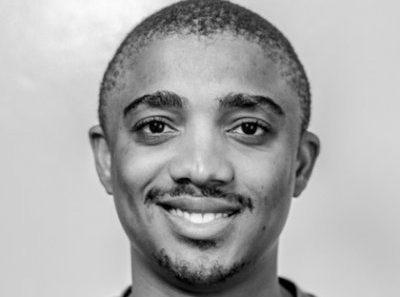
By Okeowo Aderemi
Nigeria enters the second half of 2026 with construction cranes rising over Lekki and Ikeja, building what will soon become the country’s first dedicated artificial intelligence data centres. Equinix, MTN and their partners have committed close to a billion dollars to this infrastructure, signalling Nigeria’s ambition to become a serious player in the global AI economy.
It is an encouraging milestone. But after more than a decade building enterprise software across digital payments, platform integrations and financial technology, I have learned that infrastructure is only ever the beginning of the story, never the story itself. Countries do not become AI leaders simply because they own powerful computers. They become AI leaders because they develop the engineers, entrepreneurs and companies capable of turning computing power into products that solve real problems.
That lesson has shaped my career.
At Interswitch, I led development of the Financial Inclusion System (IFIS), a mobile platform that extended agency banking services to more than one million previously unbanked Nigerians. We were not building technology for its own sake or chasing headlines. We were solving a practical problem: how do you deliver secure financial services to a trader in Kano or a farmer in Benue when the nearest bank branch is hours away?
The answer was never just software. It was understanding the realities of the people using it.
That experience has influenced every engineering role I have held since; from building enterprise platforms and large-scale integrations at AppRiver, OLI Systems and Andela to leading projects through my own consultancy, Retani Consults. Across each environment, one lesson has remained constant: technology creates possibilities, but people create value.
That is the question I keep returning to as Nigeria celebrates its AI infrastructure boom.
Who is this infrastructure actually being built for?
At present, much of it is designed to provide computing capacity for multinational cloud providers while keeping more AI workloads and sensitive data within Nigerian borders. That is a worthwhile objective. Data sovereignty matters, and Nigeria has every reason to ensure that critical national data is processed closer to home.
But sovereignty over infrastructure is not the same as sovereignty over innovation.
A world-class data centre does not automatically produce world-class AI companies. It does not teach a software engineer how to fine-tune language models, deploy secure inference pipelines or build AI products that understand Nigerian languages, markets and behaviours. Those capabilities come from deliberate investment in people.
Today, AI tools such as Claude Code and GitHub Copilot have become part of my daily engineering workflow. Used properly, they dramatically accelerate software development by reducing the time between an idea and a working product. But they have not replaced experienced engineers.
If anything, they have made experience more valuable.
The competitive advantage is no longer typing code faster. It is knowing which problems are worth solving, how to architect reliable systems, and how to build software that people trust. AI can generate code. It cannot replace the judgement gained from shipping payment systems where failure means a merchant cannot receive payment or a family cannot access financial services.
That judgement is one of Nigeria’s greatest untapped assets.
It is being developed quietly across engineering teams in Yaba, within companies like Andela, among founders building software businesses, and across thousands of Nigerian developers whose expertise places them among the most sought-after freelancers on global platforms. They already possess the technical ability. What many lack is the ecosystem that enables them to own products rather than simply contribute to someone else’s.
This is why Nigeria’s National Artificial Intelligence Strategy and NITDA’s risk-based framework for high-risk AI systems are welcome developments. Responsible regulation is essential, particularly where AI affects financial services, healthcare and public administration.
But regulation alone will not produce the next generation of Nigerian AI companies.
If I were advising policymakers, I would pair every announcement about GPUs, data centres and computing capacity with an equally ambitious commitment to applied engineering capability. Not just introductory AI literacy; which Nigeria already performs remarkably well in; but advanced training in machine learning engineering, model deployment, data engineering, AI security, MLOps and product development for African markets.
More importantly, government should help create pathways for Nigerian AI startups to build and scale. That means expanding research partnerships between universities and industry, supporting indigenous AI companies through procurement opportunities, providing access to venture capital, and creating environments where local founders can own intellectual property rather than simply supply technical labour.
Nigeria does not lack talent.
Our engineers already build systems used around the world. They mentor global teams, architect enterprise platforms and compete successfully in international markets. What we have yet to build is a bridge between technical excellence and ownership; a bridge that allows Nigerian engineers to create globally competitive AI companies instead of merely powering someone else’s.
I often think about the contrast between the Financial Inclusion System we built years ago and the AI infrastructure now rising across Lagos.
The earlier project succeeded because it was designed around a Nigerian problem by engineers who understood Nigeria. The new generation of AI infrastructure will only fulfil its promise if the software running inside those data centres is built with the same philosophy; by people who understand local realities first and global opportunities second.
The cranes over Lekki represent an important beginning.
But a data centre is ultimately just an empty room filled with very expensive computers until someone decides what to build with them.
The true measure of Nigeria’s AI ambition will never be the number of GPUs we install. It will be the number of Nigerian companies, products and breakthroughs those GPUs make possible.
Okeowo Aderemi is a senior software engineer and founder of Retani Consults. Over the past decade, he has built enterprise platforms spanning digital payments, financial inclusion, AI-assisted software development and large-scale system integrations.
Disclaimer
Comments expressed here do not reflect the opinions of Vanguard newspapers or any employee thereof.