
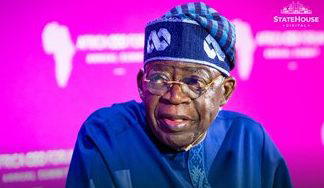
On May 29, 2023, President Bola Ahmed Tinubu took the podium at Eagle Square and delivered three words that would alter the course of Nigeria’s economic history: “Subsidy is gone.” What followed, including the swift unification of the foreign exchange windows, marked one of the most consequential shifts in economic policy since the return to democratic rule. The administration did not merely introduce a new set of policies,it dismantled an old framework that had shaped Nigeria’s economy for decades.


Three years into the Renewed Hope agenda, the dust from those decisions is beginning to settle. The story of the Tinubu administration is neither one of unqualified success nor outright failure. It is a story of difficult choices, painful adjustments, and an ongoing debate about whether the costs of reform will ultimately be justified by the benefits. It is a story defined by a tension that remains unresolved, the visible improvement in several key economic indicators alongside the persistent hardship experienced by millions of Nigerians. As the administration enters the final stretch of its first term, the question is no longer what was broken. It is whether the repair has been worth the price.
For more than a decade, economists warned that Nigeria was drifting toward a fiscal crisis. The petrol subsidy consumed trillions of naira annually, placing an enormous burden on public finances, while a heavily managed exchange rate distorted the market and drained foreign reserves. Successive governments acknowledged the problem, but few were willing to bear the political cost of confronting it.
The choices confronting the administration in 2023 were not created in 2023. They were the culmination of years of postponed decisions, mounting fiscal pressures, and an economic model that was becoming increasingly difficult to sustain. By the time Tinubu assumed office, many of the country’s underlying economic weaknesses had already been years in the making.
The Tinubu administration chose a different path. Rather than postpone difficult decisions, it embraced sweeping reforms from the outset, betting that short-term pain would prevent a deeper economic crisis in the future.
Three years later, there is evidence that some of those reforms have delivered important results. The Central Bank’s monetary tightening and exchange-rate reforms have helped restore a measure of stability to an economy that had become increasingly fragile. Nigeria’s external reserves have strengthened considerably, standing at about $48.6 billion and providing a healthier buffer against external shocks. Inflation, which surged above 34 percent during the most turbulent phase of the adjustment period, has begun to ease. The foreign exchange market, once characterized by uncertainty and speculation, has become more predictable, with the naira finding relative stability around the ¦ 1,400 mark against the dollar.
While these figures do not tell the whole story, they suggest that some of the vulnerabilities that once alarmed investors and policymakers have been reduced. Businesses now operate in a more predictable environment, government finances appear steadier, and confidence in the country’s economic direction has improved. By many conventional economic measures, the administration has succeeded in stabilizing areas that had long been sources of concern.
Yet the story sounds very different outside policy circles.
For many Nigerians, the economy is not experienced through reserve figures, inflation data, or exchange-rate charts. It is experienced at the filling station, at the bus stop, in the market, and at the end of the month when salaries no longer stretch as far as they once did. It is measured not in percentages but in the daily struggle to make household budgets work.
The paradox of the Tinubu years is that macroeconomic stability has come with significant social pain. Inflation may be easing, but prices remain far above where they stood before the reforms began. In economics, lower inflation does not mean lower prices; it simply means prices are rising more slowly. For the average civil servant, trader, artisan, farmer, or small business owner, the cost-of-living crisis remains a defining reality.
The rise in petrol prices from about ¦ 185 to well over ¦ 900 fundamentally changed the economics of everyday life. Transport costs increased sharply. The movement of goods became more expensive. Production costs rose. Businesses passed those costs on to consumers, and households absorbed the impact. The result has been a persistent squeeze on living standards that continues to shape public perceptions of the administration.
One of the enduring realities of economic reform is that the pain is usually immediate while the rewards are delayed. Citizens feel the impact of rising costs long before they experience the benefits of improved fiscal stability, stronger reserves, or renewed investor confidence. Governments therefore face the difficult task of asking people to endure today’s hardship on the promise of tomorrow’s improvement.
This helps explain the disconnect between official statistics and public sentiment. A stronger external reserve position or a more stable exchange rate means little to a mother calculating the cost of feeding her family or a trader trying to restock her shop. Macroeconomic gains often take time to filter through to ordinary citizens, and for many Nigerians that process has not happened quickly enough.
Beyond the economic statistics lies a deeper question of trust. Nigerians have been asked to make sacrifices before. They have listened to promises of future prosperity before. For many citizens, the issue is not whether reform is necessary but whether this time the benefits will be shared as broadly as the costs. What tests public patience is not hardship alone, but also the suspicion that sacrifice is expected from ordinary people while privilege remains largely untouched.
Recognizing that reform without support carries significant political and social risks, the administration has increasingly focused on building institutions designed to cushion the impact of economic hardship. Rather than relying solely on temporary relief measures, it has sought to create mechanisms that expand opportunity and access.
Initiatives such as the Nigerian Education Loan Fund, which has opened access to interest-free educational financing for millions of students, and CREDICORP, the consumer credit programme aimed at broadening access to finance, reflect an attempt to move beyond short-term intervention toward longer-term support. Whether these programmes achieve their full potential remains to be seen, but they represent a shift from welfare as charity toward welfare as empowerment.
The administration has also committed substantial resources to infrastructure development. The Lagos-Calabar Coastal Highway and the Sokoto-Badagry Super Highway are no longer proposals on paper but active projects intended to connect markets, stimulate investment, and unlock economic opportunities across the country. Supporters see them as investments in Nigeria’s future competitiveness. Critics question priorities at a time of widespread hardship. Either way, they have become defining features of the administration’s development agenda.
At the same time, the Presidential Compressed Natural Gas initiative has begun to gather momentum. By encouraging a transition from petrol to locally available natural gas, the government hopes to reduce transportation costs over time and lessen the pressure created by subsidy removal. It is an ambitious effort to address not just the symptoms of high energy costs but some of their underlying causes.
Some of the administration’s most consequential decisions, however, may ultimately be found outside the economy. Amid the fierce debates over inflation and living standards, important changes have taken place in the broader architecture of governance.
The Supreme Court judgment affirming financial autonomy for local governments stands out as one of the most significant institutional developments of the period. By strengthening the financial independence of local councils and reducing their dependence on state governments, it has the potential to reshape governance at the grassroots level. Likewise, the growing support for state policing reflects a recognition that Nigeria’s security challenges may require solutions that move beyond an overly centralized system.
Security presents a more complicated picture. The administration can point to successes in certain theatres and the disruption of some criminal networks, yet for many communities across the country, insecurity remains a daily reality. From banditry and kidnapping to communal violence and attacks on rural settlements, the expectation that citizens should be able to live and work without fear remains far from fully realized. In this respect, the administration’s record remains a work in progress.
Three years into the Renewed Hope agenda, the Tinubu presidency can best be described as an era of ambitious and often controversial structural reform. It is a period in which government chose the difficult route of confronting long-standing distortions rather than preserving them for political convenience. It has demonstrated a willingness to make decisions that previous administrations were reluctant to take, while also exposing millions of Nigerians to profound economic hardship in the process.
The final judgment on these reforms has not yet been written.
Governments are often praised for the courage to make difficult decisions. History, however, judges them by what those decisions ultimately mean for ordinary people. Nations can survive difficult reforms. What they struggle to survive is the belief that sacrifice is demanded from many while reward is reserved for a few.
The true test of the Tinubu administration will not be found in Central Bank reports, external reserve figures, or economic forecasts. It will be found in the lives of Nigerians themselves.
If stronger reserves, improved fiscal stability, infrastructure investment, and institutional reforms eventually translate into better jobs, higher incomes, greater security, and broader opportunity, then these years may be remembered as the painful but necessary foundation of a national recovery. If they do not, the reforms will be remembered less for the problems they solved than for the sacrifices they demanded.
That is the challenge before the administration as it enters the final quarter of its first term. The work of stabilization may have begun. Whether it becomes a story of national renewal or merely another chapter of deferred promises will depend on how deeply its benefits reach the lives of ordinary Nigerians.
Disclaimer
Comments expressed here do not reflect the opinions of Vanguard newspapers or any employee thereof.