
By Gabriel Ewepu
ABUJA – THE Committee for the Defence of Human Rights (CDHR), FCT Abuja Branch, has raised the alarm over the rise of domestic violence nearing a national disaster level in Nigeria.
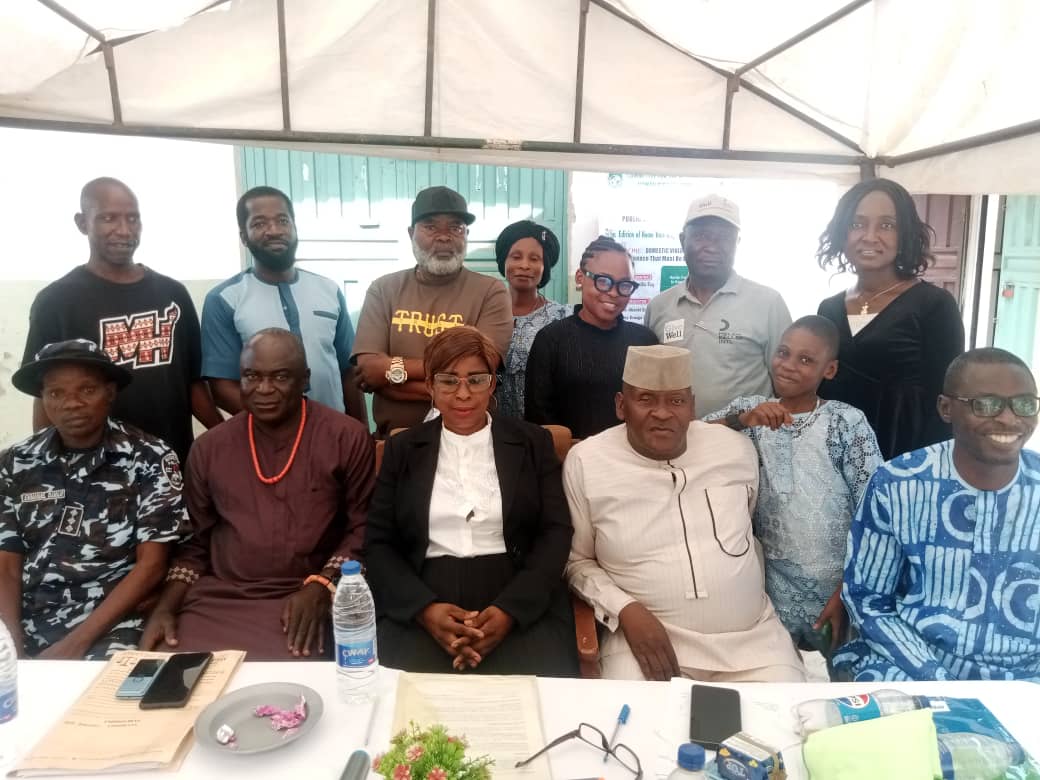
The alarm was raised at the May 2026 Edition of “Know Your Rights” Public Sensitization Seminar held in Abuja, with the theme ‘Domestic Violence: A Menace That Must Be Eliminated’, which had in attendance legal practitioners, human rights activists, community leaders, students, and members of the general public who participated actively in the discourse.
Meanwhile, the seminar was chaired by the CDHR FCT Abuja Branch Chairman, Comrd. Awe Babatunde, with the CDHR National President, Comrd. Leader Yinka Folarin, serving as Chief Host while the presenters include, the Lead Presenter, Augustina Aziba, Esq.; and the Co-Presenters were Anthony Indanosi Eruaga, Esq.; Princess Ogene Karo Ani, Esq.; Dr. Mohammed Ali Gwoza, Esq.; and Dr. M.K. Mohammed (a.k.a. “Chef Palace”).
The CDHR FCT Abuja Branch expressed gratitude to the CDHR National President, Comrd. Leader Yinka Folarin, for his support and encouragement, and also appreciated the presenters for their intellectual contributions, also to the Branch Chairman, Comrd. Awe, S. Babatunde, for his leadership including all the participants who honoured the invitation and contributed to the success of the seminar.
The Lead Presenter, Augustina Aziba, Esq., in her comprehensive presentation titled ‘domestic violence is one of the major social problems affecting families and communities across the world’, said the issue of domestic violence is a menace that had being an impediment to individual, family, community, and national development, and it cuts across borders.
According to Aziba, the issue of domestic violence is an evil that robs peace and stability from homes, inflicting physical and emotional trauma on the victims, and retards the growth and development of children, and the society in general, thereby also undermining the economies of nations.
She also stressed that every home is expected to be a place of love, safety, and understanding. Ironically, domestic violence has turned many homes into nightmares where fear and suffering endure. Therefore, it is important for everyone to understand domestic violence and work together to stop it.
Meanwhile, the presenters said the domestic violence is any form of abuse, violence, or harmful behaviour that occurs within the home or family relationship – between husband and wife, parent and children, or among relatives living together.
The said: “Domestic violence manifests in the following forms: Physical Abuse -| Beating, slapping, kicking, or causing bodily injury; Emotional/Verbal Abuse – Insults, threats, humiliation, and degrading language; Sexual Abuse- Forced sexual acts or any non-consensual sexual conduct; Economic Abuse – Withholding money or basic needs from a dependent partner; and Psychological Abuse- Intimidation, instilling fear, and manipulation. It was noted that domestic violence can be committed by either men or women, although women and children are statistically the most frequent victims.
“Causes of domestic violence in Nigeria include; Poor anger management; Poverty and financial problems; Unemployment and lack of income; Alcohol and drug abuse; Lack of communication between partners; Cultural and traditional beliefs that condone violence; Jealousy and infidelity; Lack of education and awareness; Patriarchal beliefs and male dominance; and weak law enforcement.”
However, they noted that domestic violence, though it may not be entirely eliminated from society, and said it is imperative to curtail and prevent it to its barest minimum cannot be overemphasized, hence, every stakeholder including government, civil society, religious institutions, and individuals must play their part.
“The impact of domestic violence nationwide has reached near-national disaster proportions, greatly undermining the national production level of the Nigerian economy. Something must be done about it, and the time is now.
“It is most desirable to activate proactive campaigns in appropriate government quarters and seek necessary concern and interventions needful to curtail domestic violence in Nigeria. The National Assembly, the Ministry of Women Affairs, and relevant agencies must be engaged.
“Nigerians must stop blame games and face the stark reality that domestic violence today is not limited to husband and wife alone. There are now reported cases of sons killing fathers and/or mothers and vice versa. The menace has assumed alarming dimensions.
“Domestic violence has become a hydra-headed challenge affecting almost every home in Nigeria. Every individual must develop better anger management strategies. On the part of the government, there is an urgent need to: Activate enforcement mechanisms under the VAPP Act 2015; Establish more shelters and support centres for victims; Fund public awareness campaigns; Train law enforcement officers on proper handling of domestic violence cases; Expedite judicial processes for domestic violence matters; and Provide economic empowerment programmes to reduce financial dependence.
“The CDHR FCT Abuja Branch calls upon all tiers of government, civil society organizations, religious bodies, traditional institutions, and all well-meaning Nigerians to join hands in the fight against domestic violence. Silence is complicity. Action is survival.”
Disclaimer
Comments expressed here do not reflect the opinions of Vanguard newspapers or any employee thereof.