
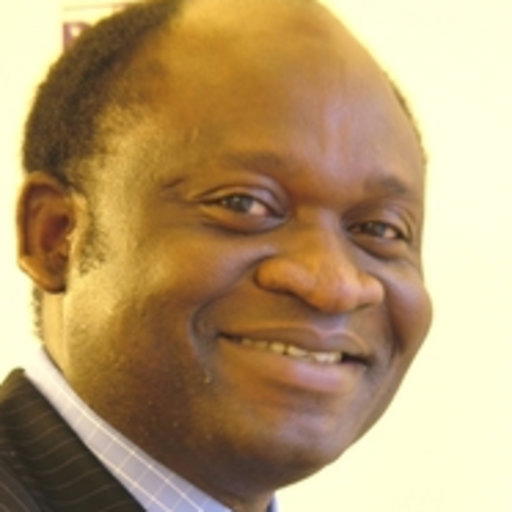
Olu Fasan
The morning foretells the day.
Early signs can indicate how a day will unfold. In that sense, the recent presidential, gubernatorial and legislative primaries foretell a very messy general election next year. Over the past two weeks, the media have been awash with endless stories about deeply flawed party primaries. The primaries betray a political culture at the heart of Nigerian broken politics, which could hugely erode the credibility of next year’s elections. The ruling party, All Progressives Congress, APC, kicked off the charade with a comical presidential primary in which one Stanley Osifo, a politically unknown quantity, “ran” against President Bola Tinubu, the magisterial and all-powerful incumbent. So important, and so competitive, was the primary that 10,999,967 APC members across Nigeria’s 36 states “voted”. In the end, Osifo, a lilliputian, polled 16,504 votes.
But what really caught everyone’s attention was the purported number of voters. What message was APC sending with the patently over-inflated figure of 11mn voters in its presidential primary? Was the party trying to bounce Nigerians into accepting the “inevitability” of President Tinubu’s victory next year by suggesting that the party, with its 31 governors, would garner over 11mn votes in 2027, beating its 8.7mn votes in 2023? The presidential primary was a political show, which is fine; but APC didn’t have to insult Nigerians with the 10,999,967 almost-certainly-fictitious votes! It’s a bad omen for 2027! Beyond the bloated presidential primary votes, APC’s gubernatorial and legislative primaries across Nigeria were trailed by allegations of irregularities and manipulations. Consensus was, in fact, imposition by the powers that be, leading to grievances that threatened internal party cohesion and, indeed, some post-primary defections. Prominent defectors included Isa Ali Pantami, a former minister, who decamped to the Peoples Democratic Party, PDP, in Gombe State, and Ovie Omo-Agege, a former Deputy Senate President, who defected to the Nigerian Democratic Congress, NDC. Some of those who decamped from other parties to APC had egg on their faces as they were denied a ticket to run for elective office and left in the lurch.
The situation in Rivers State is particularly a basket case. In September 2025, I wrote a column titled “The return of Fubara, Nigeria’s most diminished ‘governor’” (Vanguard, September 25, 2025). I argued that Siminalayi Fubara, who was removed from office by President Tinubu, and restored six months later, had become a GINO – Governor-In-Name-Only – and utterly irrelevant in Rivers State politics. After returning to office, Fubara decamped to APC in the hope of strengthening his position. But, alas, the FCT Minister, Nyesom Wike, a former governor of Rivers State, whose political brigandry is condoned by President Tinubu, calls the shots in Rivers. Mortifyingly, Fubara became the only first-term APC governor to be denied a ticket for a second term. In a stranger-than-fiction development, Kingsley Chinda, an ally of Wike, was declared winner of the APC’s governorship ticket on May 25, following Fubara’s forced withdrawal from the race. Perversely, Chinda was still a PDP member and Minority Leader in the House of Representatives when he “won” the APC primary. Indeed, it was not until earlier this week, precisely on June 2, that the Speaker of the House of Representatives, Tajudeen Abbas, read Chinda’s letter announcing his defection to APC and resignation as the Minority Leader. That’s the state of political anomie in Nigeria under Tinubu’s APC: a political party that is effectively the personal fiefdom feudal lords.
But if you think the opposition parties are different or would be better if they came to power, perish the thought! The party primaries, where they took place, have shown that all politicians in Nigeria are the same. Truth is, no political party in Nigeria practises internal democracy, no party in Nigeria conducts free and fair elections without rigging, manipulation and other malpractices, and no party in Nigeria is free from domination by a few self-interested individuals who see political parties as mere special purpose vehicles. Take the African Democratic Congress, ADC. Here’s a party that sounds sanctimonious about fixing Nigeria’s broken politics and removing its pervasive stench. But what should one make of the extremely damaging allegations dogging ADC’s recent presidential primary, which former Vice-President Atiku Abubakar won, receiving 1,846,370 against his rivals, Rotimi Amaechi and Mohammed Hayatu-Deen who got 504,117 and 177,120, respectively. Both Amaechi, a former governor and minister, and Hayatu-Deen, a renowned economist and banker, immediately rejected the results. Amaechi was particularly scathing. He said the results were “concocted”, adding damningly: “A party that criticises the ruling APC and INEC for vote buying, rigging and writing of results cannot be engaged in those practices.” Indeed, let’s face it, for an opposition party that wants to replace the ruling party and a presidential candidate who seeks to replace the incumbent, the optics are terribly bad.
To be sure, neither Amaechi nor Hayatu-Deen could have defeated Atiku in the ADC presidential primary. But the tendency to “win big”, rather than with a modest margin, could have propelled the drive towards manipulation and rigging, just as the urge to lull Nigerians into expectation inertia, forcing everyone to believe Tinubu already has victory in next year’s poll in the bag, might have led APC to inflate the number of voters in the presidential primary with a staggering but apparently contrived figure of 11mn votes. But both practices have left both APC and ADC tainted, utterly indistinguishable as mere self-serving entities. Even if one could dismiss Amaechi and Hayatu-Deen as bad losers, it’s hard to ignore the impassioned intervention of Babachir Lawal, a former Secretary to the Government of the Federation, who resigned from ADC this week, saying the party’s presidential primary was “at all levels massively rigged in favour of” Atiku. He added that “results were just written or rewritten to favour him,” concluding: “In the real sense, it was a disgraceful charade.” As I watched Babachir Lawal being interviewed by Seun Okinbaloye on Channels TV, I couldn’t help but feel his unfeigned sadness that all parties and all politicians in Nigeria are the same. “My worry,” he lamented, “was that everybody in ADC was behaving as if it’s the normal thing to do.” Those are the politicians who want to govern Nigeria next year!
What about NDC, Peter Obi’s party, you may ask? Well, for a start, Obi’s “take-a-bow” treatment as the ADC’s anointed “sole candidate” does him no favours. Rightly or wrongly, the perception remains that he avoids tough presidential primaries. As for the NDC itself, allegations that its primaries were manipulated discredit the party. For instance, the activist Aisha Yesufu, who vied for the FCT Senate ticket, said the primary was “compromised and predetermined”. Hear her: “The contest was not decided by delegates in the open; it was affirmed in a closed room.” That’s not what one would expect from Peter Obi’s party, or is it?
Unsurprisingly, none of the other parties covers itself in glory. PDP has two factions. The one led by Wike anointed one Sandy Onor as its consensus presidential candidate; the other, led by Kabiru Turaki, picked former President Goodluck Jonathan as its presidential flagbearer by proxy. Meanwhile, Governor Seyi Makinde of Oyo State claims to be running for president under an alliance between PDP and the Allied People’s Movement, APM. It’s a potpourri of confusion in the PDP. But even People’s Redemption Party, PRP, led by Dr. Hakeem Baba-Ahmed, had a controversial presidential primary. The emergence of former Cross River State governor, Donald Duke, as the party’s presidential candidate was criticised by those who allege “widespread inflation of votes beyond the party’s membership register”. Put simply, Nigerian politics is broken; it defies basic democratic norms.
Truth is, next year’s presidential election will be messy. It will be defined by competitive rigging, and whichever party/candidate outrigs others, with INEC’s acquiescence, will win. However, if INEC is truly independent, the election will be genuinely competitive, free and fair, blunting the antics of the parties and politicians. We must all hope for the latter!
*Dr Fasan is the author of ‘In The National Interest: The Road to Nigeria’s Political, Economic and Social Transformation’, available at RovingHeights bookstores.
Disclaimer
Comments expressed here do not reflect the opinions of Vanguard newspapers or any employee thereof.