
By Niyi Okiri
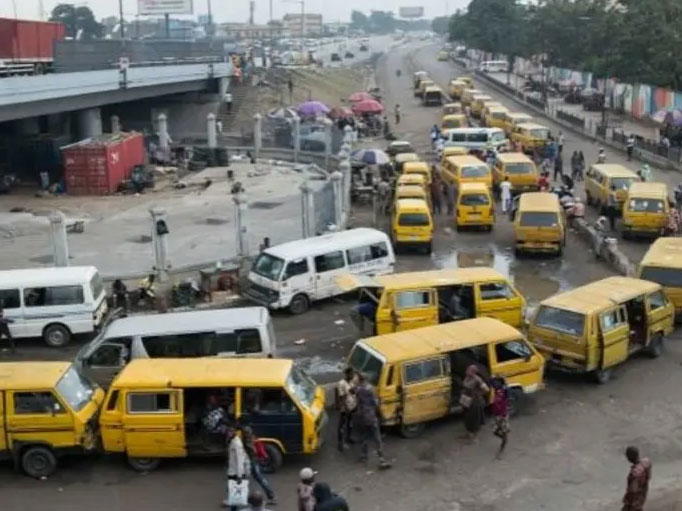
It has been estimated that the informal buses, through their unions’ unorthodox money collection system observed at every bus stop, generate at least N123 billion in Lagos State alone each year.
This was the position of Prof. Charles Ojima Asenime, while asking governments at all levels to prioritise the projects contained in the National Transport Survey, NTS, plan.
The Professor of Transport, Mobility and Development, in the Department of Transport Planning and Policy of the School of Transport and Logistics of the Lagos State University, LASU, gave this recommendation, among many others, while delivering the 122nd Inaugural Lecture, titled “Who is This ‘Agbero’? Cathechising the Role of Informality and Non-State Actors in Nigeria’s Transport System and Development”, at the university’s main campus, in Ojo
He said the review of the Master Plan for Integrated Transportation Infrastructure is long overdue, emphasising that the Federal Government should prioritise multimodal transport in transport planning across the states of the federation, especially rail and inland waterways.
“Throughout civilisation, transport has played the role of a conveyor, moving people, goods, ideas and services, and serves as a cord that binds society together, providing the necessary eyes for communities to see each other.
“Every human must move to fulfil different purposes in life — for religious, education and employment, among many other activities. Transport systems are thus evolving beyond their traditional role of facilitating movement to become instruments of safety, resilience and inclusive development.”
The lecture reveals that transport remains indispensable to emergency response mechanism, and functions not merely as a logistical instrument, but as a strategic enabler of survival, security, and humanitarian relief.
“But with 195,000km of highway network and more than 12 million registered vehicles, Nigeria has witnessed vehicular growth in the past two decades but, sadly, there is no reliable data on freight and passenger movement on roads and inland waterways, which is due to their informal mode of operations.
“However, a deficient transport system will hamper the quality of life, persons and corporate productivity, and this has been the challenge of most developing countries, where mobility among low-income earners is highly disrupted,” the lecture opined.
Disclaimer
Comments expressed here do not reflect the opinions of Vanguard newspapers or any employee thereof.