
By Emmanuel Okogba
As the global conversation on beauty standards intensifies, a Nigerian scholar is pushing the boundaries of research and advocacy, shedding new light on the deep-rooted crisis of colourism and skin bleaching in the country.
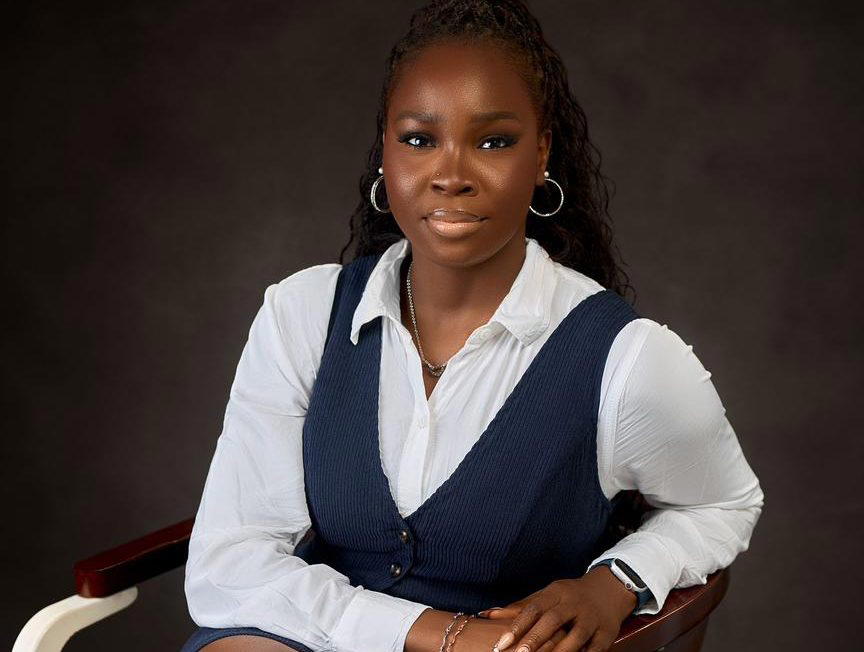
Olabanke Oyinkansola Goriola, a PhD Candidate in Performance Studies at Northwestern University, United States, one of the world’s leading research universities, has emerged as one of the most prominent voices interrogating how skin-tone discrimination continues to shape lives, opportunities, and identities in Nigeria.
Goriola holds three master’s degrees from institutions across Europe and the United States, including the University of Edinburgh—where she was awarded the prestigious Kirby Laing Foundation Scholarship—and Northwestern University. Her first master’s degree was earned through the highly competitive European Union Erasmus Mundus Scholarship, which funded her studies across four European universities simultaneously.
She holds a First-Class Honours degree from the University of Ibadan, Nigeria’s oldest and most prestigious university, where she graduated as Best Graduating Student and Student of the Year. She has also been inducted into the Edward Alexander Bouchet Honor Society at Northwestern University, one of the most distinguished graduate honours in American academia and is the recipient of more than 20 competitive grants and fellowships.
Her work goes beyond surface-level discussions, examining how cultural systems, media structures, and historical forces combine to reinforce preferences for lighter skin. She has presented her research at major international conferences in the United States, United Kingdom, South Africa, Ethiopia, Ghana, and Canada, and has published on the subject in The Republic, one of Nigeria’s foremost intellectual magazines.
Speaking on the issue, Goriola challenged the common narrative that blames individuals for engaging in skin bleaching practices, arguing instead that the problem is deeply systemic.
“Scholars like Margaret Hunter and Jemima Pierre have shown that colourism is not a matter of personal vanity. It is a rational response to a system that rewards lighter skin with better treatment in marriage, employment, and social life.”
She emphasised that the focus should shift away from condemning individuals and toward dismantling the structures that sustain these inequalities.
“We cannot blame Nigerian women for responding to incentives we built and continue to maintain. The problem is the system, not the women navigating it.”
Goriola’s research highlights how media industries, including Nollywood and digital platforms, continue to normalise lighter skin as the ideal standard of beauty and success. Nigeria leads all of Africa in skin-whitening product use, with 77% of Nigerian women using these products regularly, according to the World Health Organization—higher than any other African country.
Her doctoral work specifically explores how these biases affect dark-skinned female performers in Lagos, influencing casting decisions, branding opportunities, and career growth.
“My doctoral research examines how colourism shapes the careers and visibility of dark-skinned female performers in Lagos’s entertainment industry, who gets cast, who gets branded, and who achieves visibility. This is an understudied dimension of a crisis that most people only see at the level of the individual and the cream.” She explained.
She noted that this dimension of the crisis is often overlooked, as public discussions tend to focus only on cosmetic choices rather than industry structures.
Beyond academia, Goriola has taken active steps to address the issue by founding The Shade Initiative for Cultural and Social Empowerment, a nonprofit dedicated to tackling colourism through research, education, cultural intervention, and public advocacy.
“Nigeria needs an institution that takes colourism seriously, not as a beauty trend but as a structural issue with real consequences for women’s health, identity, and opportunities.” She said.
“That institution did not exist in the way it needed to. So, I built it.”
Her work continues to spark conversations both locally and internationally, positioning her as a leading voice in the fight against entrenched beauty hierarchies.
As Nigeria grapples with the social and health implications of skin bleaching, Goriola insists that lasting change will only come through cultural transformation, policy engagement, and sustained public awareness.
Disclaimer
Comments expressed here do not reflect the opinions of Vanguard newspapers or any employee thereof.