
By Nnasom David
Religious leaders and environmental advocates have called for stronger collaboration, policy reforms and grassroots awareness to support Nigeria’s energy transition plan and tackle climate change.
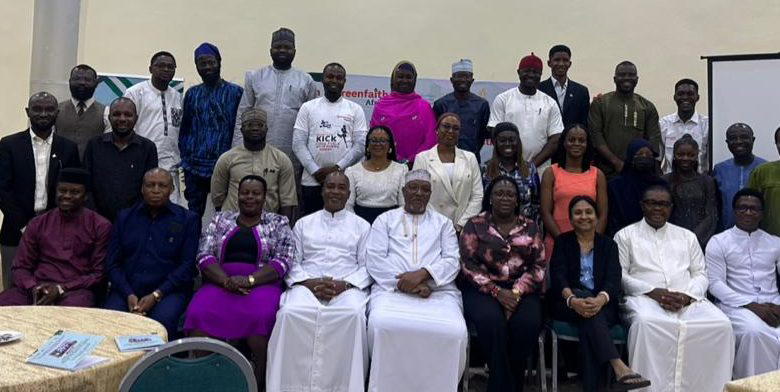
The call was made during the GreenFaith Nigeria multi-faith, multi-sectoral forum on Nigeria’s energy transition plan held in Abuja.
Speaking at the event, Managing Director of GreenFaith Africa, Meryne Warah, said the connection between faith and nature remained undeniable, noting that religious practices across different faiths reflected the importance of natural resources such as water.
Warah shared personal childhood experiences of illness and recovery through traditional herbal treatment, saying the experience reinforced her understanding of the relationship between faith, healing and nature.
“The nexus between faith and nature is unquestionable,” she said.
She explained that many religious traditions rely on natural elements in worship and spiritual practices, citing baptism in Christianity and purification rituals in Islam.
Warah urged participants at the forum to commit to practical actions that would protect the environment and preserve the planet for future generations.
“I’m looking forward to rich discussions that have pragmatic outcomes where everybody commits to do something for the sake of the planet,” she said.
Secretary General of the Catholic Secretariat of Nigeria, Reverend Father Michael Banjo, also emphasised the importance of environmental stewardship and the role of faith communities in protecting natural resources.
Banjo noted that water and other natural resources hold deep spiritual significance in many religious traditions, adding that environmental degradation threatens both humanity and faith practices.
He called on religious institutions to intensify awareness campaigns on environmental sustainability and encourage responsible use of natural resources among worshippers.
According to him, faith leaders have a responsibility to guide their followers towards actions that promote care for the environment and support climate justice initiatives.
Also speaking, Chairman of GreenFaith Africa, Sheikh Ibrahim Lithome, said environmental degradation caused by human activities was already affecting both present and future generations.
Lithome, a lawyer and Muslim scholar from Nairobi, Kenya, said people of different faiths must unite to address climate justice and environmental protection.
“We have polluted the environment. We have misused the natural resources that God has given us, and the consequences of that is that people are suffering,” he said.
He added that while prayer remained important, faith communities must also take concrete action to restore the environment.
“We believe prayer works, but prayer alone does not work. We must do what is humanly possible,” he stated.
Lithome called on religious leaders to integrate environmental awareness into sermons, teachings and worship activities.
“We expect institutions that belong to religious organisations to go green, use renewable energy and make their environments eco-friendly,” he said.
He further urged religious leaders to use their influence at the grassroots to educate followers on environmental preservation and climate responsibility.
Lithome also stressed the need for governments and policymakers to enact environmentally friendly policies that would support sustainable development and climate protection.
“We need policies. Most of the problems we are facing are because we do not have good policies to protect our environment,” he said.
He called on lawmakers and government officials to ensure that future policies prioritise environmental sustainability and renewable energy transition.
According to him, protecting the environment requires collective responsibility from governments, religious institutions and citizens alike.
Disclaimer
Comments expressed here do not reflect the opinions of Vanguard newspapers or any employee thereof.