
By Nkiruka Nnorom
Consul General of the People’s Republic of China in Lagos, Ms Yan Yuqing, has said that the decision by Beijing to eliminate tariffs for 53 African countries is a concrete demonstration of its principles of sincerity, real results, amity, and good faith in Africa.
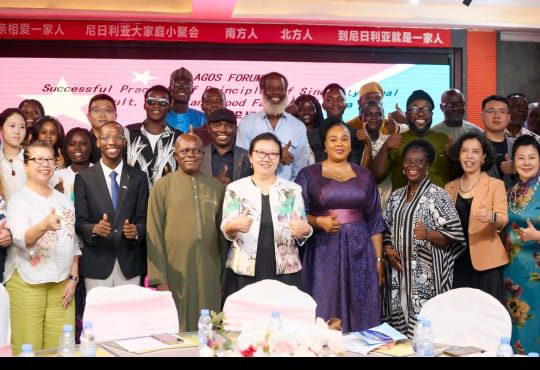
Speaking at the Lagos Forum marking 70 years of China-Africa diplomatic relations, Yuqing described the zero-tariff policy that took effect on May 1, 2026, as an epoch-making move in the history of China-Africa relations and international relations, saying that it was a major step on how China puts its Africa policy into practice.
The policy, she added, is designed to expand high-standard opening up and promote closer China-Africa trade and investment ties, while enhancing the well-being of African people.
“On May 1, 2026, China implemented a zero-tariff policy to 53 African countries having diplomatic relations with China across the board. This policy is a strategic decision taken by China in the opening year of the 15th Five-Year Plan to balance domestic and international imperatives and expand high-standard opening up,” she said
She explained that the four principles guiding China’s Africa policy mean treating African partners as family without political conditions, delivering on commitments through projects that benefit people, building close people-to-people bonds, and upholding mutual respect and win-win cooperation.
She cited ongoing projects in Nigeria, including the Lekki Deep Sea Port, which is expected to generate about $360 billion in GDP growth and create 170,000 jobs over a 45-year concession period, the Lagos Blue Line Rail that has cut travel time on the route from two hours to 20 minutes and the new ECOWAS headquarters building in Abuja as examples of “real results”.
Ikenna Emewu, Research Director (Africa) at Zhejiang Normal University, and Editor-in-Chief, Africa China Economy Magazine, said the zero-tariff policy was already yielding results two weeks after taking effect with trade imbalance between Africa and China already narrowing.
He argued the zero-tariff regime would help Africa export more and boost its 4.5 percent share of global trade and linked it to broader China-Africa cooperation under FOCAC (Forum for China Africa Cooperation), which was elevated to a full multilateral body by President Xi Jinping in 2015.
In 2023, China’s export value to Nigeria stood at $21 billion, while Nigeria exported goods worth $2.37 billion, an 89.5 percent gap. For Africa, China exported $348 billion goods and imported $123 billion, indicating a 64.5 percent imbalance. Angola was the only African country with a surplus due to oil exports under the “Angola Model” oil-for-infrastructure deal, Emewu explained.
With the new policy in place, he noted China-Africa trade was already up by 23.7 percent year-on-year, with African exports to China rising 14.6 percent — the fastest growth on record.
“The zero tariff policy is expected to further catalyze this growth by lowering entry costs for African products, particularly in agricultural, agro-processing, and manufactured goods sectors.
In the first week of the new trade regime, shipment of South African apple, Kenyan avocados had faster clearing times at the Chinese ports and increased competitiveness.
“The challenge is, therefore, for African countries to work on steady local production in the various sectors to reap the gains of this new trend,” Emewu said.
Dr. Adetoro Banwo of the University of Lagos, said that Chinese projects under the Belt and Road Initiative have filled infrastructure gaps across Africa citing the 1,860km TAZARA railway in East Africa and Nigeria’s Abuja-Kaduna railway, which have improved trade, transport, and access to markets.
He said that China was also backing the African Continental Free Trade Area and using its UN veto to support African-led conflict resolution in cases like South Sudan and Mali.
Disclaimer
Comments expressed here do not reflect the opinions of Vanguard newspapers or any employee thereof.