
By Chinedu Adonu
The Vice-Chancellor of the University of Nigeria, Nsukka (UNN), Simon Otuanya, has reiterated that the maritime sector remains a major driver of economic growth, regional integration, and sustainable development in Africa.
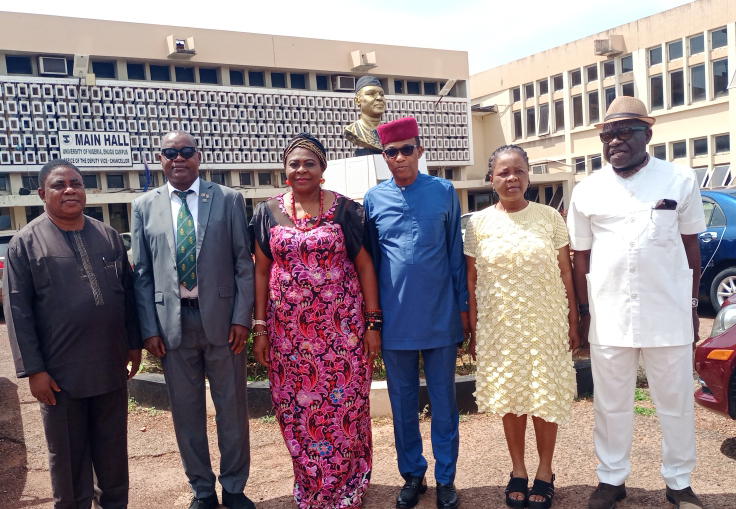
Otuanya made the remark during the 3rd International Conference of the Institute of Maritime Studies, University of Nigeria, Enugu Campus, held within the university premises.
The conference, themed “From Global Maritime Regulations to Tangible Actions: Driving Sustainable Operations in the African Maritime Sector,” examined how global maritime frameworks can be translated into practical outcomes within Africa’s maritime industry.
Represented by the Deputy Vice-Chancellor, Enugu Campus, Prof. Jesophat Onwumere, the Vice-Chancellor stressed the importance of ensuring that ports, shipping systems, coastal resources, and blue economy initiatives go beyond compliance with international standards to embrace innovation, inclusiveness, and environmental sustainability.
He commended the Institute and its Local Organising Committee for sustaining what he described as a relevant intellectual platform aligned with global maritime discourse and emerging regulatory trends.
According to him, although global maritime regulations have advanced in areas such as environmental protection, safety, trade facilitation, and security, the key challenge remains their effective implementation and measurable impact, particularly in developing maritime economies like Nigeria.
He further noted that the maritime sector remains a critical pillar for economic growth and regional integration, especially for Africa and Nigeria, given their strategic coastal and trade positions.
The Vice-Chancellor also emphasised the university’s commitment to supporting research, innovation, and policy engagement that contribute to both national development and global relevance.
Earlier, the Director of the Institute, Florence Orabueze, described the conference as a convergence of ideas and expertise aimed at strengthening the maritime sector through knowledge sharing and policy dialogue.
She explained that the Institute was established to bridge the gap between academic knowledge and industry practice, adding that it has developed a multidisciplinary framework covering maritime law, logistics, environmental governance, engineering, tourism, and blue economy studies.
Orabueze noted that the Institute continues to advance maritime scholarship through conferences, workshops, and its research journal, while contributing to policy discussions within the sector.
She added that the conference theme was timely, given Africa’s expanding maritime opportunities, strategic shipping routes, and growing port infrastructure.
The event also featured awards presentations to notable contributors to maritime development, including Brig. Gen. Chibuzor Okwuosa, who commended the Institute for its commitment to advancing the sector.
Disclaimer
Comments expressed here do not reflect the opinions of Vanguard newspapers or any employee thereof.