
By Ibrahim Hassan-Wuyo
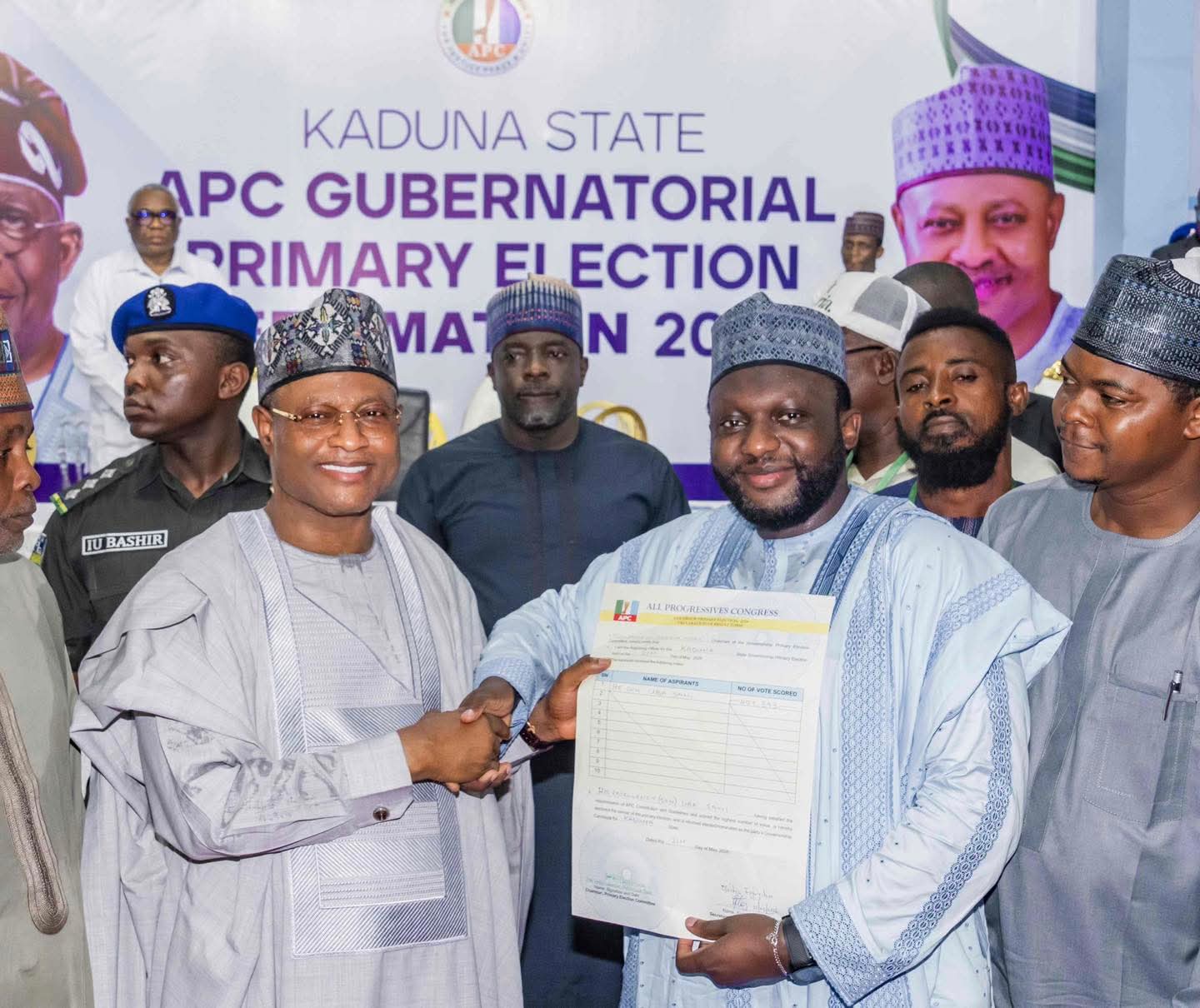
As political activities gradually gather momentum ahead of the 2027 elections, discussions have intensified over the prospects of Governor Uba Sani securing a second term in office. Like every election cycle, the debate is generating different opinions, projections, and political calculations from supporters and critics alike.
Across Kaduna State, many residents who have followed the administration’s policies believe the governor has strengthened his political standing through a leadership style that emphasizes inclusion, dialogue, and engagement with various segments of society. Supporters argue that these qualities have helped ease tensions and restore confidence in government after years of political polarization.
One of those who recently praised the governor’s performance is Senator Suleiman Othman Hunkuyi, Commissioner representing the North-West in the National Assembly Service Commission (NASC). Marking the third anniversary of the administration, Hunkuyi described Governor Uba Sani’s tenure as a period of transformative leadership and visible progress.
According to him, the administration has made significant investments in infrastructure, education, healthcare, social welfare, rural development, and economic empowerment initiatives. He maintained that these interventions have positively affected communities across the state and contributed to renewed optimism among citizens.
Hunkuyi further argued that the governor has promoted inclusive governance and strengthened public trust through consistent engagement with stakeholders. In his assessment, Kaduna State has witnessed improvements in social cohesion and community relations, which he believes are essential foundations for sustainable development.
Supporters of the governor point to these achievements as reasons why any attempt to dislodge him in 2027 may face considerable political obstacles. Their argument is that incumbency alone does not guarantee electoral success, but a combination of performance, grassroots support, and broad political acceptance can provide a strong advantage.
Political observers also note that Governor Uba Sani’s long-standing involvement in Kaduna politics has enabled him to build extensive networks across different interest groups and communities. These relationships, cultivated over several years, continue to play a significant role in shaping the state’s political landscape.
Meanwhile, discussions about the relationship between the governor and his predecessor remain a subject of public interest. However, analysts caution against reducing Kaduna’s evolving political dynamics to personal disagreements or political rivalries. Rather, they argue that the 2027 contest will ultimately be determined by governance outcomes, public perception, party organization, and the ability of political actors to connect with voters.
Mukhtar Mohammed, a political commentator, believes Governor Uba Sani demonstrated resilience in navigating political challenges during the early stages of his administration. He argues that the governor’s experience, strategic approach, and political background enabled him to consolidate his position despite pressures often associated with transitions in political leadership.
As the countdown to 2027 continues, one reality remains clear: Kaduna politics is highly competitive and unpredictable. While Governor Uba Sani’s supporters are confident that his record in office has strengthened his re-election prospects, opposition parties are also expected to organize and present alternative visions to the electorate.
Ultimately, the decision will rest with the people of Kaduna State, who will assess the performance of the current administration alongside the proposals offered by its challengers. Until then, political discussions, alliances, and permutations will continue to shape the conversation on the road to 2027.
Disclaimer
Comments expressed here do not reflect the opinions of Vanguard newspapers or any employee thereof.