
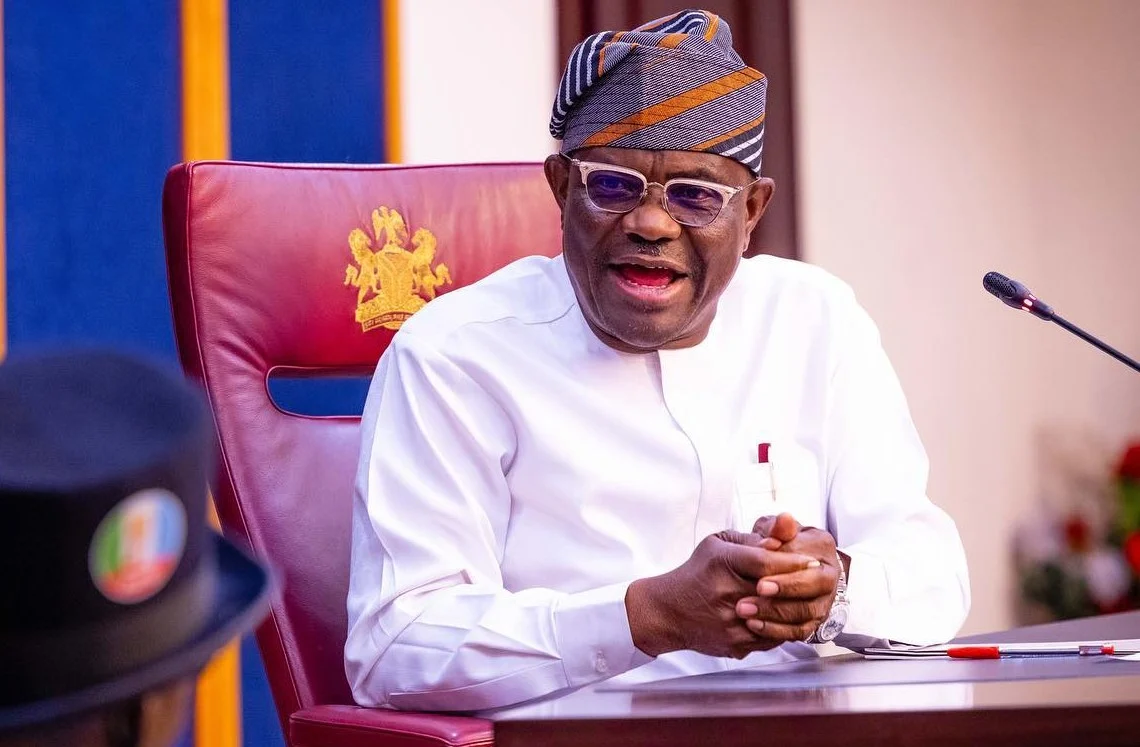
Nyesom Wike
In the high-stakes theatre of Edo South politics, there is a fine line between a political alliance and a political liability. The people of Edo are historically hospitable, but they are also sensitive to any perception of external influence in their local affairs.
A growing narrative around Hon. Ogbeide-Ihama has begun to raise questions within political circles. It is a narrative that, if not carefully managed, could have implications not just for the APC in Edo South, but also for the broader public image of the FCT Minister, Nyesom Wike.
Observers note that Ogbeide-Ihama’s campaign messaging appears to emphasise his perceived proximity to the Minister. In several instances, references to Wike’s political stature and influence have featured prominently. While political alliances are not unusual, the extent to which this association is being highlighted has sparked debate.
For some, this approach risks shifting attention away from local issues and priorities in Edo South. It also raises a broader question about how national figures are represented in sub-national political contests.
Nyesom Wike is widely regarded as a prominent political figure with influence that extends beyond any single region. His reputation has been shaped by years of visible political engagement. As such, the manner in which his name is invoked in local campaigns may carry wider implications.
A key question emerging from this situation is whether the emphasis on association enhances or complicates both men’s political standing. Some analysts suggest that over-reliance on perceived political backing could be interpreted by voters as a lack of independent positioning, whether or not that perception is accurate.
There is also the potential reputational dimension. In the event of electoral setbacks, political narratives can quickly evolve, sometimes extending beyond the immediate candidate to those perceived to be associated with them. This is a dynamic that experienced political actors often seek to manage carefully.
Additionally, there are concerns in some quarters about how such messaging may be received by local party stakeholders. Political processes at the grassroots level tend to be sensitive to perceptions of fairness, inclusion, and respect for established structures.
None of this diminishes the legitimacy of political alliances. However, it underscores the importance of balance—ensuring that partnerships complement, rather than overshadow, a candidate’s own engagement with constituents.
Ultimately, the responsibility lies with all actors involved to ensure that political communication remains measured, respectful, and focused on issues that matter most to the electorate.
For Hon. Ogbeide-Ihama, the path forward may depend on articulating a clear and distinct vision that resonates locally, while maintaining any alliances in a way that strengthens rather than complicates his message.
For Minister Nyesom Wike, the situation presents an opportunity to ensure that his political influence continues to be perceived as constructive and appropriately aligned with democratic expectations.
In Edo South, perception often shapes political reality. The challenge, therefore, is not merely about building alliances, but about ensuring they are understood in a way that builds trust rather than raises concern.
Disclaimer
Comments expressed here do not reflect the opinions of Vanguard newspapers or any employee thereof.