
By Chioma Obinna
A Professor of Medicine at the Washington University School of Medicine in St. Louis, United States, Prof. Juliette Iwelunmor, has identified poor access to preventive healthcare services and persistent stigma as major barriers frustrating efforts to end HIV/AIDS transmission among young people in Africa.
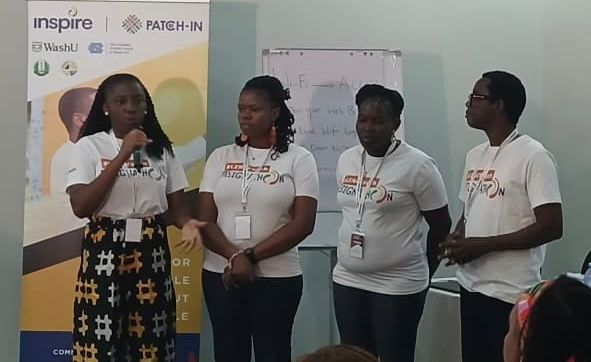
Iwelunmor spoke at the 2026 INSPIRE Designathon organised by the Innovative Network on the Science and Practice of Implementation, Research and Engagement (INSPIRE), a programme aimed at scaling up youth-centred HIV prevention and care across Africa through innovative solutions.
The event focused on expanding access to Lenacapavir, a long-acting injectable medication recently recommended by the World Health Organisation, WHO, as an additional pre-exposure prophylaxis, PrEP, option for HIV prevention.
According to Iwelunmor, although scientific breakthroughs such as Lenacapavir offer new hope in the fight against HIV, structural barriers continue to prevent many young Africans from accessing life-saving prevention services.
She said: “We now have a game-changing intervention that can help us begin to realise the vision of ending HIV among young people. It is called Lenacapavir, and if many young people, especially those engaging in risky behaviours, can access this injection twice a year, ending HIV is within reach.”
She, however, noted that the challenge goes beyond the availability of medicines.
“Access remains a major issue. As much as these services exist, whether regular PrEP or Lenacapavir, many young people still cannot reach them. This makes it seem almost impossible to achieve our goals.”
Highlighting stigma as another obstacle, Iwelunmor lamented the shortage of youth-friendly healthcare spaces.
“We do not have enough youth-friendly clinics or spaces where services are decentralised away from traditional hospitals to places young people naturally use and feel comfortable accessing care.
“By bringing young people together and asking them directly what works for them, we can build solutions around their realities and create systems that are truly youth-friendly.”
She commended Nigeria for being among the first countries preparing to roll out Lenacapavir to high-risk youth populations.
“Nigeria is one of the first countries moving towards rollout for high-risk youth populations. That is commendable because not many countries have stepped up in the way Nigeria has,” she stated.
Iwelunmor also praised the Nigerian Institute of Medical Research, NIMR, for supporting the programme and youth-focused HIV research interventions.
Speaking at the event, Professor of Global Health at the London School of Hygiene and Tropical Medicine, Prof. Joe Tucker, said Nigeria possesses the capacity to take the lead in reshaping HIV prevention efforts across Africa.
Tucker urged the country to leverage its huge youth population and research talent to tackle the epidemic more aggressively.
“Nigeria can play a leading role in this response and help flip the script in HIV prevention. There are so many bright Nigerian researchers here with innovative ideas that can help scale up this medication,” he said.
He, however, warned that global funding cuts to HIV interventions are threatening previous gains recorded in the sector.
“There is hope, especially seeing the energy from young people. But with funding cuts and uncertainty in the HIV landscape, we must do more.
“We are already seeing rising infections in some regions, more babies being born with HIV, and challenges with treatment adherence. Gains made through programmes like PEPFAR are being jeopardised, so alternative funding sources are urgently needed.”
Also speaking, one of the judges at the designathon, Dr. Matilda Carey, stressed the need for youth-led ideas in ending HIV transmission.
“We are looking for simple, innovative and practical ideas that can be integrated into existing systems. They must resonate with young people and be sustainable.
“Nothing about young people without young people. When solutions are designed with the target population involved, the impact is always greater,” Carey said.
Project Director for Asia at Heartland Alliance Nigeria, Michael Akonji, said the focus on young people was critical because they remain one of the most vulnerable groups affected by HIV.
“You cannot talk about HIV in Nigeria without talking about young people. This population remains highly vulnerable, especially adolescents, young women and key populations.
“This programme is about allowing young people to provide practical solutions on how best to reach them with prevention messages and commodities before infection happens,” he said.
Akonji urged youths to prioritise prevention by knowing their HIV status and embracing available preventive options.
“Young people need information. Lenacapavir is coming as a twice-yearly injection for HIV prevention, while Cabotegravir and condoms are also available. Prevention is key, and social media must be used effectively to educate them,” he added.
Eight teams from across Africa are participating in the designathon, including Team BioSecure, Team Catalyst, MyCare, Nexus and Team Reach from Nigeria; Team HAIR SALON from South Africa; Peerlen from Tanzania; and Safe Six from Uganda.
At the end of the programme, three winning teams will be selected for mentorship, additional support and pilot implementation of their ideas.
Disclaimer
Comments expressed here do not reflect the opinions of Vanguard newspapers or any employee thereof.