
By Luminous Jannamike
ABUJA — As worsening dry spells continue to threaten food production in Northern Nigeria, smallholder farmers in parts of Niger State are turning to solar-powered irrigation and grain storage systems to keep their farms running beyond the rainy season.
The move is aimed at helping farmers grow crops throughout the year, reduce losses after harvest and cut dependence on costly diesel-powered equipment as climate pressures deepen concerns over food security across the region.
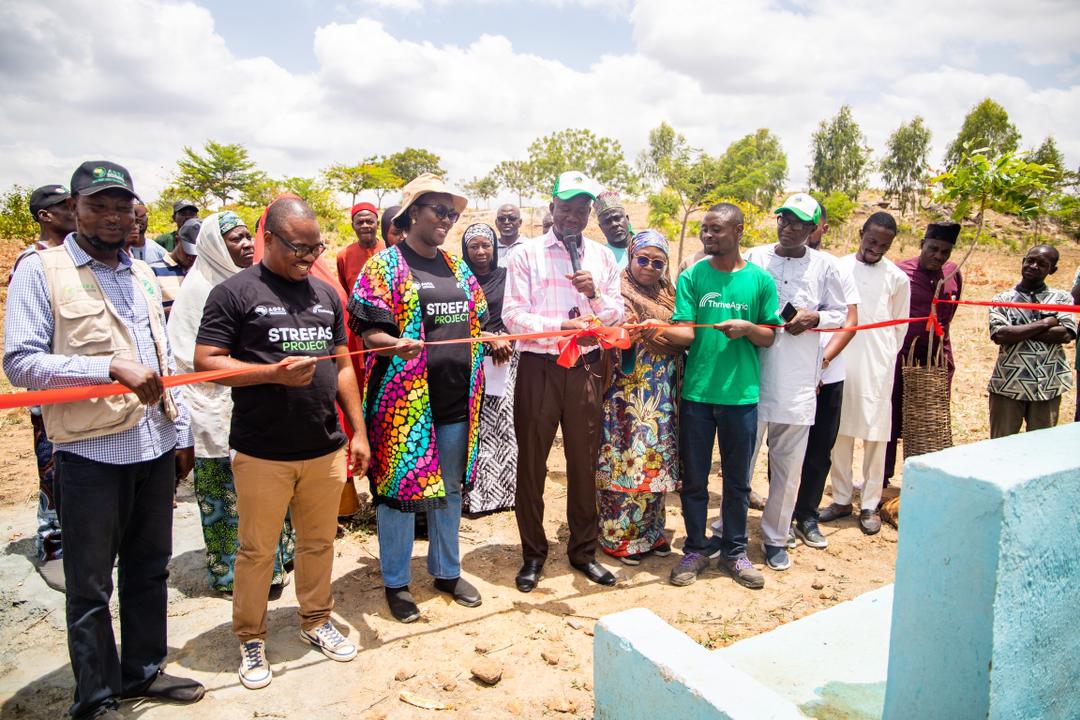
Officials of the Niger State Ministry of Agriculture, representatives of AGRA and ThriveAgric spoke at a Launching and Field Day Event held in Bosso and Gbako Local Government Areas, where a solar-powered borehole system was commissioned in Maitumbi Community.
At Talba Market, farmers gathered around demonstration points as technicians showed how solar-powered irrigation pumps, multi-grain threshers and drying systems could help preserve grains, reduce fuel costs and support farming activities during dry periods.
Representing the state Commissioner for Agriculture, the Permanent Secretary of the Ministry of Agriculture, Dr. Mathew Ahmed, described the project as an important response to the growing impact of climate change on farming communities.
“This initiative is a vital step forward in our climate change mitigation efforts, particularly in protecting our communities against the harsh realities of seasonal dry spells,” he said.
Ahmed said the deployment of solar-powered irrigation infrastructure supports the state government’s push to modernise agriculture, protect rural livelihoods and strengthen long-term food security.
Speaking on behalf of AGRA Country Director, Mr. Rufus Idris, Programme Officer, Dr. Esther Ibrahim, said the intervention would help smallholder farmers better withstand climate shocks and improve their livelihoods.
“By investing in solar-powered irrigation and post-harvest technologies, we are helping farmers move beyond subsistence toward more productive, sustainable livelihoods, enabling them to adapt, diversify, and thrive in more inclusive and competitive food systems,” she said.
Vice President of Product and Innovation at ThriveAgric, Sula Bello, said the technologies were designed to help farmers produce more with lower energy costs while making their farms more resilient to changing weather conditions.
“True innovation doesn’t just digitise the farm, it future-proofs it. By integrating clean energy into farmer operations, we are empowering them to scale productivity while building a sustainable, climate-resilient food system,” she added.
Organisers said the programme has so far reached more than 8,000 farmers across the region, supported the planting of over 20,000 trees in six local government areas and facilitated the aggregation of more than 15,000 metric tonnes of grains.
They also said the initiative has helped farmers gain more reliable access to buyers while creating jobs for young people working as field extension agents.
For many of the farmers at the event, the shift to solar-powered systems is expected to mean fewer post-harvest losses, lower operating costs and a better chance of sustaining production despite increasingly unpredictable weather patterns..
Disclaimer
Comments expressed here do not reflect the opinions of Vanguard newspapers or any employee thereof.