
By Esther Onyegbula
Industry leaders at the 2026 Kenya Blockchain & Crypto Conference, KBCC, have said Africa’s digital finance ecosystem is entering a more operational phase, with exchanges evolving beyond trading platforms into broader financial infrastructure providers supporting payments, liquidity, compliance and cross-border commerce.
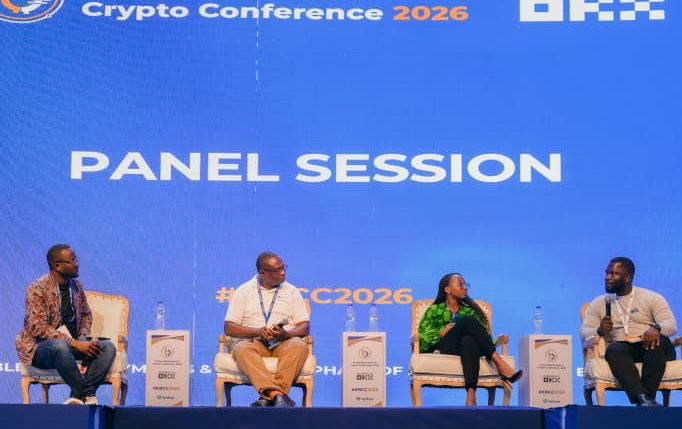
The stakeholders spoke during a panel session on exchanges and Africa’s evolving financial system held at the A.S.K Dome on May 14 and 15, 2026.
The session featured Apollo Sande of luno dot com, Sunny Joseph Imohimi of Bitget, Chebet Kipingor of Busha, while Seun Orolu of Okx moderated the discussion.
The panel formed part of broader conversations at the conference around stablecoins, blockchain adoption, payments infrastructure and the future of Africa’s digital economy.
Speaking during the session, Sunny Joseph Imohimi, Regional P2P Manager for MENA and Africa at Bitget, said Africa’s next phase of financial growth would be driven by innovators building practical systems around access, liquidity and digital value exchange.
According to him, exchanges across Africa are increasingly serving functions beyond digital asset trading, with users leveraging platforms for liquidity access, stablecoin transactions, wealth preservation, cross-border transfers and alternative payment rails.
“The future of finance in Africa will not simply be shaped by those with the biggest balance sheets. It will be shaped by builders willing to rethink access, liquidity and digital value exchange,” Imohimi said.
He explained that peer-to-peer, P2P, ecosystems continue to solve critical financial challenges across emerging African markets, particularly around settlement speed, foreign exchange access and payment flexibility.
Imohimi added that exchanges are gradually transforming into broader financial infrastructure platforms capable of supporting digital commerce while improving access to global financial systems.
“Users stay where they feel safe, where transactions are smooth, and where platforms consistently work during critical moments,” he said.
He stressed that trust, platform reliability and user experience remain key drivers of adoption and retention within Africa’s expanding digital finance ecosystem.
On regulation and compliance, Imohimi emphasized the need for a balance between innovation and accountability across Africa’s fragmented regulatory environment.
“The goal is balancing compliance requirements with operational efficiency and user experience by strengthening monitoring systems, improving merchant quality, enhancing KYC processes, and working proactively with compliance teams to reduce abuse while maintaining a smooth experience for legitimate users,” he stated.
Also speaking, Apollo Sande, Country Manager Kenya at Luno, said exchanges are increasingly treating compliance as part of their market positioning rather than a regulatory obligation.
Sande disclosed that Luno adopted a compliance-first structure early in its operations, noting that stronger due diligence processes are helping attract users seeking safer transaction environments amid growing scrutiny of illicit financial flows within loosely monitored P2P systems.
He further observed that some Kenyan traders now prefer centralized exchanges capable of absorbing more compliance responsibilities internally instead of exposing users directly to counterparties in unregulated environments.
On her part, Chebet Kipingor, Business Operations Manager at Busha, said the company has spent the past year restructuring its platform around practical business use cases.
According to her, the platform now enables manufacturers, startups, importers and exporters to move funds across borders using stablecoins with fewer delays and lower transaction costs.
Kipingor added that treasury management is emerging as a major focus area as businesses holding dollar-denominated balances increasingly seek yield-generating opportunities tied to stablecoin reserves rather than leaving capital idle.
The panelists also highlighted the gradual expansion of cryptocurrency utility into everyday transactions, including school fees, medical bills, merchant payments, remittances and enterprise settlements.
Discussions throughout the session repeatedly identified stablecoins, merchant settlements, cross-border payments and compliance systems as critical pillars for the next phase of digital finance growth across Africa.
By the close of the session, panelists broadly agreed that exchanges are increasingly positioning themselves at the intersection of custody, liquidity, payments, compliance and broader digital financial services.
Stakeholders at the conference noted that Africa’s evolving financial ecosystem presents an opportunity for the continent to shape modern financial systems responsibly while solving practical local challenges through innovation.
Disclaimer
Comments expressed here do not reflect the opinions of Vanguard newspapers or any employee thereof.