
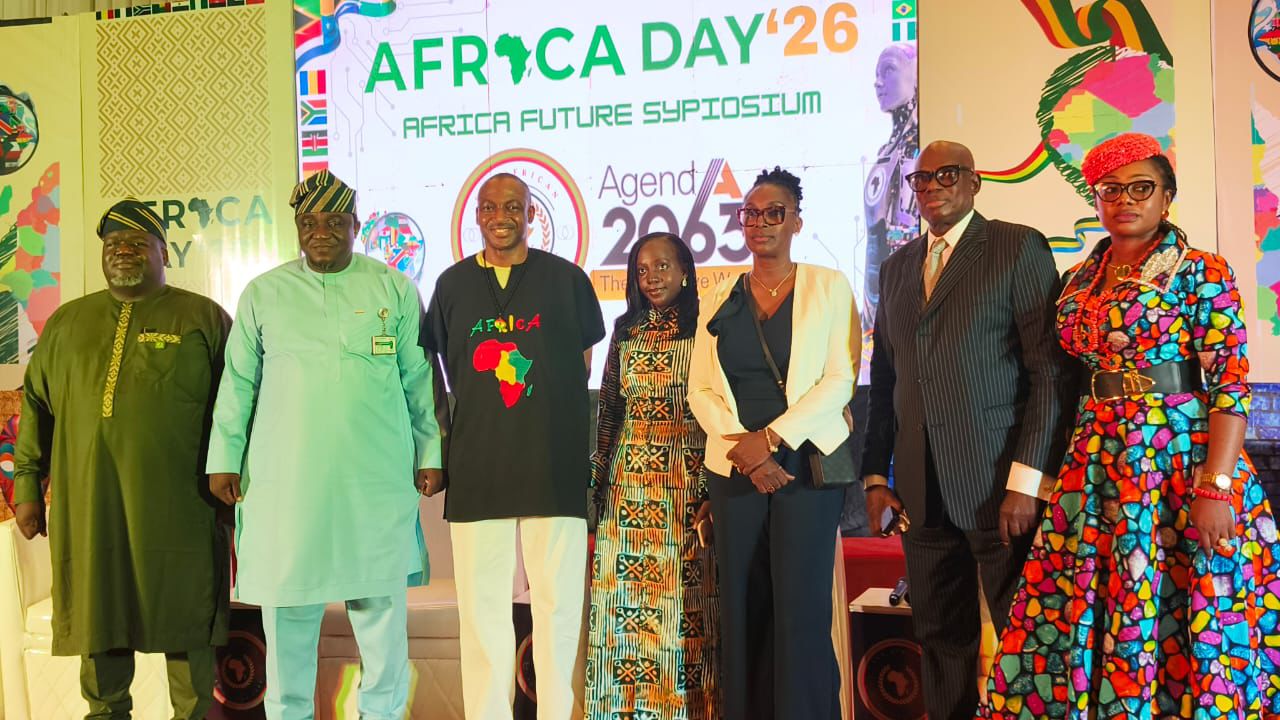
By Favour Ulebor, Abuja
In a bid to celebrate African Day 2026, the President of the Pan African AU Agenda 2063 Diplomatic Mission and Managing Director of the Pan African Continental Supermarket initiative, Stephen Gbatigbi Ben Joel, has called on African nations to end economic dependency and build stronger systems capable of driving the continent’s development from within.
Speaking during the African Day Celebration on Monday In Abuja, Dr. Stephen said Africa possesses enormous human and economic potential but has remained trapped in dependency due to systems inherited from colonial structures.
He stressed that Africans must deliberately build institutions, industries and innovations capable of sustaining the continent without over reliance on foreign aid and external funding.
According to him, Africa has consistently demonstrated resilience even during global crises, including disease outbreaks and economic instability, proving that the continent has the capacity to solve its own problems.
He said the African Continental Free Trade Area presents a major opportunity for Africans to strengthen intra continental trade and reduce dependence on foreign economies.
He said, “We have innovated when there was nothing at our disposal, created great things when there was no electricity for us to do that.
“We must let them know that we are in charge of our economic future,” he added.
The Pan African leader also challenged young Africans to believe in their abilities and become active participants in reshaping the continent’s future.
“You are the next leaders we are waiting for. You are the ones that will change our continent,” he said.
He further urged African governments and citizens to invest more in innovation, technology, waste management and industrial development, noting that many of the continent’s challenges could become economic opportunities if properly harnessed.
Dr. Ben Joel also condemned xenophobia and divisions among African countries, particularly tensions affecting Africans living in South Africa, insisting that Africans must remain united.
“We are one Africa. We are together. Nobody will separate us,” he said.
Earlier in her address, the Director General of the Pan African AU Agenda 2063 Diplomatic Mission, Elizabeth Emeka Onwuchekwa, described African Day as a moment for reflection, unity and renewed commitment to the African Union Agenda 2063 vision.
She said Africa must move beyond rhetoric and focus on strategic investments capable of improving the lives of citizens across the continent.
Dr. Onwuchekwa noted that millions of Africans still lack access to safe water and sanitation, stressing that no meaningful development can take place where basic human needs remain unmet.
She also highlighted activities organised during the three day celebration, including a liberation walk held at Jabi Lake Mall Park in Abuja, the commissioning of the African Trade Centre under the Pan African Continental Supermarket initiative, the unveiling of the “She Veras” youth empowerment project, and an African cultural festival showcasing foods, fashion and dance from different African countries.
Also speaking, Head of Mission of the Pan African AU Agenda 2063 Diplomatic Mission, Kingsley Okwara, said Africa’s transformation would depend on stronger regional cooperation, innovation, infrastructure development and visionary leadership.
He noted that despite challenges such as insecurity, unemployment, poverty and climate change, Africa remains a continent with enormous economic and cultural potential.
“We strongly believe that Africa’s transformation will be driven by stronger regional cooperation, economic integration through the African Continental Free Trade Area, innovation and technology, youth and women empowerment, strategic partnerships, sustainable infrastructure, peace and security, and visionary leadership,” he said.
The Director General of the Institute for Peace and Conflict Resolution, Dr. Joseph Ochogwu, who was represented by the Head of External Conflict Prevention, IPCR, Dr. Olalekan Babatunde, linked water scarcity and climate change to rising conflicts in many African communities.
He said women and children in several rural communities still travel long distances in search of water, creating tensions and disputes over land and water resources.
He added that the institute was strengthening early warning systems and community peace monitoring initiatives aimed at preventing conflicts and promoting stability across Africa.
In his keynote address, President and Chief Executive Officer of Cradle to Harvard School, Phrank Shaibu, urged African leaders to prioritise action over speeches and ceremonies.
He said Africa’s future would not be transformed by conferences alone but by deliberate leadership, innovation and systems that improve the lives of citizens.
Shaibu stressed that African youth are already proving their potential through innovation and entrepreneurship despite harsh economic realities.
He also described access to water as a matter of dignity rather than charity.
The African Day celebration ended with renewed calls for unity, economic independence, stronger African institutions and accelerated implementation of the African Union Agenda 2063 vision of a peaceful, integrated and prosperous continent.
The event formed part of a three day programme organised by the Pan African AU Agenda 2063 Diplomatic Mission, featuring a liberation walk, policy discussions, cultural exhibitions, trade initiatives and a webinar focused on sustainable water access and sanitation across Africa.
Disclaimer
Comments expressed here do not reflect the opinions of Vanguard newspapers or any employee thereof.