
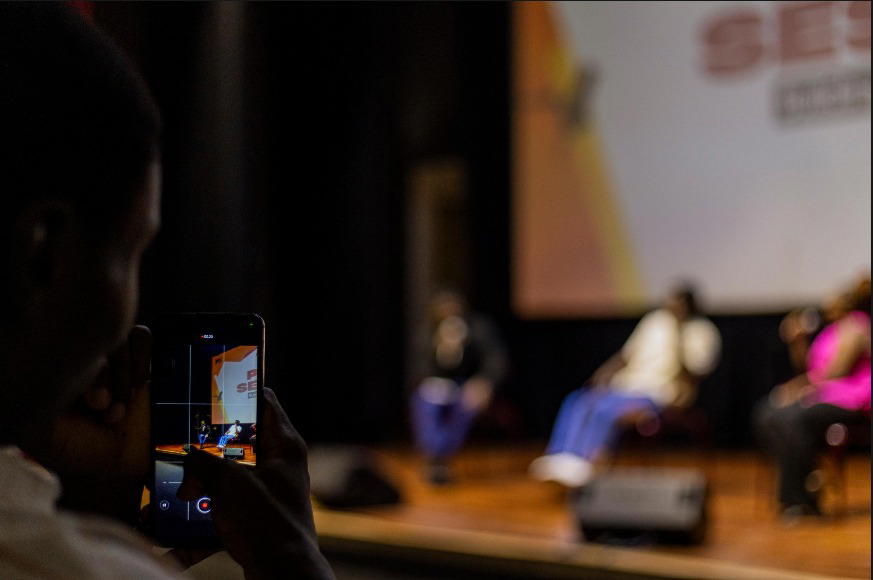
Photo credit:Communiqué.
By David I. Adeleke
Somewhere in the Philippines, a YouTuber based in Nigeria is going viral. His comment section is full of Filipinos and Latina women, his sound is being used in videos he will probably never see, and his analytics show that most of his audience has never set foot in Nigeria. By every measure that matters to a brand or a platform, he has made it big. But his bank account tells a different story.
This is the defining tension of Nigeria’s creator economy. It has talent and an audience to show for it, but has not yet figured out how to get the latter to pay for the former. Nigerian creators are sending their work out into the world and capturing very little of the value that comes back.
The Africa Creator Economy Report 2.0, published earlier this year by media intelligence company Communiqué and TM Global, introduces a metric called the Audience Anchor Ratio, which asks: Is a country’s audience being served mostly by its own creators or by creators from elsewhere? The ratio compares the number of creators whose audience is at least 20% from a given country against the number of creators actually based there. A ratio (or score) below one means local creators are punching beyond their borders. A ratio above one means the country is a net importer of creative content.
Nigeria’s numbers tell a clear story. On YouTube, the ratio sits at 0.33. That means for every Nigerian creator whose audience is mostly local, there are roughly three times as many creators whose audiences are predominantly foreign. On Instagram, it is 0.75. Even on TikTok, where the ratio approaches 1, Nigerian creators are reaching well beyond their own market. By any reasonable definition, Nigeria’s creator economy is already an export industry.
The problem is that it isn’t being treated like one.
Exporting products and profiting from exporting them are two different things. A creator can have 80% of their audience outside Nigeria and still earn less than $100 a month (60% of African creators earn less than this monthly). Reach without the infrastructure to monetise is just influence with no return.
And right now, the infrastructure that can make this possible—reliable cross-border payments, enforceable intellectual property rights, platforms that pay fairly in non-dollar currencies, and financial institutions that understand what creators do—is still very undeveloped. And that needs to change.
We must ask how we can create the conditions that will enable creators to actually profit from their work. Doing this benefits the creators and also the country. It is a golden opportunity to build a sustainable, non-oil, export-based industry, something the government has been trying to do in recent years.
The clearest example of what closing that gap looks like is South Korea. What appears to be a cultural phenomenon — K-pop, K-drama, the global dominance of Korean entertainment — is largely the result of deliberate, sustained government investment in the creative sector dating back to the late 1990s. Korea didn’t stumble into a $12 billion cultural export industry. It recognised that its creators were producing something the world wanted, and it built the conditions to capture that value. Trade infrastructure, IP enforcement policies and systems, export financing, and institutional support for creative businesses were all part of the package.
Nigeria has the audience gravity that Korea was trying to build. For instance, the Nigerian diaspora in the United Kingdom (over 270,000 strong according to the 2021 census data, and likely more given how quickly that community has grown) actively consumes content from back home and produces some of it too. London has made its mark as one of the largest global markets for Afrobeats, maintaining its position since the early 2000s.
The UK, in particular, is opening up stronger pathways for collaboration with Nigeria’s creator economy by positioning itself as a vital partner for ecosystem growth and greater value creation. This is most evident in a growing set of institutional programmes led by agencies like the British Council and the Department for Business and Trade.
These initiatives are intentionally designed to tap into the deep-rooted social and cultural ties between both countries. Over the past few years, they have spanned the full breadth of the creator spectrum, from high-level masterclasses for filmmakers to hands-on workshops for music industry operators.
More recently, following conversations at the UK–Nigeria Enhanced Trade and Investment Partnership, the SCALE Programme was announced. The ambition is clearly to build a cohort-based incubation system for creative entrepreneurs across both markets. If executed well, it could drive deeper alignment between the ecosystems and, more importantly, unlock a new layer of sustained, cross-border growth.
New York has also proven to be a viable market for Nigerian art and fashion. And this is true in many other places around the world with large Nigerian populations, such as Toronto, Atlanta, Houston, and Amsterdam. These communities are ripe targets for local creators, who are well-positioned to serve and monetise them. However, the harder work of converting that gravity into a functioning export economy back in Nigeria remains undone.
A big part of that work belongs to the government. Creators are not just entertainers or influencers. They are a class of small-business operators running export-oriented enterprises, often without realising it. They need the same enabling environment that every other export sector takes for granted: access to credit, protection for their intellectual property, and formal recognition that what they do is economic activity with real trade implications.
Policy initiatives like the Creative Economy Development Fund (CEDF) and the Creative Leap Acceleration Programme (CLAP) are good places to start. However, most of these funds would go to Nollywood and the music industry because of their visibility and relatively more established trade structures. The digital creators already reaching global audiences are not always part of those conversations, and that needs to change.
The kind of thinking Nigeria needs looks more like the UAE’s renewable 10-year golden visa: policies that treat creators as economic actors to attract and retain, not just celebrate. More concretely, Nigeria needs policies that encourage international companies to enter the market, specifically to help local creators monetise their content globally.
Platforms, financial institutions, and investors all have a role to play as well. But governments set the terms. They decide whether creative work is recognised as legitimate economic activity, whether creators can access credit, and whether intellectual property is worth protecting. Without that foundation, everyone else is building on sand.
The opportunity sitting behind all of this is significant. Nigeria’s creator economy is currently valued at 42.2 billion naira ($31.2 million), a figure that reflects not the size of the market but the amount currently being captured. With the right public and private infrastructure, that figure could reach into the tens of billions by the end of the decade. This way, the young creator making waves in the Philippines also gets to make bank, just as his work deserves.
David I. Adeleke is a writer and media entrepreneur. He is the founder and CEO of Communiqué, Africa’s leading media and intelligence firm focused on the creative economy
Disclaimer
Comments expressed here do not reflect the opinions of Vanguard newspapers or any employee thereof.